
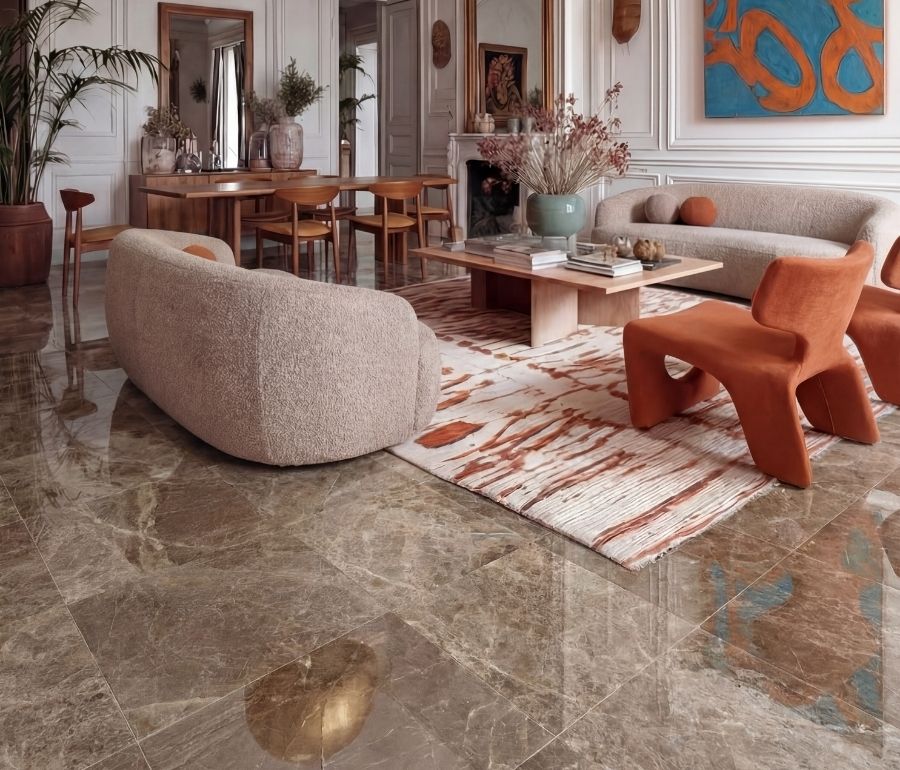
Trends in Marble Flooring Design
Marble flooring is one of the most important applications in modern architecture, offering both aesthetic appeal and long-lasting performance. The unique veining and surface variations of natural stone have led to the emergence of new trends in flooring design. Today, marble floors are no longer limited to classical styles; they have become an essential element in modern and minimalist interiors.
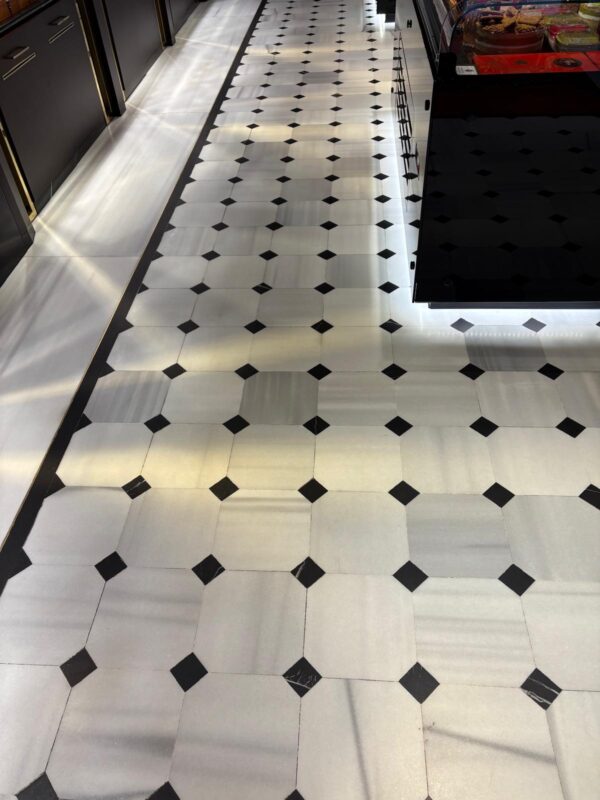
Marmara White and Nero Marquina Octagon Pattern Floor Design
Key Factors Shaping Marble Flooring Trends Today
Marble flooring trends are influenced by architectural approach, material selection, and the intended use of the space. In modern design, not only the stone itself but also the application method plays a significant role.
Key factors include:
- Use of large-format slabs
- Highlighting natural veining
- Clean and seamless surfaces
- Preference for light tones
This approach creates a more spacious and refined perception within the space.
Seamless Surfaces with Large-Format Marble Slabs
One of the most notable trends in recent years is the use of large-format marble slabs. With fewer joints, the floor surface appears more continuous and visually unified.
Advantages:
- Creates a sense of continuity
- Provides a cleaner and more modern look
- Easier maintenance and cleaning
This application is especially preferred in large living areas, hotel lobbies, and commercial spaces.
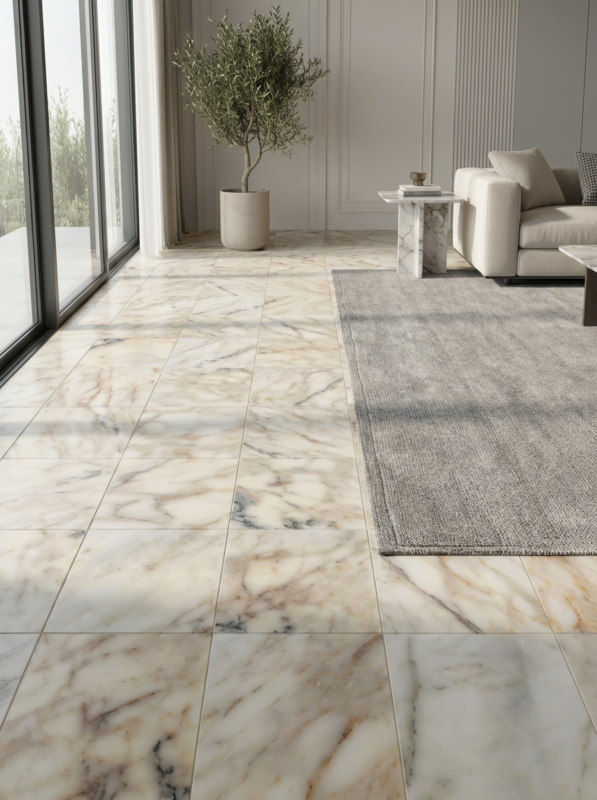
Afyon Sugar Marble Floor Design
Designs Highlighting Natural Veining
The veining of marble, one of its most distinctive characteristics, has become a central element in flooring design. Marbles with strong and visible veining create natural movement across the floor surface.
This trend:
- Adds character to the space
- Prevents a monotonous appearance
- Emphasizes the natural beauty of stone
Directional placement of veining can further enhance the overall design impact.
Dynamic Flooring with Different Layout Patterns
Instead of traditional straight layouts, patterned marble flooring has become increasingly popular. Different installation techniques create dynamic and visually engaging spaces.
Common patterns:
- Checkerboard flooring
- French pattern (Versailles)
- Diagonal layouts
These applications add depth and movement to interiors.
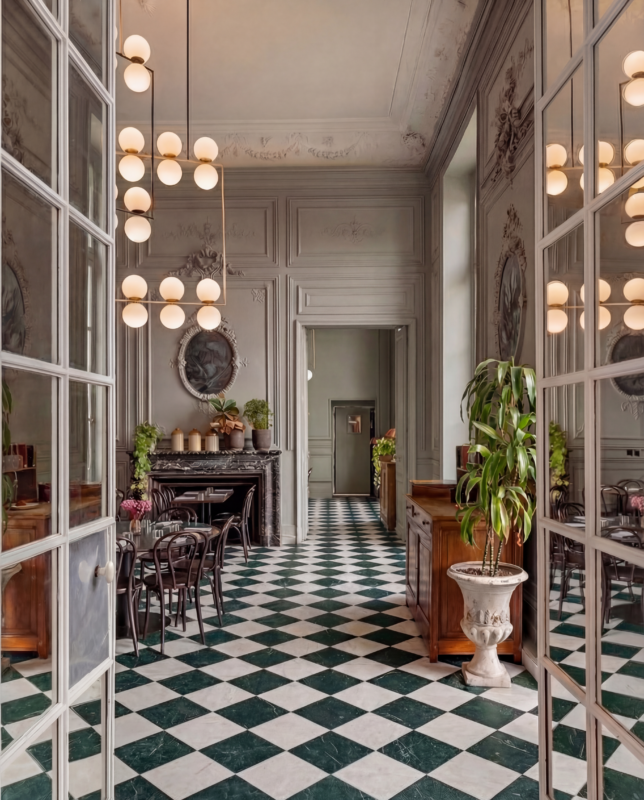
Verde Guatemala and Metell Classic Chechkerboard Floor Design
Bright Interiors with Light-Toned Marble
Light-colored marble is widely preferred in modern interiors. White, beige, and light grey tones help create a brighter and more spacious atmosphere.
Advantages of light tones:
- Reflect natural light effectively
- Work well with minimalist designs
- Offer a timeless aesthetic
For this reason, they are commonly used in both residential and commercial projects.
Choosing the Right Surface Finish for Marble Flooring
In marble flooring applications, surface finish is just as important as the stone selection. Polished, honed, and brushed finishes should be chosen based on the function of the space.
Surface options:
- Polished: glossy and reflective
- Honed: matte and natural
- Brushed: textured and slip-resistant
Selecting the right finish ensures both aesthetic value and functional performance.
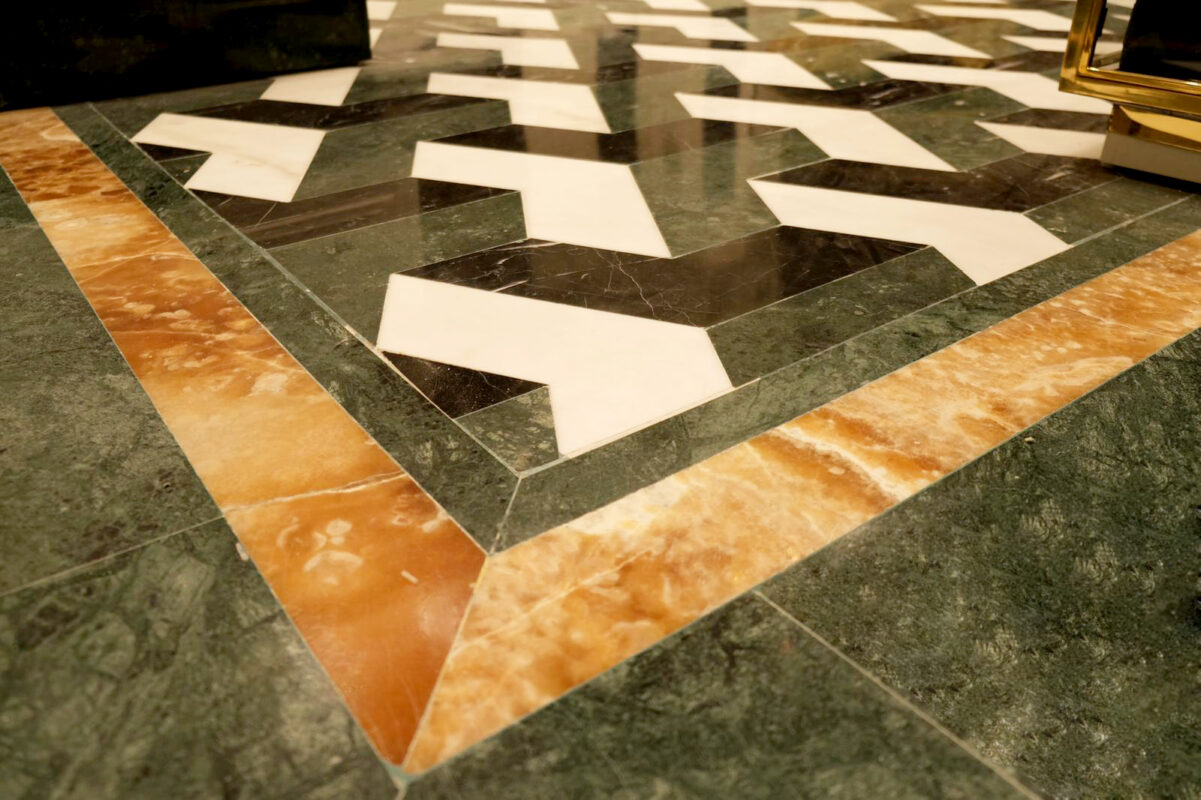
Verde Guatemala, Nero Marquina, Afyon White Arcobelano with Satin Onyx Waterjet Floor Design
Contemporary Approach to Marble Flooring Design
In today’s marble flooring design, the focus is on balance and simplicity rather than excessive decoration. The natural character of the stone is emphasized while unnecessary details are minimized.
In modern design, marble:
- Acts as a primary material in the space
- Integrates harmoniously with other surfaces
- Offers a timeless design language
This approach allows marble flooring to remain relevant and valuable over time.