
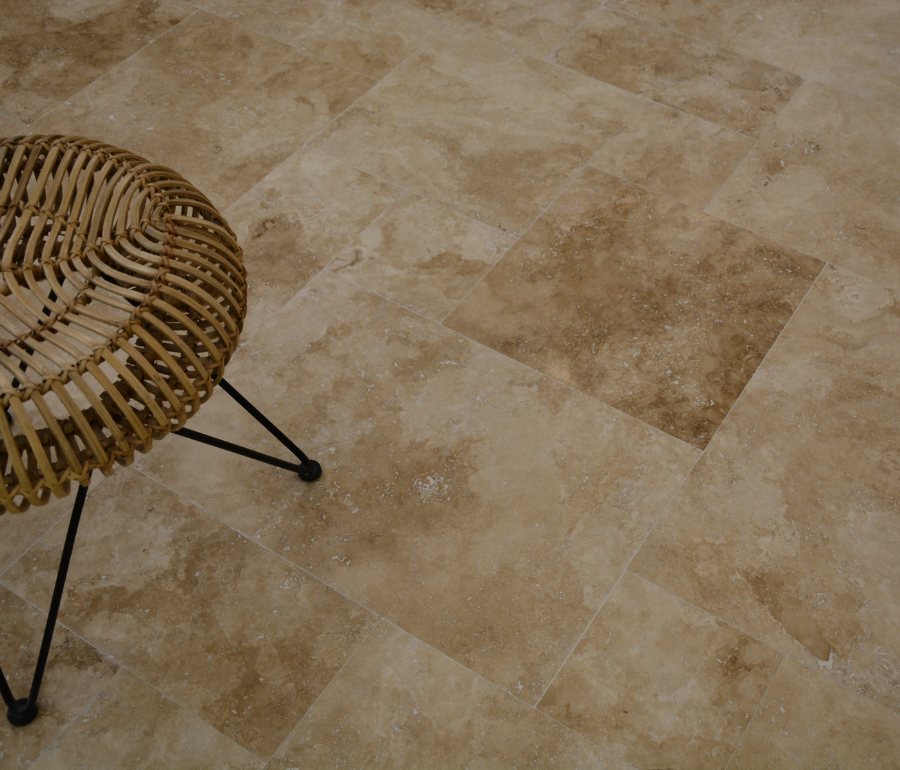
Travertine is one of the natural stones with the widest range of surface finish options. The same stone can achieve completely different looks and performance characteristics depending on the finish applied. For this reason, choosing the right surface finish is just as important as selecting the stone itself.
Surface finishes directly affect the texture, shine level, slip resistance, and overall visual perception of travertine. This makes them a key factor in determining where and how the material should be used.
What Are Travertine Surface Finishes?
Travertine surface finishes are processes applied after the stone is extracted from the quarry. These mechanical or chemical treatments give the stone its final appearance and functional properties.
Through these processes, travertine can be:
- Made smoother or more textured
- Finished with a matte or glossy appearance
- Enhanced for slip resistance
- Left with natural pores or filled for a smoother surface
These variations allow travertine to be used across a wide range of design applications.
Honed Travertine
Honed travertine has a smooth, matte surface that is not reflective but feels soft to the touch.
Key characteristics:
- Matte and understated look
- Suitable for modern interiors
- Balanced surface texture
It is commonly used for interior flooring and wall applications.
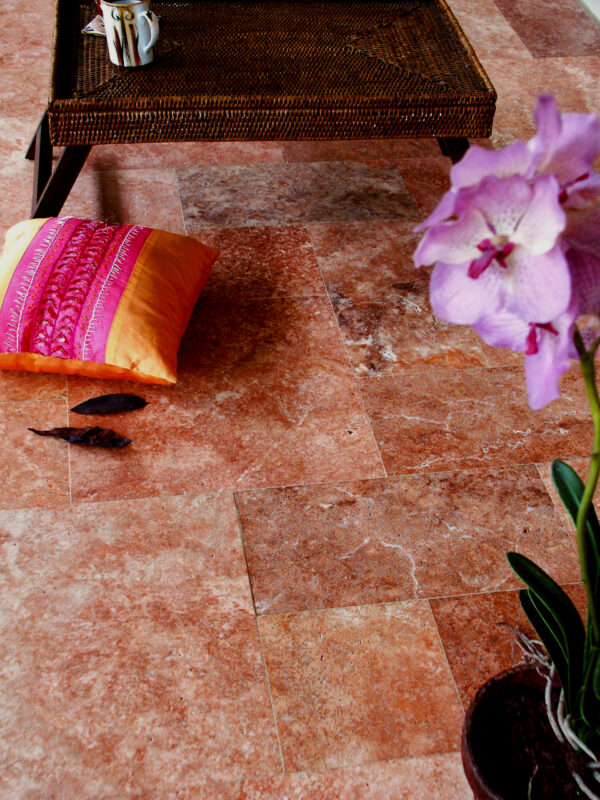
Honed, Unfilled Red Travertine Floor Tiles
Filled Travertine
Travertine naturally contains pores and voids. In filled travertine, these are filled with a special material to create a more even surface.
Key characteristics:
- Smooth and uniform surface
- Easier to clean
- More refined appearance
Filled travertine is often preferred in interior spaces and high-traffic areas.
Unfilled Travertine
Unfilled travertine leaves the natural pores open, emphasizing the raw and organic character of the stone.
Key characteristics:
- Natural and textured appearance
- Strong surface character
- Ideal for rustic designs
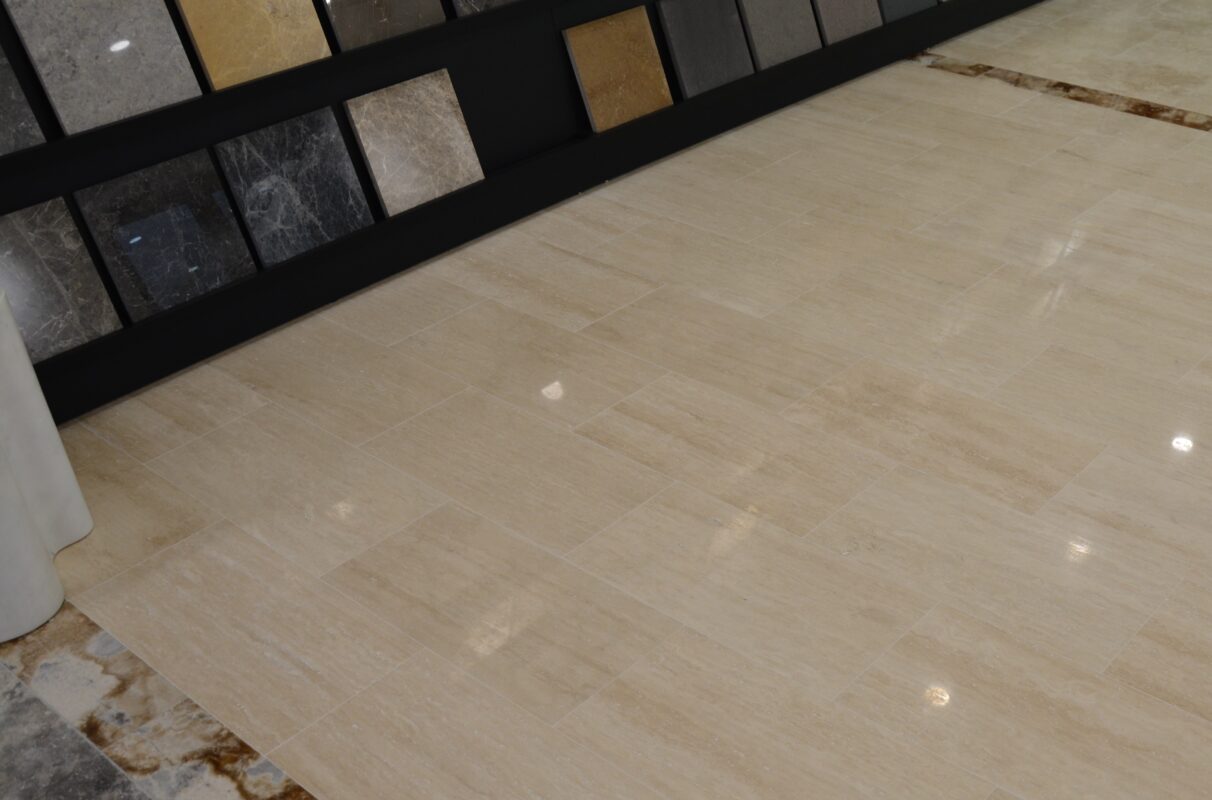
Polished, Unfilled White Travertine Floor Tiles
Polished Travertine
Polished travertine has a glossy, reflective finish achieved through surface polishing. While less common for travertine, it is used in specific design contexts.
Key characteristics:
- High-gloss surface
- Enhanced color visibility
- Elegant and striking look
It is typically used in decorative areas with lower foot traffic.
Tumbled Travertine
Tumbled travertine is processed to create an aged, worn look with softened edges and a textured surface.
Key characteristics:
- Rounded edges
- Antique and natural appearance
- Slip-resistant surface
It is widely used in outdoor areas, terraces, and rustic-style designs.
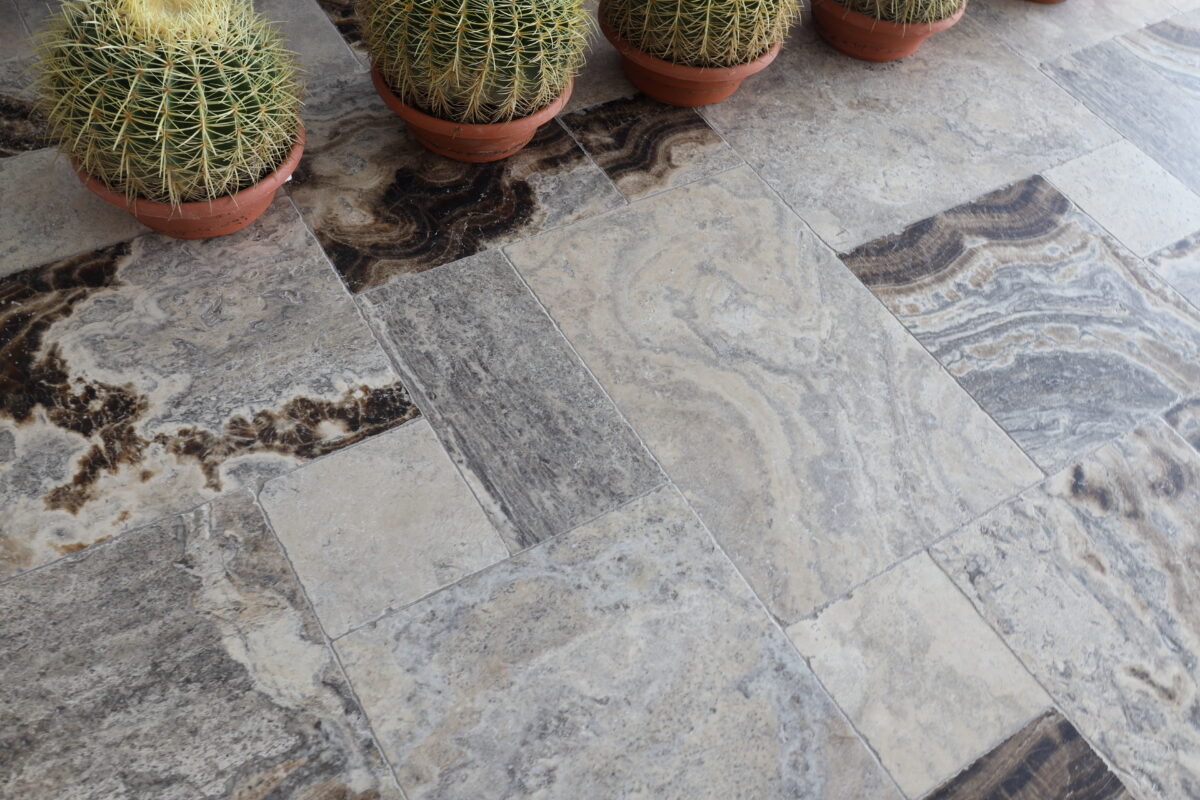
Imperial Blend Travertine Tumbled Floor Tiles
Brushed Travertine
Brushed travertine is finished by brushing the surface to create a slightly textured and natural feel.
Key characteristics:
- Soft textured surface
- Slip resistance
- Suitable for both indoor and outdoor use
This finish is often chosen for projects that aim to preserve a natural aesthetic.
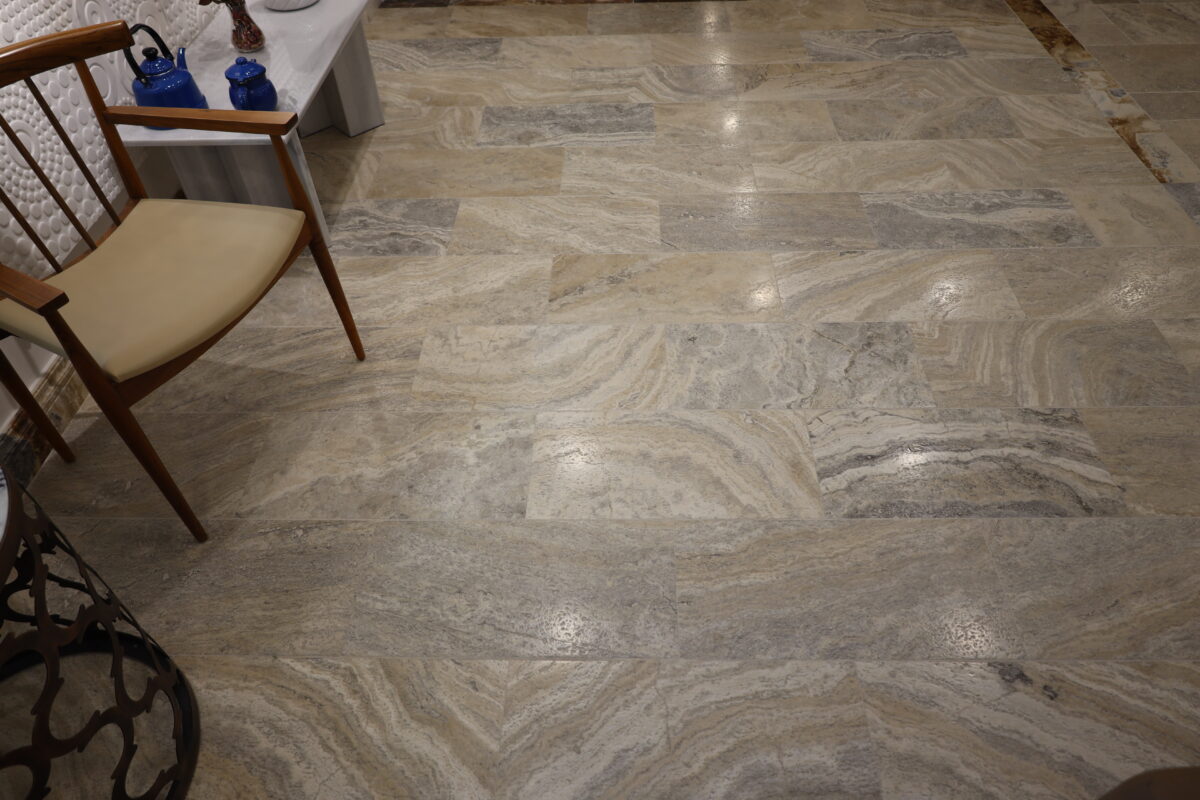
River Travertine Brushed Floor Finish
Edge Treatments and Details
In addition to surface finishes, edge treatments also play an important role in the overall appearance of travertine. Techniques such as chipped or rustic edges enhance the natural look of the stone.
Key characteristics:
- More organic finishing
- Adds character to the design
- Especially suitable for outdoor and rustic settings
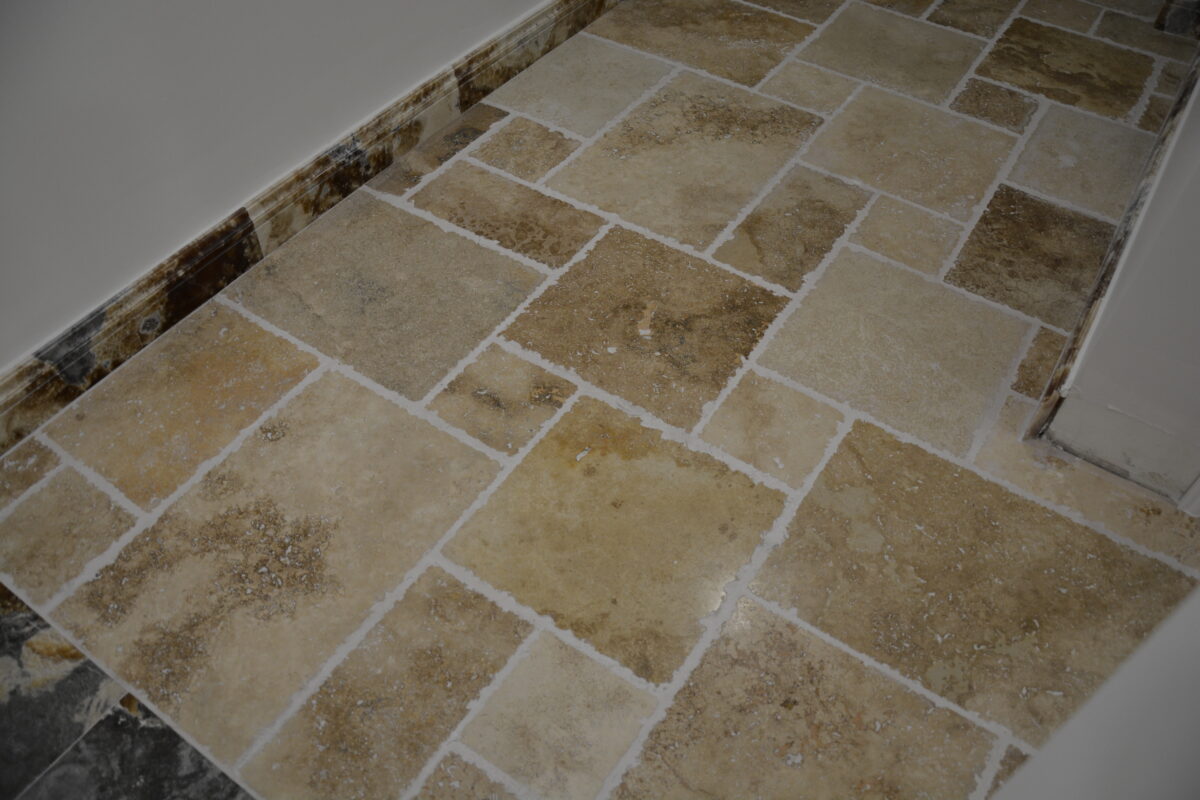
Kale Travertine Honed, Distressed – Edge Floor Tile
Applications Based on Surface Finish
Different travertine finishes are suitable for different applications:
- Honed & Filled: Interior flooring and walls
- Unfilled: Natural and rustic designs
- Polished: Decorative and low-traffic areas
- Tumbled: Outdoor spaces and terraces
- Brushed: Areas requiring slip resistance
This versatility allows travertine to adapt to both aesthetic and functional needs.
Importance of Choosing the Right Finish
Selecting the right travertine finish is essential for both performance and visual impact. The same stone can create completely different design outcomes depending on how it is finished.
When choosing a finish, consider:
- The application area
- Slip resistance requirements
- Design expectations
- Overall spatial concept
A Balanced Approach to Travertine Surface Selection
Travertine surface finishes preserve the natural beauty of the stone while adapting it to different design needs. With the right selection, travertine:
- Becomes more durable
- Integrates better with the space
- Enhances the overall aesthetic
In this sense, travertine is not just a material, but a key element in architectural and interior design.