
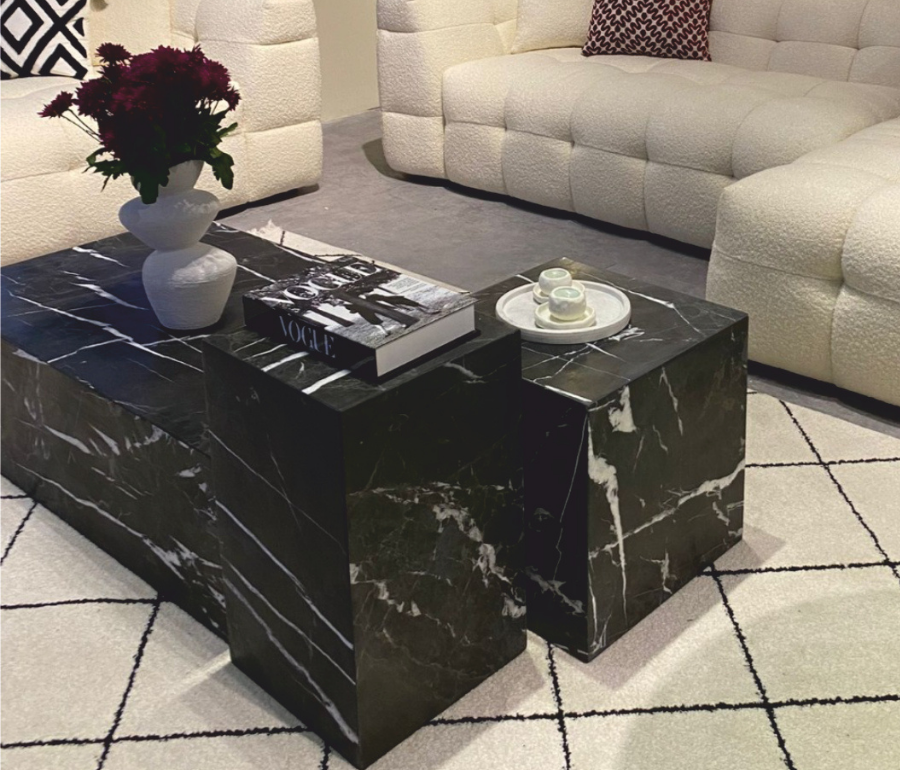
Natural stone has always played a defining role in architecture, offering both durability and timeless visual appeal. Among the many varieties available, black marble stands out for its ability to introduce depth, contrast, and architectural character into contemporary interiors. Whether used on flooring, furniture, feature walls, or decorative details, black marble transforms ordinary spaces into refined environments where material becomes an essential part of the design language.
Two of the most distinctive black marbles are Nero Marquina Marble and Uludağ Black Marble. While Nero Marquina is recognized worldwide for its deep black background crossed by bold white veins, Uludağ Black Marble presents softer grey transitions and naturally flowing patterns that create a different visual rhythm. Together, these stones demonstrate how black marble can adapt to multiple architectural styles while maintaining a sophisticated identity.
Rather than functioning as an isolated material, black marble performs best when integrated into the overall interior composition. Television units, flooring, decorative furniture, feature walls, and mosaic installations can all be designed around a consistent natural stone palette, creating visual continuity throughout the project. This holistic approach allows architects and designers to build interiors that feel balanced, luxurious, and naturally connected.
Nero Marquina Marble as a Statement Material for TV Units
Modern living rooms increasingly treat television walls as architectural focal points rather than purely functional installations. Selecting the appropriate material for this surface significantly influences the atmosphere of the entire space. Nero Marquina Marble provides dramatic contrast through its intense black background and naturally occurring white veining, making it one of the most popular choices for luxury residential interiors.
Large-format Nero Marquina slabs emphasize the continuity of the marble’s natural veins, allowing each installation to become completely unique. Instead of repetitive decorative finishes, homeowners benefit from a surface shaped by geological processes over millions of years. Every slab tells a different visual story while maintaining a refined and contemporary appearance.
When combined with light-colored walls, oak flooring, or warm wooden furniture, Nero Marquina establishes a sophisticated balance between contrast and harmony. Thin metal accents, concealed lighting, and minimalist cabinetry further highlight the natural elegance of the marble without competing for attention.
Beyond aesthetics, a Nero Marquina television unit also reinforces architectural identity. Rather than simply framing a television, it creates a sculptural wall composition that anchors the living room and establishes a cohesive relationship between furniture, flooring, and surrounding materials.
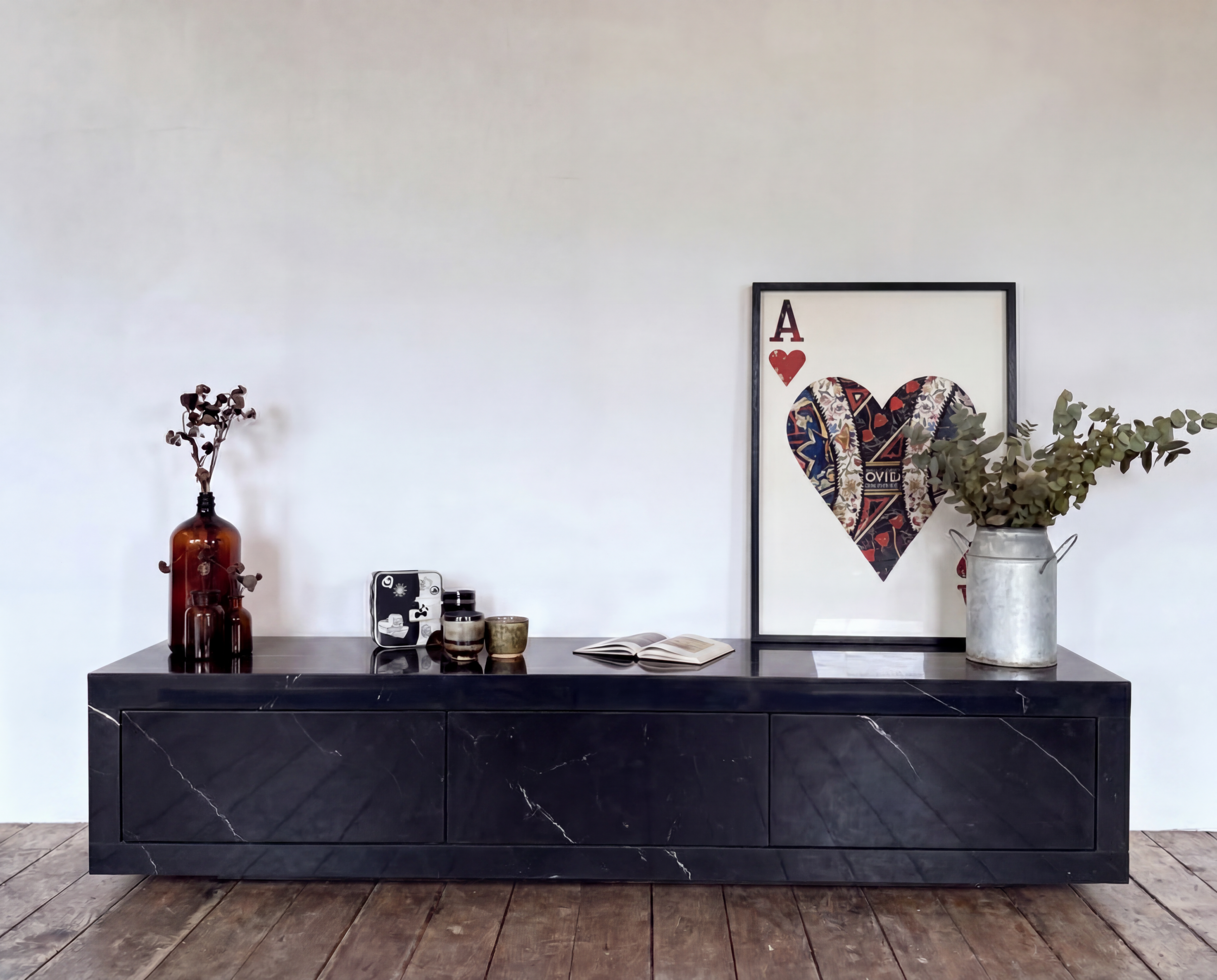
Nero Marquina Marble Creating A Sophisticated Living Room Focal Point
Combining Black Marble with Wood and Glass
Although black marble naturally attracts attention, its visual strength becomes even more effective when balanced with complementary materials. Architects frequently combine black marble with natural wood, expansive glass panels, and slim metal details to soften its appearance while preserving its luxurious character.
Warm wood introduces texture and comfort, preventing black marble from feeling visually heavy. At the same time, large glazed surfaces allow natural light to interact with the marble throughout the day, revealing subtle variations in color and veining that continually change under different lighting conditions.
This combination works particularly well in entrance halls, corridors, and open-plan living spaces, where multiple materials coexist within a single architectural composition. Rather than competing with one another, wood, glass, and black marble establish a carefully balanced dialogue that feels contemporary, elegant, and timeless.
The relationship between materials also improves spatial perception. While black marble provides visual depth, wood contributes warmth, and glass introduces openness. Together they create interiors that feel sophisticated without becoming overwhelming.
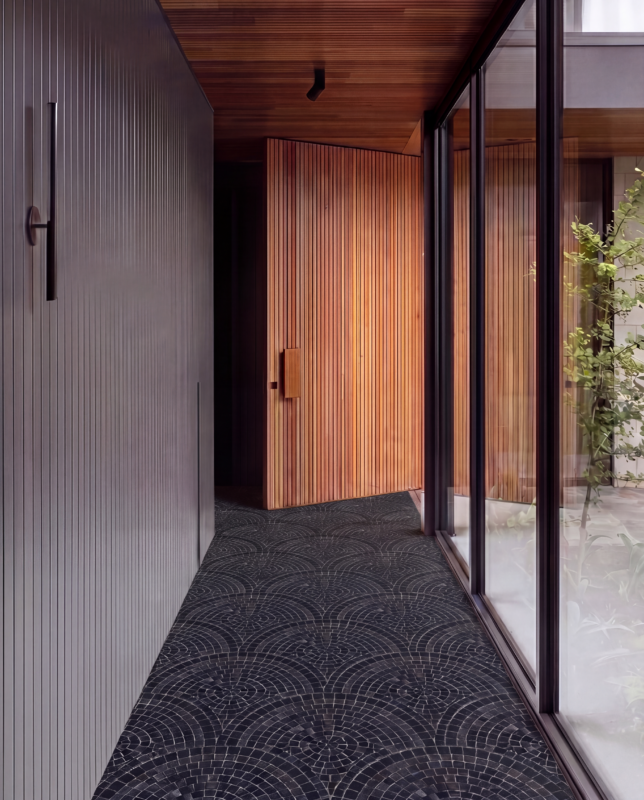
Nero Marquina Marble Mosaic Flooring Bringing Rhythm to Interior Spaces
Nero Marquina Marble Mosaic Floors with Rhythmic Surface Movement
Black marble is not limited to large slabs. When fabricated into mosaics, it becomes a highly expressive surface material capable of creating rhythm, detail, and architectural movement. Nero Marquina Marble mosaics are especially effective in entrance halls, corridors, boutique hotels, luxury retail spaces, and contemporary residential interiors where flooring is expected to become part of the design identity.
Fan patterns, herringbone layouts, circular mosaics, and custom waterjet designs allow Nero Marquina to create highly detailed surfaces while preserving the stone’s natural character. The white veining within the marble appears differently across every small piece, creating an organic variation that manufactured tiles cannot replicate.
Creating Design Continuity with Black Marble
Using black marble across multiple applications strengthens the relationship between different areas of an interior. A Nero Marquina TV unit in the living room can be visually connected to black marble mosaic flooring in the entrance or hallway, creating a consistent natural stone language throughout the project.
This approach prevents interiors from feeling visually fragmented. Instead of treating each surface separately, designers can use black marble in different formats—slabs, mosaics, furniture, and flooring—to create layered yet cohesive spaces.
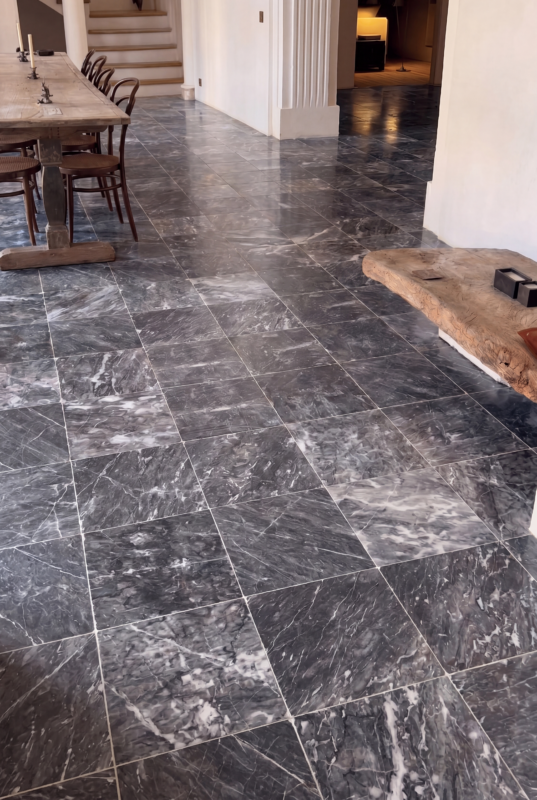
Uludağ Black Marble Creating Depth And Natural Movement In Flooring Design
Uludağ Black Marble for Natural and Characterful Flooring
Uludağ Black Marble offers a different interpretation of black natural stone compared to Nero Marquina. While Nero Marquina is known for its strong black-and-white contrast, Uludağ Black Marble features softer grey transitions, natural white veining, and a more fluid surface movement. This makes it especially suitable for large flooring applications where the goal is to create depth without making the space feel overly heavy.
In expansive interiors, Uludağ Black Marble provides a strong architectural foundation. Its natural patterns prevent large dark surfaces from appearing flat, while its grey undertones allow it to pair beautifully with light walls, wood furniture, neutral textiles, and metal accents. Polished finishes create a more reflective and dramatic appearance, while honed finishes offer a softer and more understated surface character.
The Lasting Role of Black Marble in Interior Architecture
Black marble continues to hold an important place in interior architecture because it offers a rare balance between visual strength and material versatility. Nero Marquina Marble and Uludağ Black Marble each bring a different expression to the same color family, allowing designers to create interiors with depth, contrast, and natural character across multiple applications.
When supported by the right lighting, surface finish, and material combinations, black marble can be used successfully in contemporary, industrial, minimalist, and classic interiors. From feature TV walls and mosaic floors to expansive natural stone flooring, it remains one of the most effective materials for defining strong architectural identities while preserving the authentic beauty of natural stone.
Black marble is more than a bold decorative choice; it is a natural stone that can define the entire atmosphere of an interior. Whether used through the sharp contrast of Nero Marquina Marble or the fluid movement of Uludağ Black Marble, it gives designers the ability to create spaces with depth, balance, and a strong architectural identity.
By applying black marble across feature walls, mosaic flooring, and large-format floor surfaces, interiors gain a cohesive material language that feels intentional rather than fragmented. Its natural veining, durable structure, and compatibility with wood, glass, metal, and neutral color palettes make black marble one of the most powerful materials for contemporary interior design.