
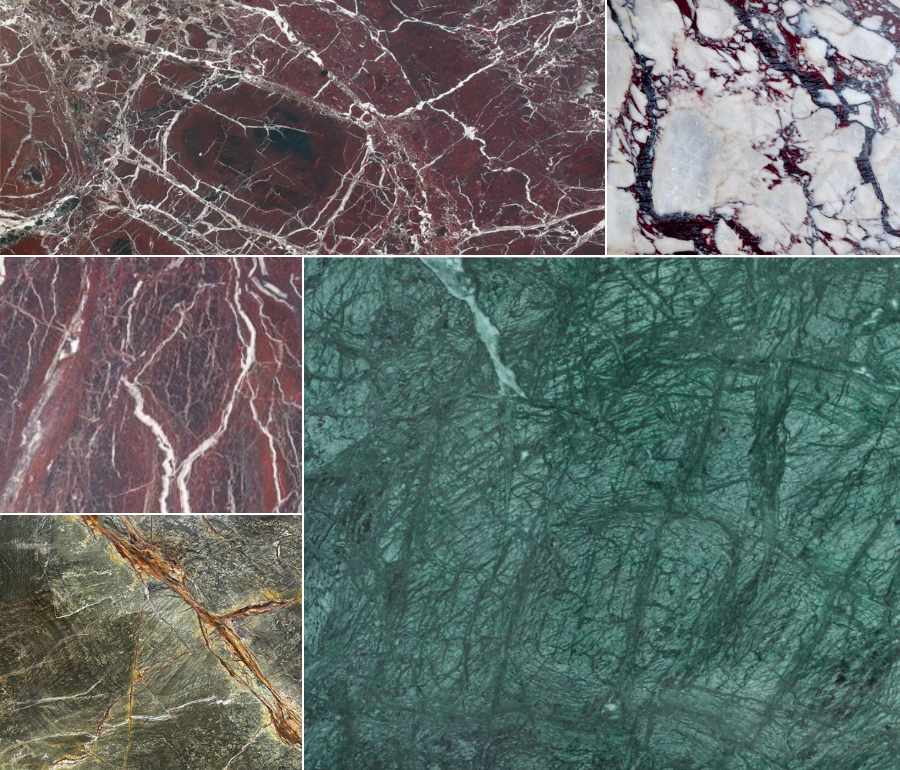
Neutral materials have long dominated interior design, but color is returning through surfaces that feel more permanent, natural, and architecturally meaningful. Instead of relying only on painted walls or decorative accessories, designers are increasingly using colored marble furniture to introduce depth, movement, and personality into residential interiors.
A richly veined dining table, sculptural console, marble coffee table, or custom vanity can become the visual center of a room. Because natural marble carries color and pattern within the stone itself, it creates a more layered effect than a flat decorative finish. Burgundy, green, purple, cream, brown, and white tones appear through mineral formations and veins that developed naturally over time.
This geological variation gives every piece of colored marble furniture an individual identity. Two tables produced from the same marble variety may share a general color palette, yet the direction, thickness, and distribution of their veins will never be completely identical. As a result, each finished piece has the character of a custom-made design rather than a standardized product.
Colored marble can also solve an important interior design challenge: creating a focal point without filling the room with unnecessary decoration. A single statement table or console can establish the color direction of an entire space. Furniture, artwork, lighting, rugs, and accessories can then be selected around that central piece.
The five applications in this guide demonstrate different ways to use color in natural stone furniture:
- Rosso Levanto Marble in a dining area
- Rain Forest Green Marble in a console design
- Calacatta Viola Marble in a living room
- Elazığ Vişne Marble in a bathroom
- Verde Guatemala Marble in a calm, neutral interior
Each stone creates a distinct atmosphere. Rosso Levanto introduces deep wine-red warmth, Rain Forest Green offers landscape-like movement, Calacatta Viola combines a light background with expressive purple veining, Elazığ Vişne creates an architectural burgundy statement, and Verde Guatemala brings darker botanical tones into the living space.
The key is not simply selecting the boldest marble. A successful interior depends on proportion, surrounding colors, lighting, furniture shape, surface finish, and the amount of visual detail used throughout the room.
Why Colored Marble Works as an Interior Focal Point
A focal point is the element that naturally attracts attention when someone enters a room. It helps organize the surrounding furniture and gives the interior a clear visual hierarchy.
In some spaces, the focal point may be a fireplace, artwork, architectural window, or feature wall. Colored marble furniture can perform the same role while also serving a practical purpose.
A marble dining table becomes the center of shared meals. A coffee table anchors the seating arrangement. A console defines an entrance or completes an empty wall. A custom vanity gives the bathroom an architectural identity.
Colored marble is particularly effective because it combines several visual qualities in one material:
- Natural color
- Distinctive veining
- Surface depth
- Mineral variation
- Sculptural weight
- Reflective or matte finishes
- Compatibility with custom forms
Manufactured patterns often repeat, whereas natural marble changes continuously across the surface. This movement encourages the eye to explore the furniture rather than perceive it as a single block of color.
However, strong marble should be supported by restraint. When the stone has intense color or expressive veining, surrounding materials usually work best when they are quieter. Neutral fabrics, controlled lighting, simple wall colors, and carefully selected accessories allow the marble to remain the principal design element.
Rosso Levanto Marble Dining Table: Deep Burgundy at the Center of the Room
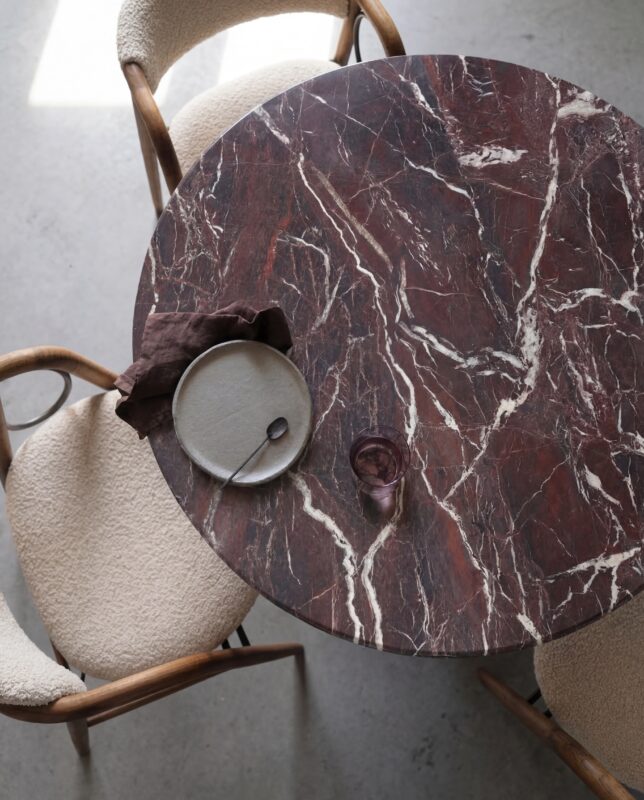
Rosso Levanto Marble Dining Table With Deep Burgundy Veining
Round Rosso Levanto marble dining table with cream upholstered chairs and warm wood details
Rosso Levanto Marble is immediately recognizable through its dark burgundy background and contrasting white veins. Some selections also include reddish-brown transitions, fine mineral lines, and areas that shift in tone depending on the lighting.
Used as a dining table, this stone establishes a rich and intimate atmosphere. Dining areas naturally function as social centers, so a strongly colored marble table can give the room an immediate sense of identity.
The round table shown in the image places the natural pattern at the center of the composition. Its curved outline softens the strong color of the marble, while the overhead perspective reveals how the white veins travel across the burgundy surface.
The surrounding materials are important. Cream-colored upholstered chairs create contrast without competing with the stone. Warm timber arms establish a visual connection with the red and brown undertones of the marble. Neutral tableware allows the surface to remain clearly visible.
Rosso Levanto works particularly well with:
- Cream and ivory upholstery
- Dark walnut
- Medium-toned oak
- Aged brass
- Bronze lighting
- Smoked glass
- Warm gray walls
- Beige wool rugs
- Deep brown textiles
- Muted burgundy accessories
The room does not need several additional red elements. Repeating the table color too frequently can make the composition feel overly coordinated. Instead, one or two subtle references—such as a dark burgundy cushion, artwork detail, or glass accessory—are usually enough to connect the marble with the rest of the interior.
Why the Round Form Works
Round dining tables encourage a more fluid seating arrangement because no guest occupies a visually dominant end position. The absence of corners also allows the stone pattern to be read as a continuous composition.
For colored marble, this softer geometry is especially useful. It balances the visual weight of a dark material and helps the furniture feel welcoming rather than severe.
A central pedestal or carefully positioned base can also improve legroom and allow the chairs to sit more evenly around the table.
Lighting Rosso Levanto Marble
Warm lighting can emphasize the wine-red and brown tones of Rosso Levanto. Very cool lighting may make the surface appear flatter or more purple than intended.
A pendant centered over the table should distribute light evenly across the stone. Excessive glare may conceal some of the finer veins, so the choice between polished and honed finishes should be evaluated together with the lighting plan.
Rain Forest Green Marble Console: A Landscape-Like Stone for Entryways and Living Areas
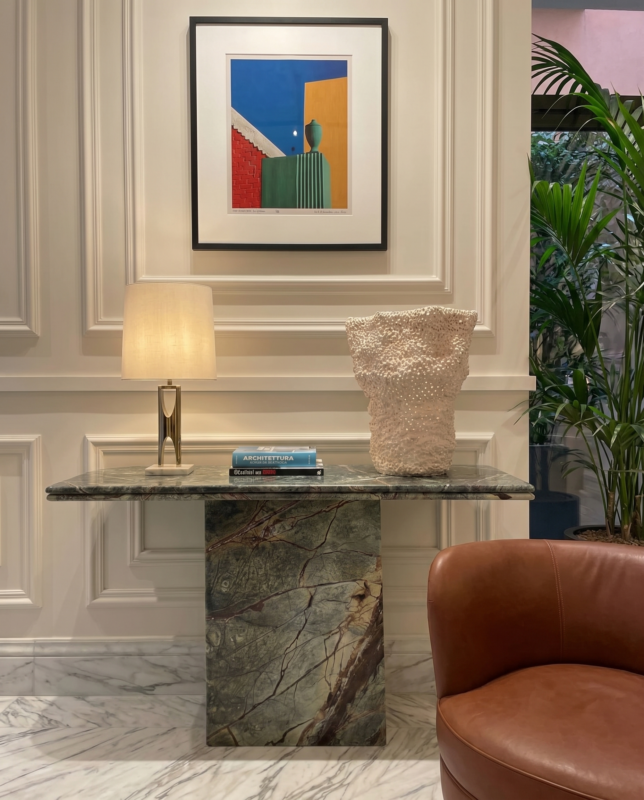
Rain Forest Green Marble Console With Sculptural Natural Veining
Rain Forest Green marble console styled with a lamp, artwork, books, and a sculptural vase
Rain Forest Green Marble has an expressive pattern that often resembles branches, roots, or aerial views of a natural landscape. Its green background can include brown, burgundy, beige, and darker mineral lines, giving the surface exceptional visual depth.
In console form, the stone functions almost like a framed geological artwork. The vertical support displays the marble pattern at eye level, while the top surface offers space for lighting, books, and decorative objects.
The console in the image is positioned against classic wall molding. This creates an effective contrast between the organic, unpredictable pattern of the stone and the controlled geometry of the architecture.
The surrounding tan leather chair also supports the warmer brown passages within the marble. Instead of matching the green directly, the interior draws from one of the secondary colors found inside the stone.
Rain Forest Green Marble works well in:
- Entrance halls
- Living rooms
- Dining rooms
- Boutique hotel lobbies
- Private offices
- Reading corners
- Art-focused interiors
- Transitional spaces
Styling a Strongly Patterned Marble Console
A console made from expressive marble does not require many accessories. The surface should remain partly visible so that the natural pattern can contribute to the decoration.
A restrained arrangement may include:
- One table lamp
- A small stack of books
- One sculptural vessel
- A framed artwork
- A natural branch arrangement
- A decorative bowl
Accessories should vary in height but remain visually controlled. Too many small objects can break up the stone pattern and reduce the console’s architectural effect.
Combining Rain Forest Green With Other Colors
Green marble does not need to be limited to botanical interiors. Rain Forest Green can also work with classic molding, leather, metal, and contemporary artwork.
Suitable color combinations include:
- Warm white
- Camel
- Cognac
- Dark brown
- Black
- Burgundy
- Soft gray
- Antique brass
- Muted blue
Its complexity makes it more flexible than a flat green surface. Designers can select one of the secondary colors in the marble and repeat it through seating, lighting, art, or textiles.
Calacatta Viola Marble Coffee Table: Artistic Veining in a Relaxed Living Room
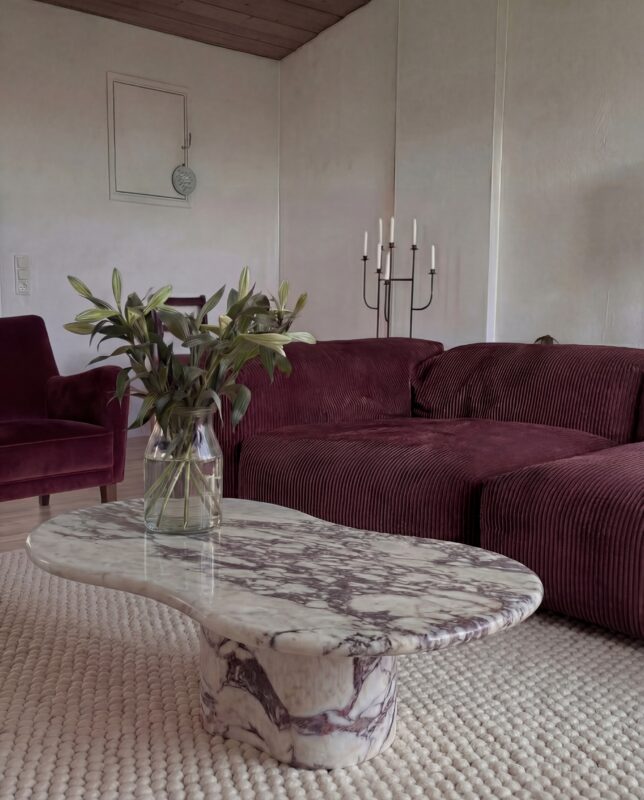
Calacatta Viola Marble Coffee Table With an Organic Sculptural Form
Organic Calacatta Viola marble coffee table placed in front of a burgundy curved sofa
Calacatta Viola Marble combines a creamy white background with purple, burgundy, gray, and sometimes warm beige veining. Its pattern can range from broad dramatic areas to finer networks of mineral movement.
Because of this contrast, the marble can appear both bright and expressive. It brings color into the room without covering the entire surface in a dark tone.
The coffee table shown in the image uses an organic, asymmetrical outline. This form supports the natural character of the marble and creates a softer relationship with the curved burgundy sofa behind it.
The table and sofa are connected through color, but they are not identical. The sofa uses a deeper, more uniform burgundy, while the marble introduces the same color family through irregular veins against a light background.
This is an effective method for using colored marble: select one important color from the stone and repeat it in a larger upholstered piece. The two materials then feel related without appearing overly matched.
Materials That Complement Calacatta Viola
Calacatta Viola can be combined with:
- Burgundy upholstery
- Ivory bouclé
- Cream wool
- Dark walnut
- Soft gray plaster
- Brushed brass
- Blackened metal
- Pale oak
- Natural woven rugs
- Clear or amber glass
A light rug beneath the table creates a clean background that makes the silhouette and veining easier to read. Dark flooring can also work, but additional contrast may be needed to keep the marble from visually merging with the surrounding surfaces.
The Coffee Table as Functional Sculpture
Coffee tables occupy a central position within the seating layout. Their height and location make them highly visible, so the design of the base is just as important as the tabletop.
In this example, the solid stone base continues the marble pattern vertically. The table therefore appears as a complete sculptural object rather than a stone slab placed on a separate frame.
When selecting a marble coffee table, consider:
- The height of the sofa seat
- Space between the table and seating
- The room’s main circulation route
- The visual weight of the base
- The number of accessories placed on top
- The relationship between the table shape and sofa form
A strong natural stone table usually looks more refined with a restrained arrangement of books, flowers, or one sculptural object.
Elazığ Vişne Marble Vanity: A Burgundy Architectural Feature in the Bathroom
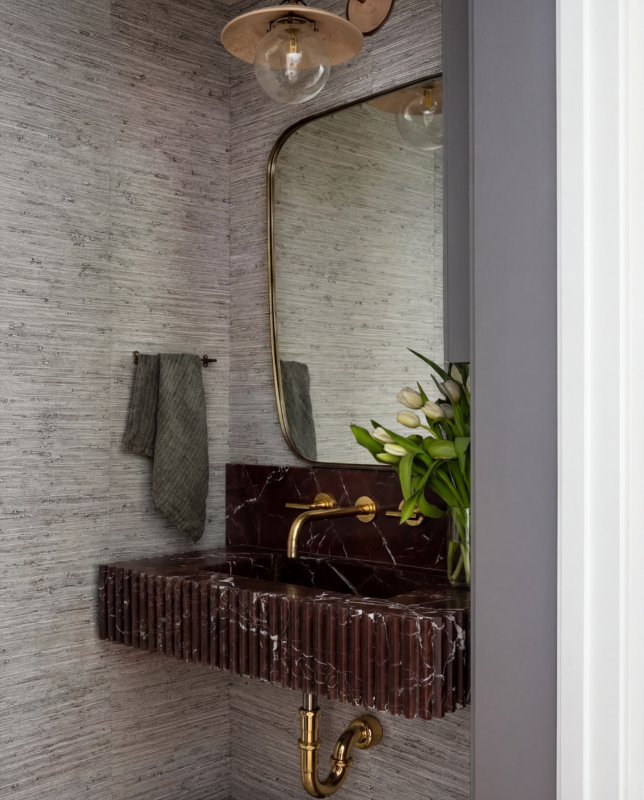
Elazığ Vişne Marble Vanity With Fluted Front Detailing
Elazığ Vişne marble vanity with a fluted front, backsplash, integrated basin, and brass fixtures
Colored marble is not limited to freestanding living room furniture. It can also define fixed architectural elements, especially in bathrooms where a vanity often becomes the principal design feature.
Elazığ Vişne Marble is a Turkish natural stone recognized for its deep burgundy-red background and contrasting white veins. Depending on the selected block, the surface may also show darker red zones, fine mineral lines, and subtle tonal movement.
The vanity in the image combines several functions within one marble composition:
- Countertop
- Integrated basin
- Backsplash
- Front panel
- Fluted architectural detail
This creates a continuous statement rather than a standard cabinet with a separate stone top. The fluting adds vertical rhythm and changes how light falls across the surface.
Brass fixtures introduce warmth and complement the red tones of the marble. The surrounding gray textured wall covering provides a quieter background, allowing the vanity to become the clear focal point.
Why Dark Marble Works in Bathrooms
Bathrooms are often smaller than living areas, but this does not mean they must rely exclusively on pale materials. A dark marble vanity can create depth when the surrounding walls, mirror, and lighting are carefully controlled.
The strongest results usually combine:
- A dark colored stone feature
- Lighter wall surfaces
- Warm metallic fixtures
- A large mirror
- Focused lighting
- Limited decorative accessories
Using the same intense marble across every wall may make a small bathroom feel heavy. Concentrating the stone in the vanity allows its color to remain impactful without overwhelming the room.
Practical Design Considerations
Natural marble bathroom furniture requires appropriate fabrication, installation, and care. The basin design, drainage, joints, supports, and plumbing access should all be coordinated before production.
The surface should be cleaned with products suitable for natural stone. Acidic cleaners, strong descalers, vinegar, and harsh abrasive products may damage calcium-based stones.
A suitable sealer may support maintenance, but it does not make the marble completely stain-proof or maintenance-free.
Verde Guatemala Marble Coffee Table: Green Stone in a Calm Neutral Interior
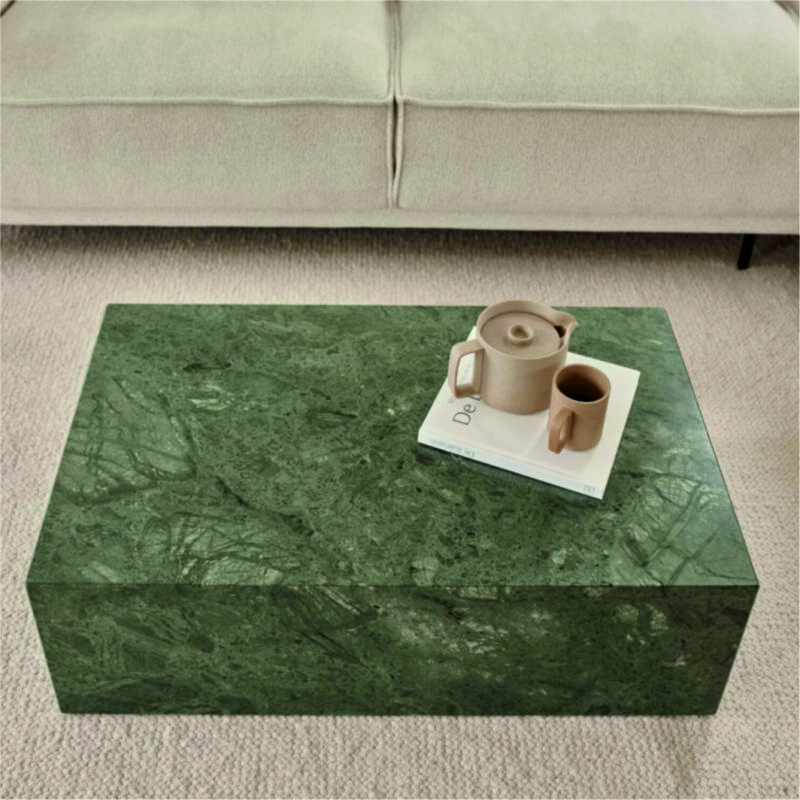
Verde Guatemala Marble Coffee Table in a Soft Neutral Living Room
Rectangular Verde Guatemala marble coffee table styled with beige furniture and ceramic tableware
Verde Guatemala Marble introduces deep green color while maintaining a calm connection to natural materials. Its surface may include lighter green movement, cloudy mineral areas, and fine white or darker veins.
The rectangular coffee table in the image has a simple monolithic form. Because the shape is restrained, attention remains on the depth and variation of the green marble.
The surrounding living room uses cream upholstery, a pale rug, and beige ceramic accessories. These neutral materials create a quiet setting in which the table can provide color without making the room feel overly decorative.
Green marble is especially effective in interiors that use:
- Cream
- Beige
- Taupe
- Off-white
- Light oak
- Walnut
- Terracotta
- Matte black
- Bronze
- Natural linen
The stone can also connect indoor spaces with exterior views, plants, and garden landscapes. However, an abundance of green accessories is not necessary. The marble itself can provide the botanical color reference.
Using a Monolithic Coffee Table
A solid rectangular form creates a strong architectural presence. It works particularly well with soft seating because the contrast between the geometric table and upholstered furniture produces visual balance.
Before selecting this form, designers should consider the overall weight, dimensions, transport route, floor protection, and placement. Stone furniture should be planned as part of the room layout rather than moved frequently like a lightweight table.
Minimal styling is often most appropriate. A ceramic set, book, or low decorative tray allows the surface pattern to remain visible.
How to Balance Colored Marble With the Rest of the Room
Colored marble is most successful when the room has a clear hierarchy. The stone should be supported by the surrounding materials rather than challenged by several equally strong patterns.
Use Neutral Areas Around the Marble
Cream, beige, warm white, gray, and natural wood create visual breathing space. They prevent the interior from becoming too dense and allow the marble color to appear more intentional.
Repeat Only One or Two Colors From the Stone
A sofa, artwork, curtain, or accessory can reference one of the marble’s secondary tones. Repeating every color within the stone may make the room look overly coordinated.
Limit Competing Patterns
Strong marble veins can conflict with patterned rugs, wallpaper, upholstery, and curtains. When the stone is highly expressive, quieter textiles usually create better balance.
Coordinate Metal Finishes
Brass and bronze often complement burgundy, red, and green marble. Black metal can create a sharper contemporary contrast, while chrome and nickel may suit cooler stone selections.
Consider Natural and Artificial Light
Light changes how colored marble is perceived. Direct sunlight may reveal warmer mineral tones, while cool artificial lighting can emphasize gray or purple passages.
Stone samples or full slabs should be reviewed under lighting conditions similar to those of the final room.
Choosing Between Polished and Honed Colored Marble
Surface finish has a major effect on color intensity and visual character.
Polished Finish
A polished surface reflects more light and typically makes colors appear deeper. It can emphasize white veins, burgundy backgrounds, and green mineral movement.
Polished marble may suit:
- Formal dining tables
- Statement consoles
- Decorative vanities
- Luxury living rooms
- Art-focused interiors
Honed Finish
A honed surface has a softer, matte appearance. It reduces glare and may create a calmer, more contemporary effect.
Honed marble may suit:
- Organic Modern interiors
- Relaxed living rooms
- Minimalist furniture
- Soft neutral schemes
- Areas with strong natural light
Neither finish is universally better. The choice should depend on the room’s lighting, desired atmosphere, maintenance expectations, and how the furniture will be used.
Common Mistakes When Decorating With Colored Marble
Selecting the Stone From a Small Sample Only
A small sample cannot show the complete scale and direction of the veining. For tables, consoles, and vanities, the full slab or a representative digital layout should be reviewed whenever possible.
Adding Too Many Strong Colors
The marble should not compete with several unrelated saturated colors. Use one primary statement stone and build the room around a controlled palette.
Ignoring Furniture Proportions
Dark or strongly patterned marble has greater visual weight. An oversized piece may dominate a small room, while a very small table may fail to create the intended focal point.
Covering the Surface With Accessories
Excessive decoration hides the natural pattern. Leave open areas so the stone can remain visible.
Forgetting Practical Use
Dining tables, vanities, and coffee tables have different functional needs. Edge profiles, surface finish, support, dimensions, and maintenance should correspond to the intended use.
Expecting Complete Uniformity
Veins, mineral markings, color transitions, and natural variations are part of genuine marble. They should be reviewed and accepted as material characteristics before production.
Caring for Colored Marble Furniture
Routine care helps preserve the surface and color of natural marble furniture.
For regular maintenance:
- Remove dust with a soft microfiber cloth.
- Use a pH-neutral cleaner formulated for natural stone.
- Clean spills promptly.
- Use coasters under glasses and bottles.
- Place mats beneath hot serving items.
- Avoid dragging metal or ceramic objects across the surface.
- Do not use vinegar, lemon, bleach, or harsh acidic cleaners.
- Follow professional recommendations for sealing where appropriate.
Wine, citrus, coffee, oils, and strongly colored liquids should not remain on the surface for extended periods. A sealer may provide more time for cleaning, but it does not make the stone completely resistant to staining or etching.
Frequently Asked Questions About Colored Marble Furniture
Is colored marble suitable for everyday furniture?
Yes. Colored marble can be used for dining tables, coffee tables, consoles, vanities, and pedestals when the stone, design, fabrication, and maintenance plan are appropriate.
Which colored marble works best in neutral interiors?
Rosso Levanto, Calacatta Viola, Verde Guatemala, and Rain Forest Green can all work well. The best choice depends on whether the room needs warm, cool, dark, or high-contrast color.
Can two colored marbles be used in the same room?
Yes, but they should have a clear relationship in color, scale, or application. In many interiors, one principal colored marble and one quieter supporting stone create a more balanced result.
Does dark marble make a room look smaller?
Not necessarily. A dark marble furniture piece can create depth without reducing the sense of space, especially when surrounded by lighter walls, fabrics, and flooring.
Is polished or honed marble better for furniture?
Both can be suitable. Polished marble provides stronger reflection and color depth, while honed marble offers a softer matte appearance.
Are natural veins considered defects?
No. Veins, mineral markings, and color variations are part of the geological character of natural marble. Structural conditions should be assessed separately by the manufacturer.
Can colored marble furniture be custom-made?
Yes. Dining tables, consoles, coffee tables, vanities, and pedestals can be produced in custom dimensions, forms, edge profiles, and surface finishes.
How should colored marble furniture be styled?
Use a limited number of accessories and select surrounding materials that support the stone’s palette. Neutral textiles, wood, metal, ceramics, and restrained artwork usually work well.
Does colored marble require special cleaning?
It should be cleaned with products suitable for natural stone. Acidic and abrasive cleaning products should be avoided.
Can colored marble work in minimalist interiors?
Yes. A simple furniture form made from expressive marble can become the only strong decorative element in an otherwise minimalist room.
Colored Marble as Functional Art
Colored marble furniture brings together geological character, craftsmanship, and practical design. Rosso Levanto can define a dining area through deep burgundy color. Rain Forest Green can turn a console into a landscape-like art piece. Calacatta Viola introduces expressive movement within a softer living room palette. Elazığ Vişne gives the bathroom an architectural identity, while Verde Guatemala brings a calm natural richness to neutral interiors.
The most effective designs do not rely on color alone. Furniture proportions, slab selection, vein placement, surface finish, lighting, and surrounding materials determine whether the marble becomes a balanced focal point or an overwhelming feature.
A well-designed colored marble piece does not need excessive decoration. Its natural variation already provides pattern, depth, and individuality. When supported by restrained materials and precise craftsmanship, it becomes both useful furniture and a permanent artistic element within the interior.
Efesus Home develops custom natural stone dining tables, coffee tables, consoles, vanities, pedestals, and project-specific furniture using selected marble and travertine varieties. Dimensions, forms, edge details, surface finishes, and stone selections can be adapted to the architectural requirements of residential, hospitality, and commercial interiors.