
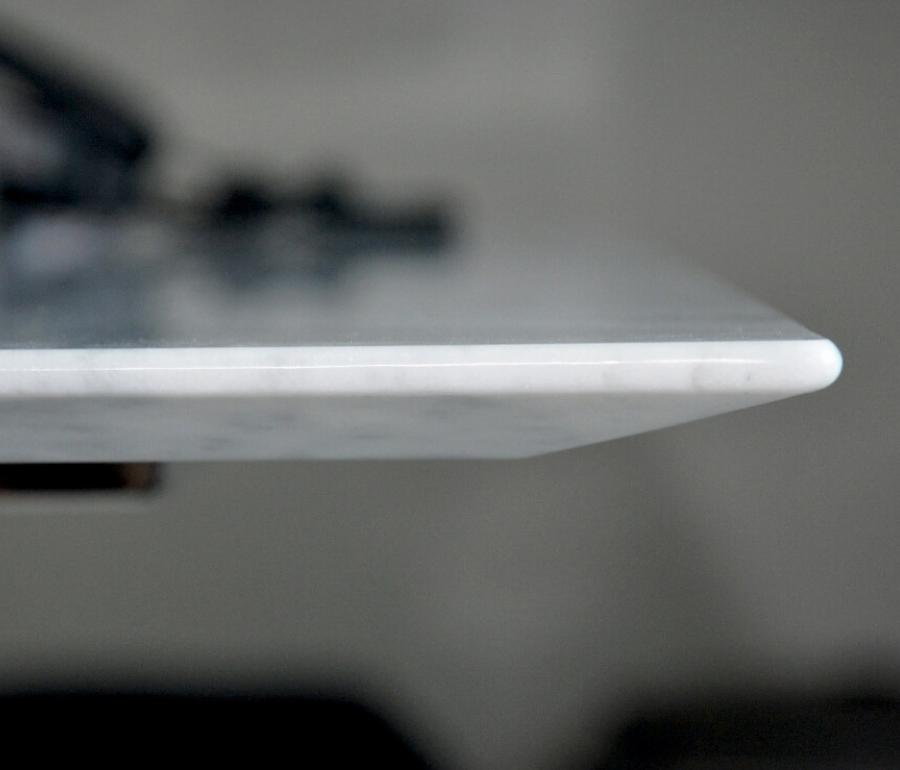
Marble dining table edge profiles influence much more than the appearance of a natural stone tabletop. The selected profile affects how the table interacts with light, how thick or refined the stone appears, and how comfortable the edge feels during daily use. Even when the same marble slab is used, changing the edge treatment can create an entirely different design character.
For this reason, selecting an edge profile is an important part of the marble dining table design process. The shape of the edge should complement the color, veining, thickness, dimensions, and supporting base of the table. It should also correspond with the architectural style of the room.
Clean bevels and subtle rounded edges are often preferred for modern interiors. More dimensional profiles, such as recessed or bullnose-style edges, can add visual depth and create a stronger decorative presence. However, the distinction between modern and classic applications is not always absolute. A carefully produced bullnose edge can suit a contemporary interior, while a minimal bevel can work well in a more traditional dining room.
The most suitable profile depends on the intended visual effect and practical requirements of the project. Among the most frequently used marble dining table edge profiles are recessed edges, 5 mm beveled edges, 3 mm rounded edges, and bullnose edge details. Each option offers a different balance between geometric definition, visual softness, and user comfort.
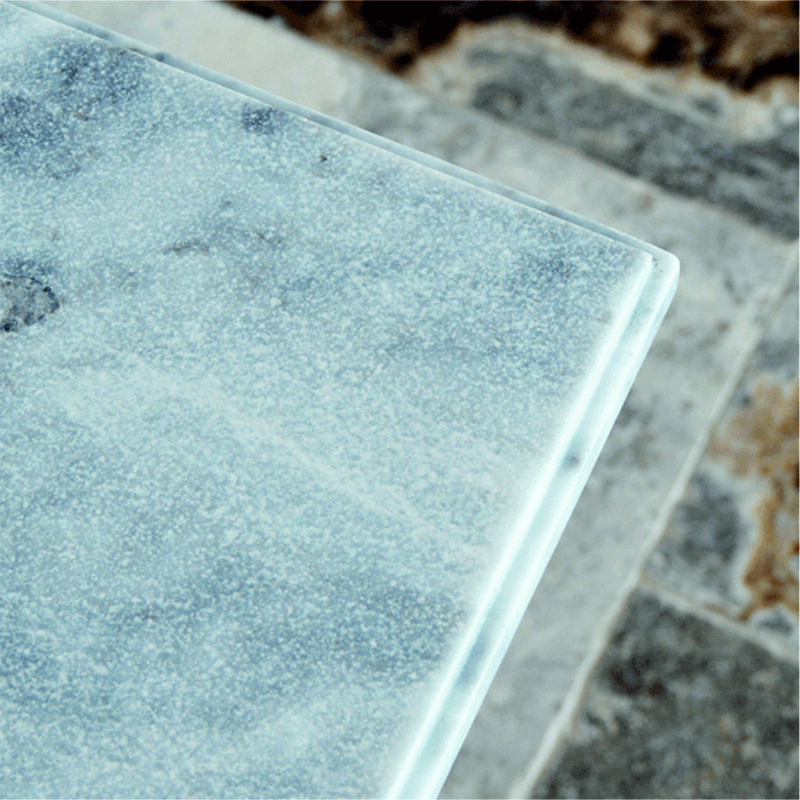
Afyon Gray Marble Dining Table, Grooved Edge Detail
Recessed Edge Detail on an Afyon Grey Marble Dining Table
A recessed edge detail creates a narrow shadow line around the perimeter of the tabletop. This application can make a solid marble surface appear lighter and more layered without hiding the natural character of the stone.
The profile is created by forming a controlled recessed section beneath or within the visible edge of the tabletop. As light reaches the narrow gap, a fine shadow appears around the table. This shadow visually separates the upper surface from the lower section and creates the impression of two carefully balanced layers.
Afyon Grey Marble works particularly well with this type of edge. Its soft gray background, natural mineral movement, and subtle tonal transitions support the architectural appearance of the recessed line. The profile does not compete with the stone’s natural pattern. Instead, it frames the tabletop and gives the overall form greater definition.
On large dining tables, a thick marble slab may sometimes appear visually heavy. A recessed edge helps reduce this effect by dividing the visible thickness into more refined sections. The table maintains the strength and presence associated with natural stone while gaining a more precise and contemporary silhouette.
The effect can become more noticeable under directional daylight or pendant lighting. As the angle of the light changes, the shadow line may appear deeper or softer. This interaction gives the table a subtle sense of dimension throughout the day.
Where Does a Recessed Edge Work Best?
Recessed edge profiles are especially suitable for contemporary residences, luxury apartments, boutique hotels, restaurants, and architectural showrooms. They coordinate well with simple stone bases, slim metal legs, and precisely formed wood supports.
The profile is also a strong option for interiors that use restrained materials and neutral colors. In these spaces, the edge detail provides architectural interest without introducing an overly decorative form.
When the tabletop and base are made from similar materials, the recessed line can create a clear visual separation between the components. When different materials are combined, it can act as a transition detail that keeps the design balanced.
The depth and location of the recess should be determined according to the tabletop thickness, overall dimensions, stone structure, and fabrication method. Careful planning is essential to achieve a consistent shadow line around the full perimeter of the table.
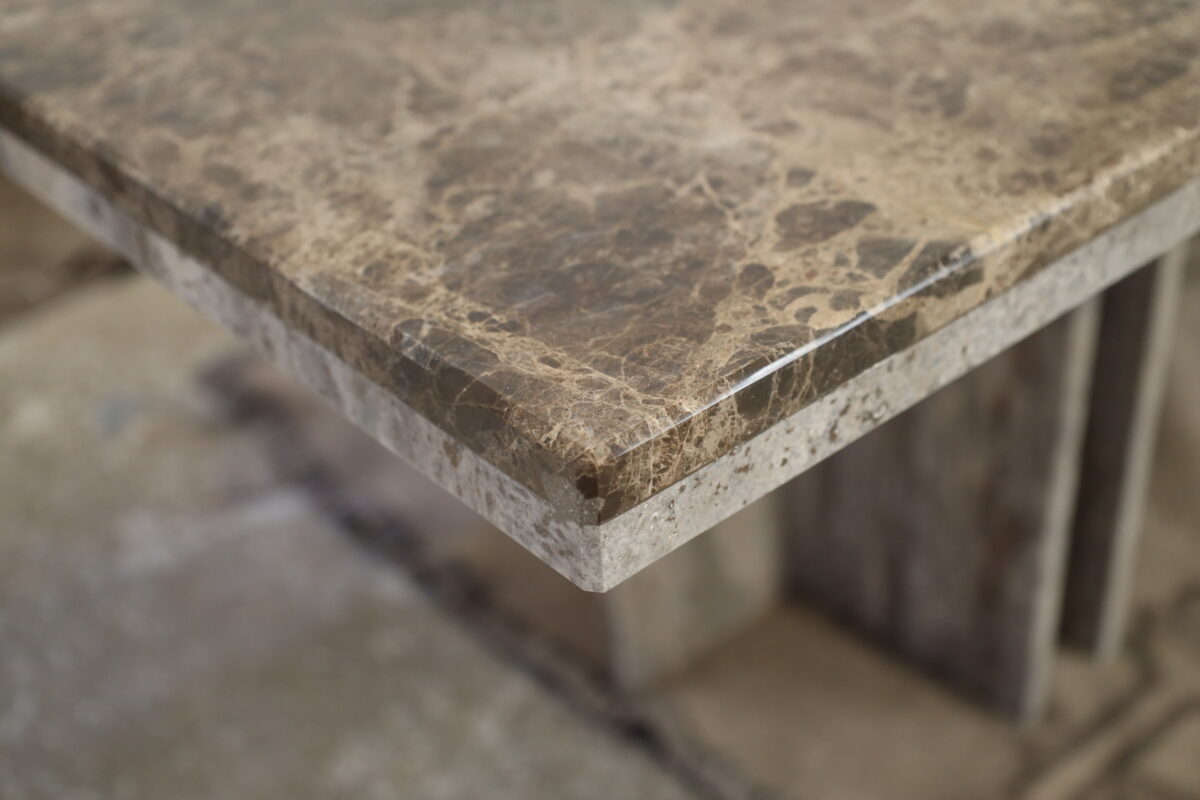
Dark Emperador and Silver Travertine Table with 5 mm Beveled Edge Detail
5 mm Beveled Edge for Clean and Modern Transitions
A beveled edge is created by removing the sharp 90-degree corner of the tabletop at a controlled angle. A 5 mm bevel is relatively subtle, but it can significantly improve the appearance and tactile quality of a marble dining table.
This profile maintains the clear geometry of the tabletop while softening the sharpest part of the edge. It is therefore one of the most versatile solutions for modern natural stone furniture.
In the featured design, the dark brown tones and light veining of Dark Emperador Marble create a strong contrast with the silver-gray structure of the Silver Travertine base. The 5 mm bevel completes this combination with a controlled transition around the upper surface.
Because the bevel exposes the marble at a different angle, it can reveal additional variation in the stone’s color and veining. Light reflects differently from the angled section than from the flat top surface. This creates a fine highlight around the tabletop without introducing a heavy decorative profile.
The bevel also helps the edge feel less severe during everyday use. Although it does not create the same softness as a rounded profile, it removes the most abrupt part of the corner while preserving the table’s crisp architectural lines.
Advantages of a 5 mm Beveled Edge
A 5 mm beveled edge is suitable for both thin and moderately thick marble tabletops. On a thinner top, it adds refinement without making the surface appear fragile. On a thicker top, it reduces the visual hardness of the edge while maintaining a substantial appearance.
The profile is particularly effective on rectangular and square dining tables, where straight lines and defined corners are central to the design. It can also be used on round and oval tables when a subtle transition is preferred over a fully rounded edge.
Beveled edges coordinate well with metal frames, monolithic stone pedestals, travertine bases, and contemporary wood structures. They are also suitable for designs that combine two natural stones, as the clean edge helps maintain visual order between contrasting colors and textures.
For consistent results, the bevel should be produced evenly along every side of the tabletop. Corners must be carefully finished so that the profile continues without visible interruptions. The final surface treatment—polished, honed, or another suitable finish—should also match the intended character of the table.
A polished bevel can reflect more light and give the table a sharper, more formal appearance. A honed bevel creates a softer and more understated transition, making it suitable for interiors with matte materials and natural textures.
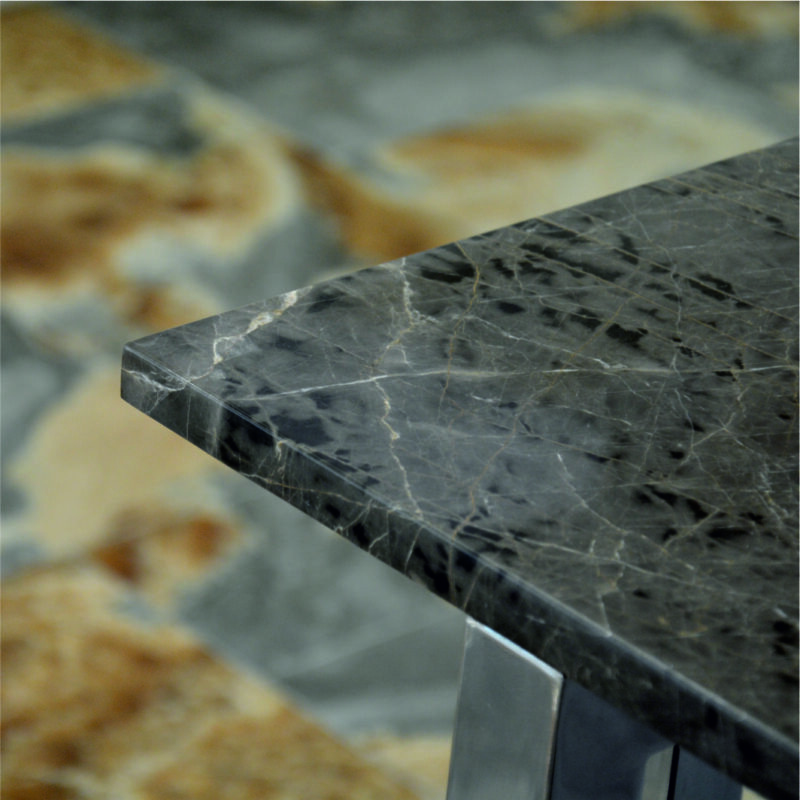
Bruno Perla Marble Dining Table with 3 mm Edge Rounding Detail
3 mm Rounded Edge Detail on a Bruno Perla Marble Dining Table
A 3 mm rounded edge is one of the most refined profile options used in contemporary marble furniture. Instead of dramatically changing the geometry of the tabletop, it gently softens the sharp corner while preserving the clean architectural appearance of the stone.
Although the radius is small, the effect is immediately noticeable during everyday use. The edge feels smoother to the touch without appearing overly rounded, making it a popular choice for luxury dining tables where elegance and comfort are equally important.
Bruno Perla Marble is particularly well suited to this profile. Its warm gray background, subtle brown undertones, and fine white veining continue naturally across the softly curved edge. Because there is no abrupt transition between the top and the side of the slab, the stone pattern appears more continuous and uninterrupted.
Another advantage of this profile is the way it interacts with light. Sharp corners often create strong highlights and deep shadows, while a gently rounded edge produces a smoother reflection. As natural daylight moves across the surface throughout the day, the marble reveals different tonal variations without creating harsh visual contrasts.
The 3 mm radius also helps the tabletop appear slimmer. Instead of emphasizing the slab thickness, the rounded transition visually reduces the edge while maintaining the strength associated with natural stone. This is particularly beneficial for larger dining tables, where achieving a balanced proportion is essential.
Why Choose a 3 mm Rounded Edge?
A lightly rounded profile offers an excellent balance between aesthetics and practicality. It maintains the clean lines expected in modern interiors while providing a more comfortable surface during everyday use.
The profile is especially suitable for open-plan kitchens, dining areas, contemporary apartments, luxury residences, and hospitality projects where refined detailing is appreciated. It complements slim steel bases, sculptural stone supports, and carefully crafted wood frames without overpowering the overall design.
Another important benefit is its timeless character. Unlike highly decorative profiles that may reflect a specific design trend, a subtle rounded edge remains appropriate across a wide range of architectural styles. Whether combined with minimalist interiors or warmer contemporary spaces, it creates a sophisticated finish that does not distract from the natural beauty of the marble itself.
When fabricated with precision, the 3 mm radius becomes almost invisible from a distance while noticeably improving the tactile quality of the tabletop. This understated refinement is one of the reasons it has become a preferred detail in premium natural stone furniture.
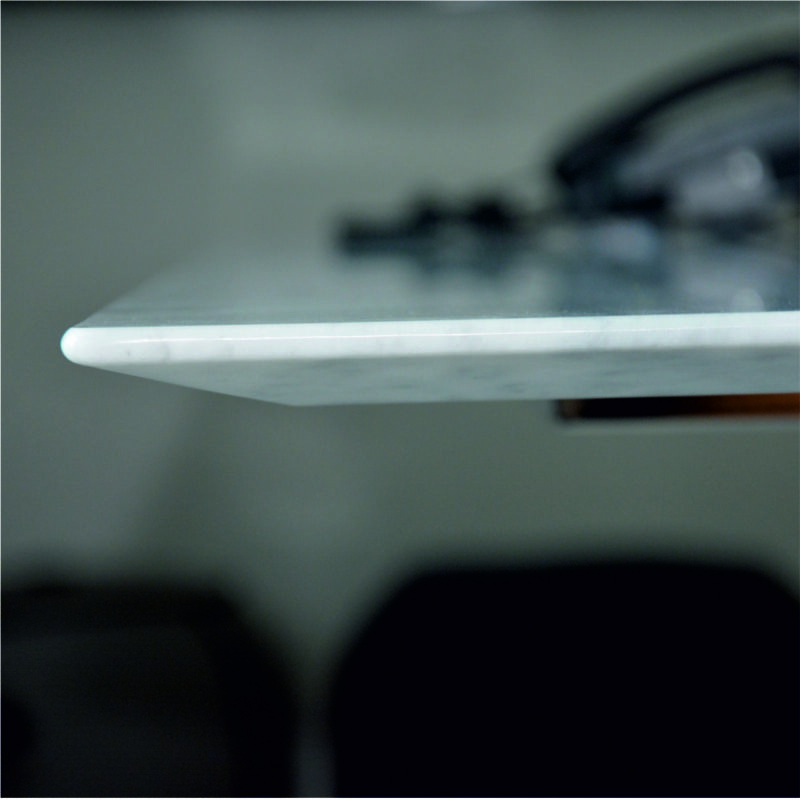
Afyon White Arcobelano Marble Dining Table with Ship’s Bow Edge Detail
Bullnose Edge Detail on an Afyon White Arcobelano Marble Dining Table
Among the various marble dining table edge profiles, the bullnose edge remains one of the most recognizable and timeless options. Unlike a bevel or a slight radius, the bullnose creates a continuous curved transition from the top surface to the underside of the tabletop, giving the stone a softer and more sculptural appearance.
Afyon White Arcobelano Marble highlights this profile beautifully. Its bright white background and elegant gray veining continue naturally around the curved edge, allowing the marble pattern to flow without interruption. The result is a tabletop that appears carefully shaped rather than simply cut.
The bullnose profile also changes how light interacts with the stone. Instead of producing sharp reflections along a defined corner, the continuous curve distributes light gradually across the edge. This softer reflection enhances the depth of the marble and creates a more welcoming visual impression.
In addition to its aesthetic qualities, the bullnose edge provides a comfortable user experience. The absence of sharp corners makes everyday interaction with the table feel smoother, while the rounded form contributes to a refined and luxurious appearance.
Where Is a Bullnose Edge Most Suitable?
Bullnose edges are commonly selected for luxury dining rooms, boutique hospitality projects, executive meeting spaces, and custom residential interiors. They pair equally well with traditional architectural elements and contemporary natural stone furniture.
This versatility comes from the balanced nature of the profile. While the curved edge introduces softness, it does not overwhelm the geometry of the tabletop. Instead, it complements the natural movement of the marble and creates a harmonious relationship between the surface and the supporting base.
The profile is particularly effective on thicker marble slabs because the full curve can be appreciated from multiple viewing angles. It also works beautifully with monolithic stone bases, fluted pedestal designs, and handcrafted wooden supports.
A well-produced bullnose edge demonstrates the precision of natural stone craftsmanship. The curvature should remain consistent along every side of the tabletop so that the marble maintains a balanced appearance from every direction.
How to Choose the Right Marble Dining Table Edge Profile
Choosing the right marble dining table edge profile involves more than selecting a decorative detail. The profile should complement the stone itself, the overall proportions of the table, and the architectural language of the interior.
A recessed edge emphasizes depth and visual layering, making thick marble slabs appear lighter and more sophisticated. A 5 mm beveled edge preserves crisp geometry while introducing a subtle transition that softens the tabletop without reducing its contemporary character.
A 3 mm rounded edge provides a delicate balance between clean lines and everyday comfort. It retains the minimalist appearance of the table while creating a smoother tactile experience. The bullnose profile, by contrast, introduces a continuous curved surface that offers a softer, more sculptural presence while remaining timeless in both modern and classic interiors.
The dimensions of the table should also influence the profile selection. Larger tabletops often benefit from profiles that visually reduce thickness, while compact tables may use cleaner geometric edges to maintain proportional balance.
The marble itself is another important consideration. Stones with dramatic veining can benefit from profiles that allow the natural pattern to continue smoothly around the edge. More uniform marbles may highlight architectural precision through beveled or recessed details.
Lighting should never be overlooked. Every edge profile reflects daylight differently. Sharp profiles create stronger highlights and shadows, while rounded transitions distribute light more evenly across the surface. This subtle difference can significantly influence how the marble is perceived throughout the day.
Ultimately, marble dining table edge profiles are not merely finishing details. They define how the tabletop feels, how its thickness is perceived, how the natural stone interacts with light, and how the furniture contributes to the surrounding architecture. Whether the design calls for the refined shadow line of a recessed edge, the precision of a 5 mm bevel, the subtle softness of a 3 mm rounded edge, or the sculptural elegance of a bullnose profile, the right choice enhances both the visual character and the long-term functionality of the table. A carefully selected edge profile allows the natural beauty of marble to remain the focal point while elevating the overall craftsmanship of the finished piece.