
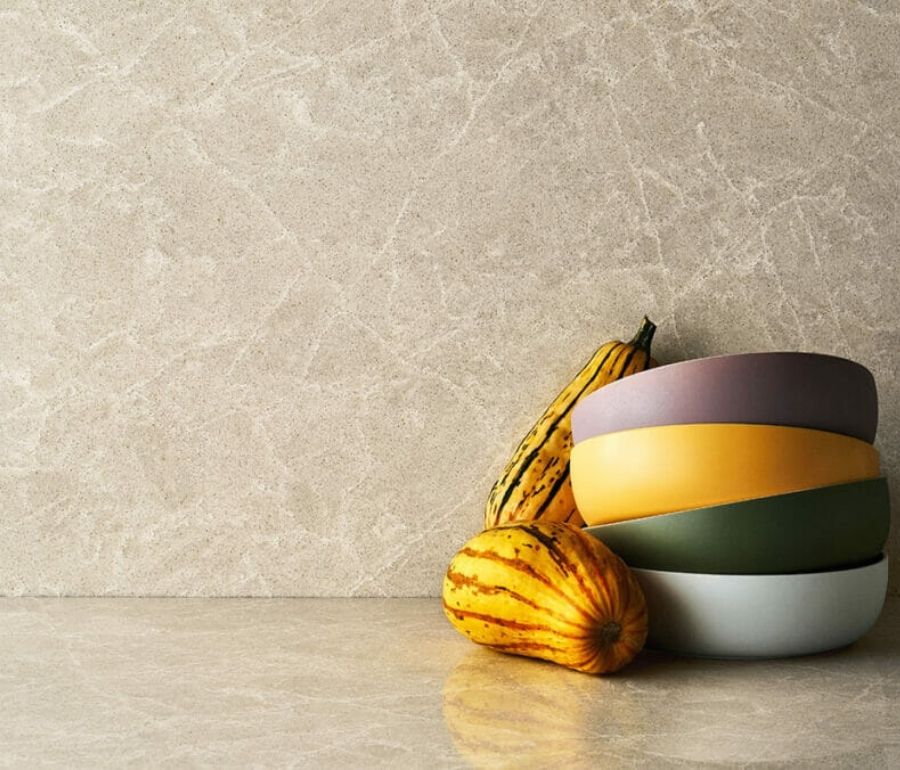
Choosing the right countertop is one of the most important decisions in kitchen design, both in terms of aesthetics and functionality. Quartz and granite countertops, two of the most commonly preferred options today, stand out with their distinct characteristics. Selecting the right material ensures that the kitchen remains both durable and practical over time.
When comparing quartz and granite countertops, it is important to consider not only appearance but also durability, maintenance, hygiene, and everyday usage habits. This comparison clearly highlights the key differences between the two materials.
What Is a Quartz Countertop? Features and Structure
Quartz countertops are engineered surfaces made by combining natural quartz minerals with resins and pigments. This composition results in a homogeneous, smooth, and non-porous surface.
The non-porous structure prevents liquid absorption and provides strong resistance against staining. For this reason, quartz countertops offer a hygienic advantage, especially in high-use areas such as kitchens.
Additionally, the wide range of color and pattern options allows quartz to easily adapt to different design styles.
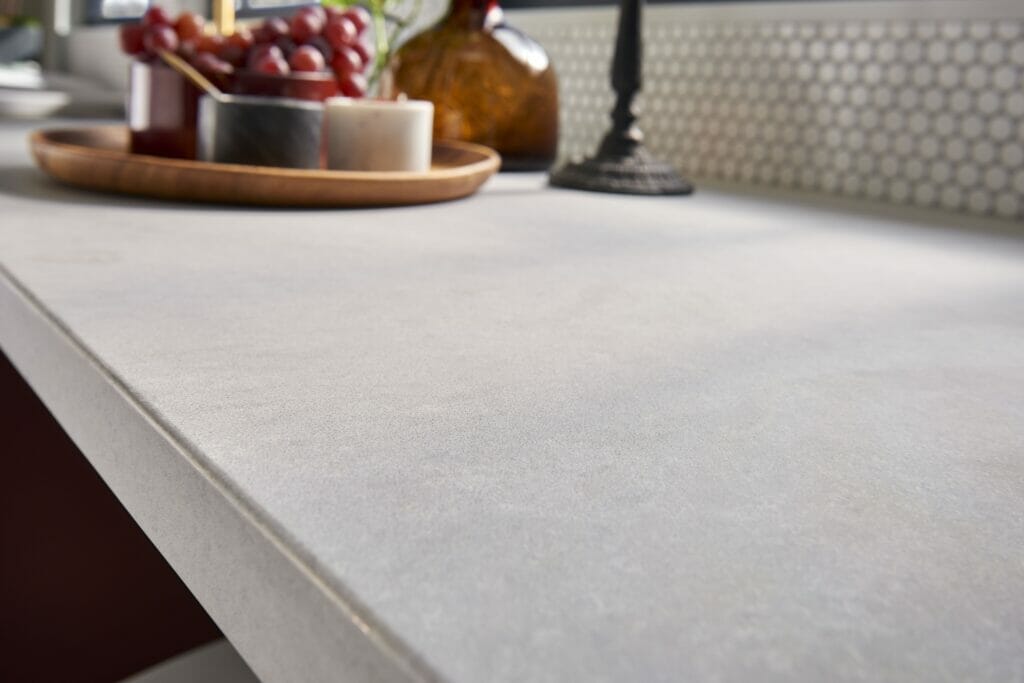
Quartz Countertop
What Is a Granite Countertop? Natural Structure and Durability
Granite is a completely natural stone formed from igneous rock under high pressure. Its hard structure makes it highly resistant to scratches and high temperatures.
Each granite slab has its own unique veining and color variation, which ensures that every countertop has a distinctive appearance.
Due to its natural composition, granite may contain pores. For this reason, periodic sealing treatments are recommended to maintain its performance.
Key Differences Between Quartz and Granite Countertops
The primary difference between quartz and granite countertops lies in their production. Quartz is an engineered material, while granite is entirely natural.
Quartz countertops offer a more uniform and controlled appearance, whereas granite provides a more organic and unique aesthetic.
In terms of durability, both materials are strong. However, granite is more resistant to high heat, while quartz performs better in terms of stain resistance and liquid absorption.
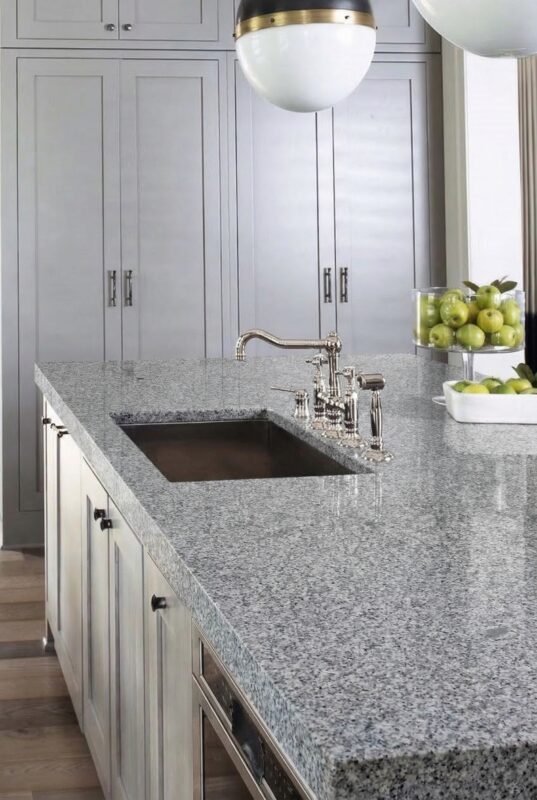
Granite Countertop
Which Is More Suitable for Kitchen Use?
In kitchens with heavy daily use, quartz countertops stand out in terms of practicality. Their non-porous surface makes cleaning easier and reduces maintenance requirements.
Granite countertops, on the other hand, are a strong choice for those who prefer natural stone. They perform particularly well in areas exposed to high temperatures.
The best choice ultimately depends on individual usage habits and priorities.
Evaluation in Terms of Aesthetics and Design
Quartz countertops are well suited for modern and minimalist designs. Their consistent colors and controlled patterns create a clean and refined look.
Granite countertops, with their natural veining, offer a more dynamic and expressive surface. They are especially suitable for classic or nature-inspired design styles.
Both materials can become a strong design element when combined with the right materials and finishes.
Maintenance and Long-Term Performance
Quartz countertops require minimal maintenance beyond regular cleaning. Their non-porous structure helps them remain clean and durable over time.
Granite countertops, however, benefit from periodic sealing treatments. This helps preserve their surface performance for many years.
With proper use and maintenance, both materials provide long-lasting solutions.
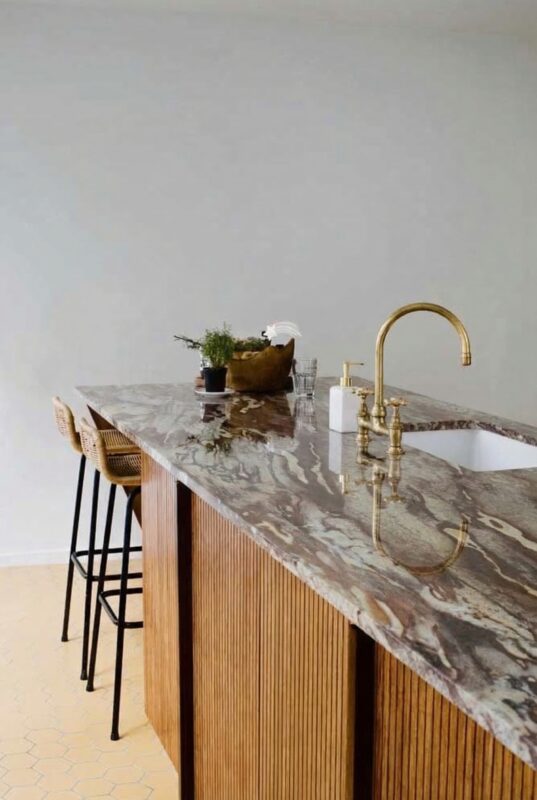
Granite Countertop
Conclusion: Quartz or Granite?
Quartz and granite countertops are both strong materials with different advantages. Quartz offers ease of use and low maintenance, while granite stands out with its natural structure and high heat resistance.
The best choice for a kitchen depends on usage habits and aesthetic expectations. Selecting the right material ensures that the kitchen remains both functional and durable over time.