
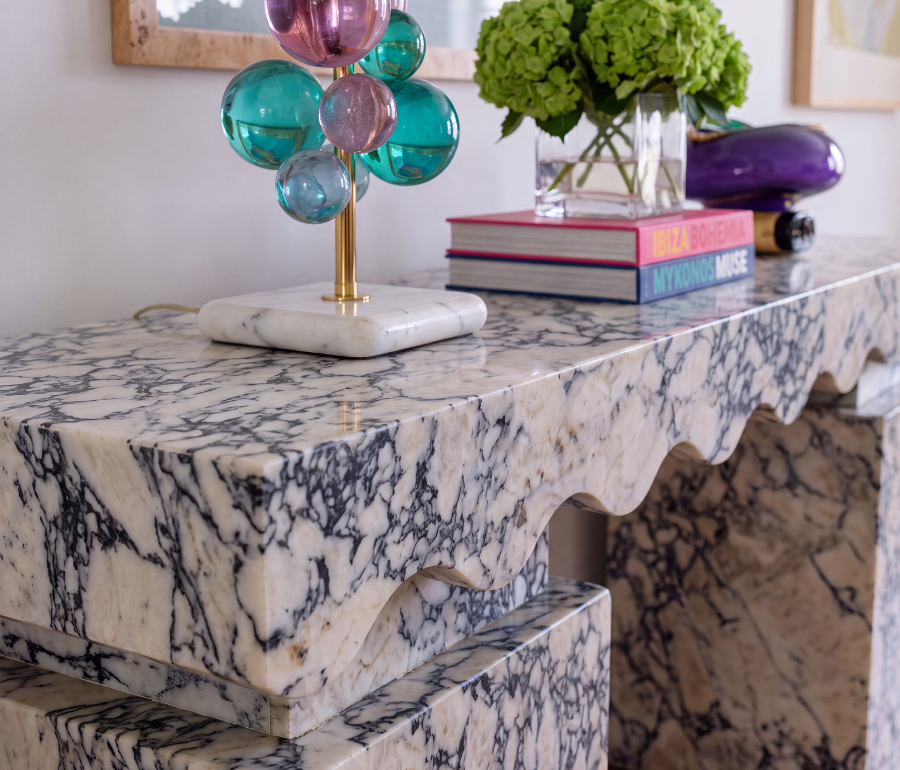
Natural stone furniture has evolved far beyond being a luxury statement. Today, marble, travertine, limestone, quartzite, and onyx are increasingly chosen by architects, interior designers, and homeowners who value authenticity, craftsmanship, and timeless design. Unlike mass-produced furniture made from synthetic materials, every natural stone piece carries unique geological characteristics that cannot be replicated.
Whether it is a sculptural marble console in an entryway, a travertine dining table in an open-plan kitchen, or a handcrafted coffee table in a contemporary living room, natural stone introduces permanence and individuality into interior spaces. Each slab features one-of-a-kind veining, mineral formations, and color variations created over millions of years, ensuring that no two furniture pieces are ever identical.
However, choosing natural stone furniture involves much more than selecting a beautiful material. The type of stone, fabrication quality, surface finish, edge profile, proportions, and intended use all influence both aesthetics and long-term performance. A thoughtfully selected piece can become the centerpiece of a room for decades, while an uninformed purchase may fail to meet functional or design expectations.
In this guide, we explore the seven most important considerations before investing in natural stone furniture, helping you select pieces that combine beauty, durability, and lasting architectural value.
1. Choose the Right Natural Stone for Your Interior Style
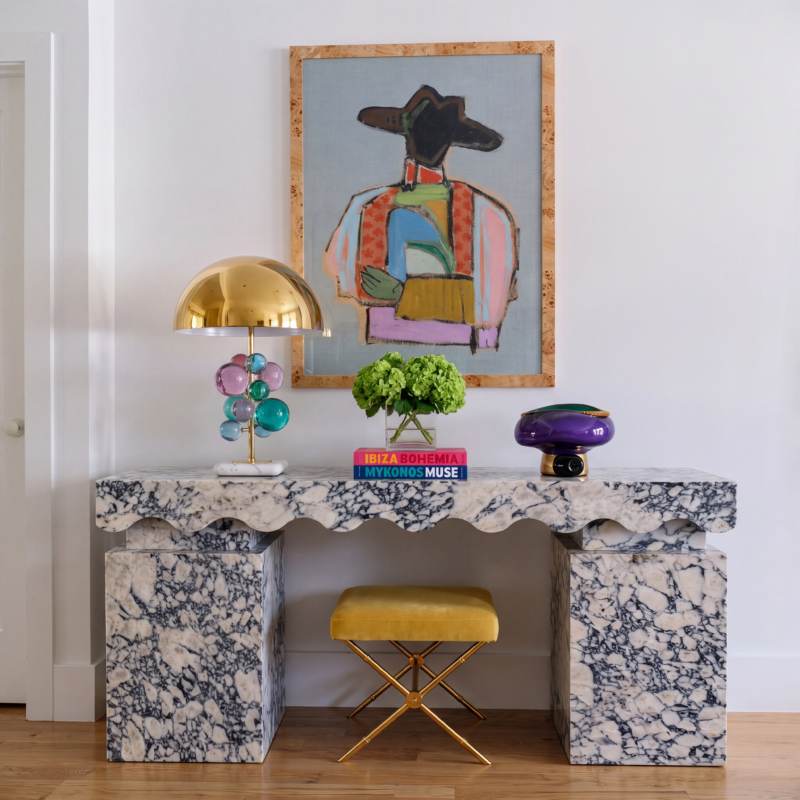
Calacatta Marble Console Table
The first and most important decision is selecting the right stone itself. Every natural stone has its own personality, making it suitable for different interior concepts and architectural styles.
Calacatta marble is known for its bold grey veining against a bright white background, making it ideal for elegant contemporary interiors. Rosso Levanto introduces dramatic burgundy tones with striking white veins, creating a luxurious focal point in darker spaces. Travertine offers softer movement and earthy textures that perfectly complement minimalist, Mediterranean, Scandinavian, and organic-modern interiors.
When selecting furniture, consider not only the stone’s appearance but also how it interacts with surrounding materials such as wood, brass, black steel, linen, leather, or textured plaster. The goal is to create harmony rather than competition between finishes.
Natural stone should enhance the architectural language of the room instead of overpowering it. This balance is what separates timeless interiors from trend-driven designs.
A carefully selected console table, dining table, or pedestal becomes more than furniture—it becomes an architectural feature integrated into the overall design concept.
2. Consider How the Furniture Will Be Used
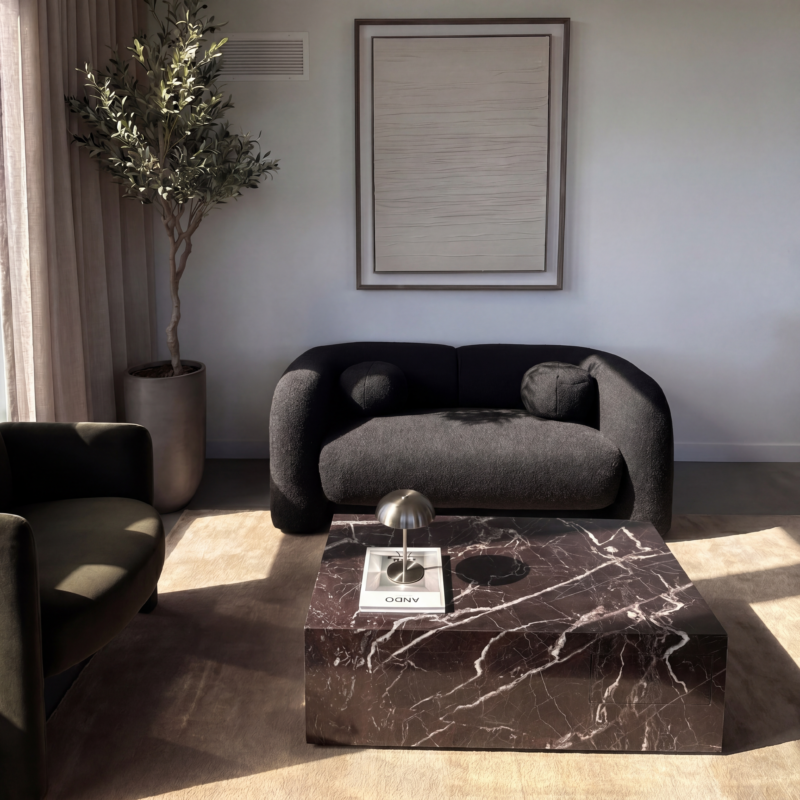
Rosso Levanto Marble Coffee Table
Beautiful furniture should also be practical. Before selecting any natural stone piece, think carefully about where it will be placed and how it will be used every day.
A coffee table experiences different demands than a dining table or console. Coffee tables often hold drinks, books, decorative objects, and everyday accessories, making scratch resistance, stability, and easy maintenance important considerations. Console tables, on the other hand, are more architectural and decorative, allowing designers to focus on sculptural forms and statement materials.
For frequently used furniture, the fabrication quality is just as important as the stone itself. Reinforced construction, accurate miters, precision cutting, and professional assembly ensure long-term durability.
Rather than choosing furniture solely for its appearance, prioritize pieces that successfully combine aesthetics with functionality.
3. Pay Attention to Stone Thickness and Edge Profiles
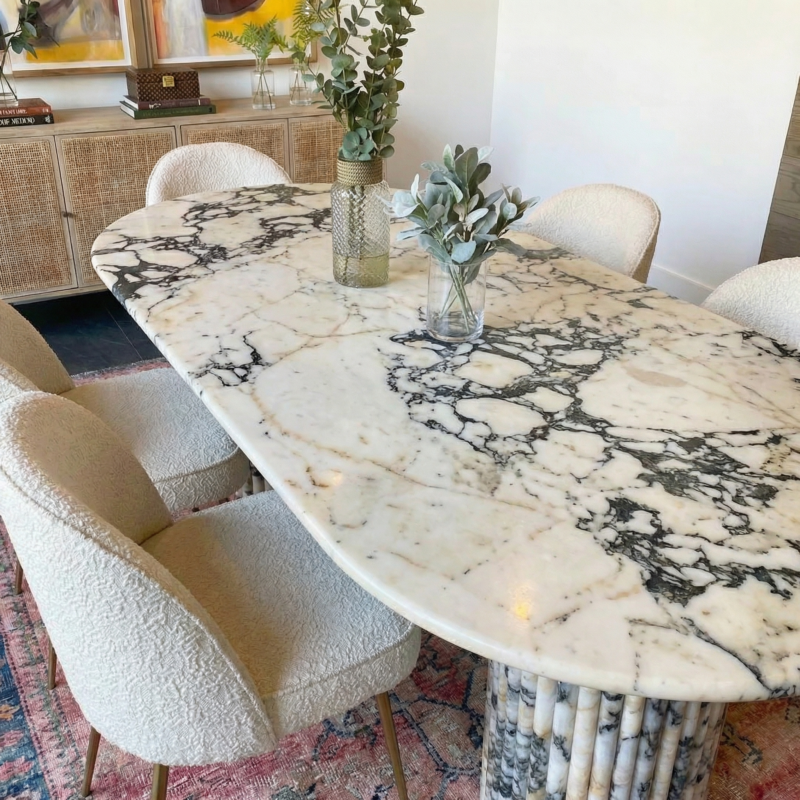
The proportions of a stone table dramatically influence its overall appearance. While many people focus only on color and veining, designers often pay even closer attention to thickness and edge detailing.
Slim tabletops create a refined contemporary look, while thicker slabs communicate strength and architectural presence. Edge profiles further define the character of the furniture.
Straight edges produce a clean minimalist appearance.
Rounded edges soften the design and create a more welcoming atmosphere.
Chamfered edges add subtle sophistication while reducing visual weight.
Custom profiles can transform a simple stone slab into a distinctive designer piece.
These seemingly small fabrication details often determine whether furniture looks standard or custom-made.
4. Round or Oval Tables Create Better Flow
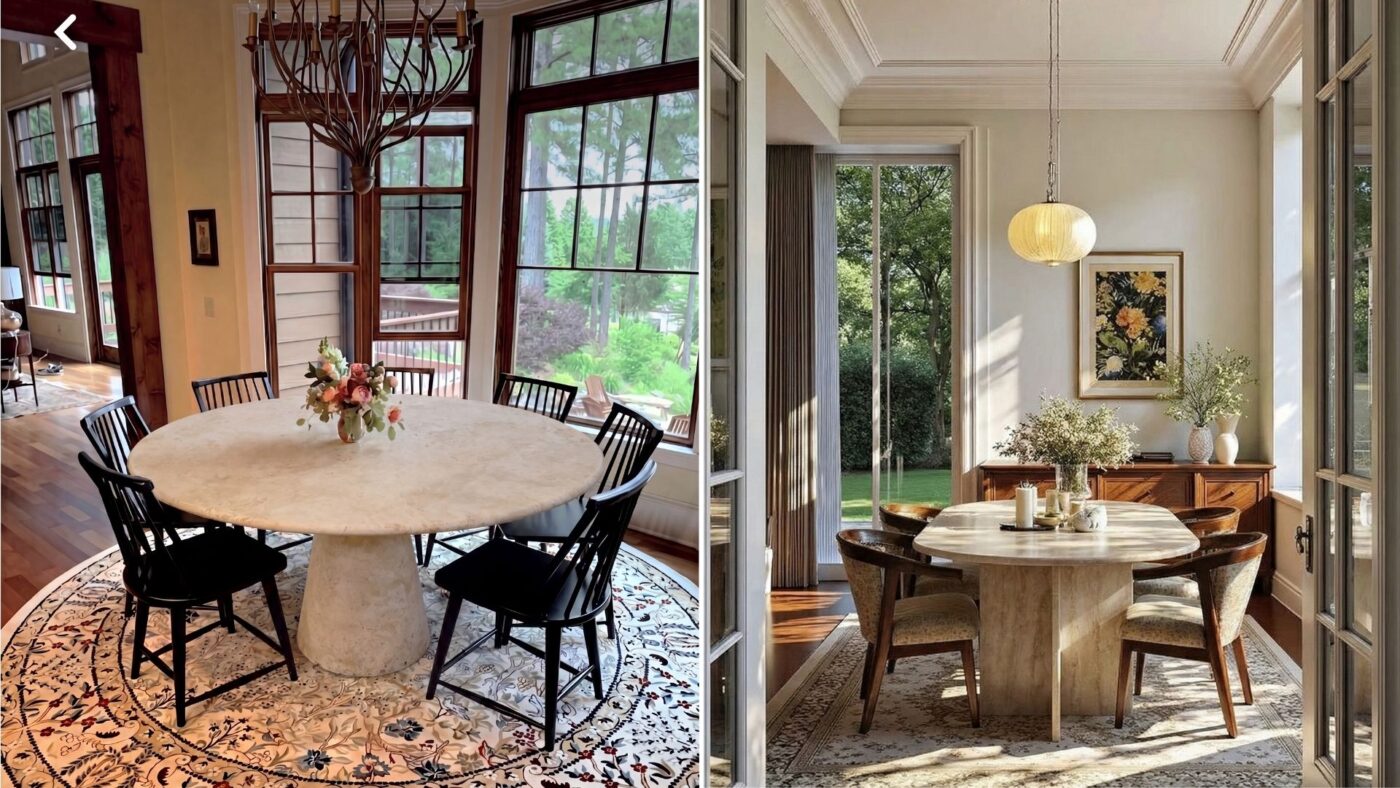
Light Travertine Round & Oval Dining Tables
The shape of a dining table affects not only aesthetics but also how people interact within the space.
Round and oval natural stone tables encourage conversation by allowing everyone to face one another equally. Their soft geometry also improves circulation, making them especially suitable for compact dining areas and open-plan homes.
Travertine is particularly effective for these organic forms because its gentle tonal variations and natural movement create warmth without overwhelming the room.
Unlike rectangular tables with sharp corners, curved silhouettes introduce softness that balances modern architecture, wood flooring, textured fabrics, and neutral palettes.
For designers seeking interiors that feel welcoming rather than formal, round and oval stone tables remain among the most versatile choices.
5. The Base Design Is Just as Important as the Stone
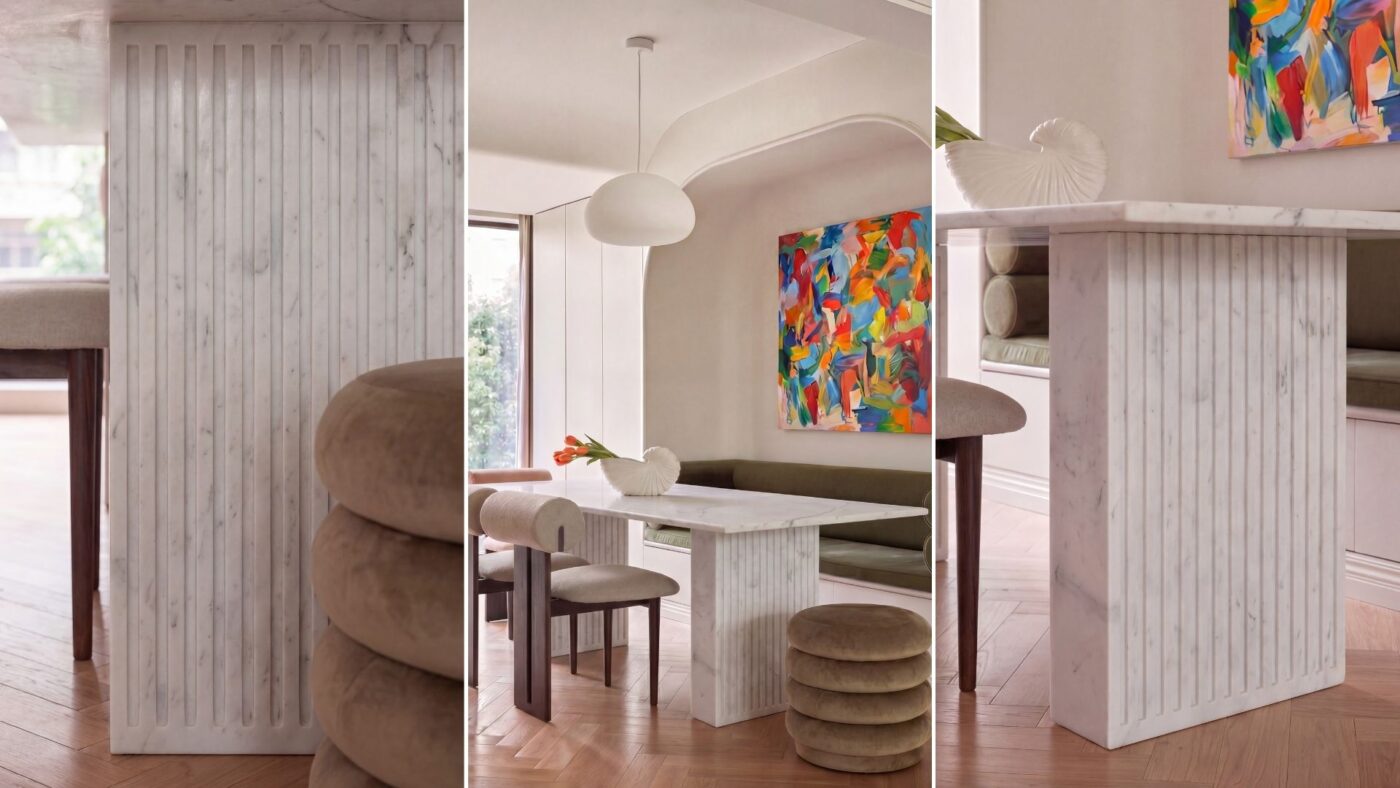
Muğla Calacatta Marble Table with Sculptural Base
Many people focus exclusively on the tabletop, but the base often determines the overall visual impact of the furniture.
A well-designed stone base creates continuity while emphasizing craftsmanship. Sculptural pedestal bases highlight the beauty of natural stone from every angle and provide excellent legroom for dining tables.
Whether geometric, cylindrical, fluted, or monolithic, the base should feel visually balanced with the proportions of the tabletop.
When both elements are designed together as a single composition, the furniture becomes an architectural object rather than simply a functional piece.
6. Surface Finish Affects Both Appearance and Performance
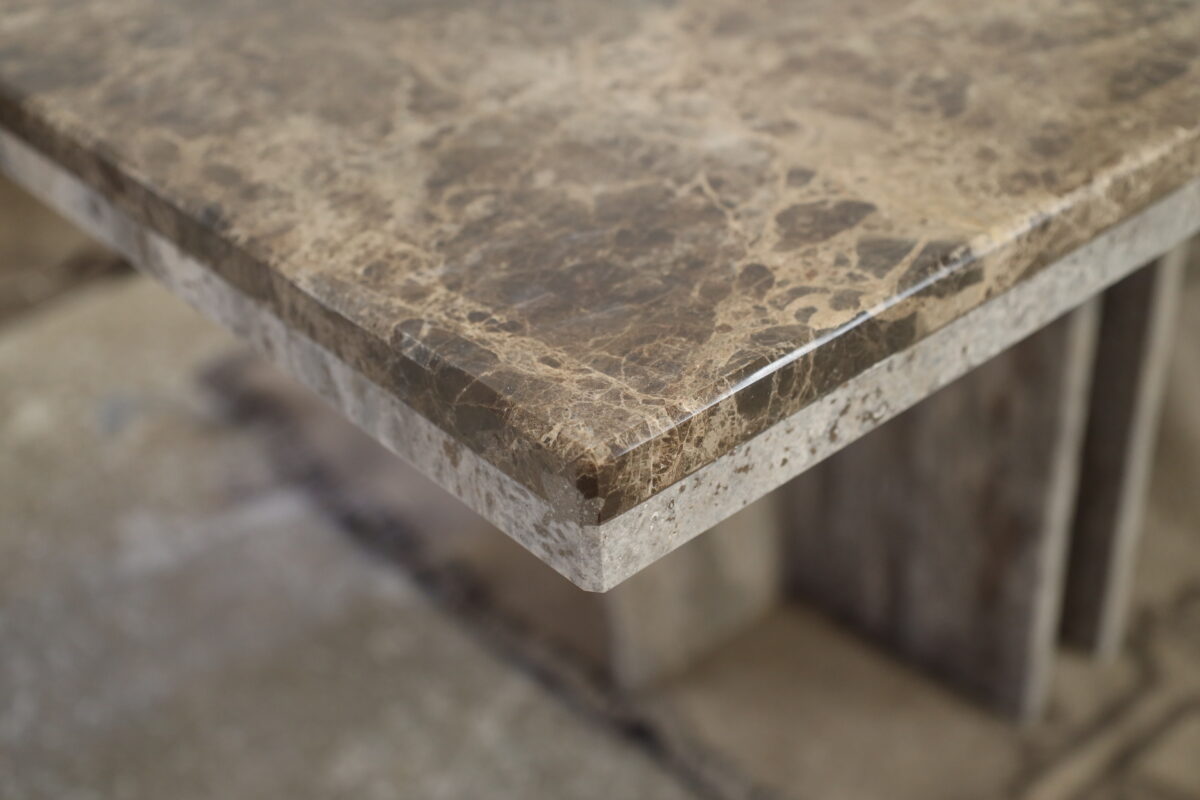
Dark Emperador & Silver Travertine Table Edge Detail
The finish of natural stone is one of the most influential factors in both aesthetics and everyday usability. Even the same stone can present a completely different character depending on how its surface is processed.
A polished finish reflects light and emphasizes the depth of color and veining, making it an excellent choice for luxurious dining tables, console tables, and statement furniture.
A honed finish offers a smoother, matte appearance with a softer tactile feel. It reduces reflections and creates a contemporary architectural look that works particularly well in minimalist interiors.
Brushed finishes provide additional texture while highlighting the stone’s natural character, especially in travertine.
Beyond visual preference, the finish should match the intended environment. Furniture placed in bright living spaces may benefit from a honed surface that minimizes glare, while formal interiors often showcase the elegance of polished marble.
The edge detailing also contributes to the overall craftsmanship. Precision fabrication, smooth transitions, and consistent finishing are subtle details that distinguish premium furniture from standard production.
7. Every Natural Stone Piece Should Tell Its Own Story
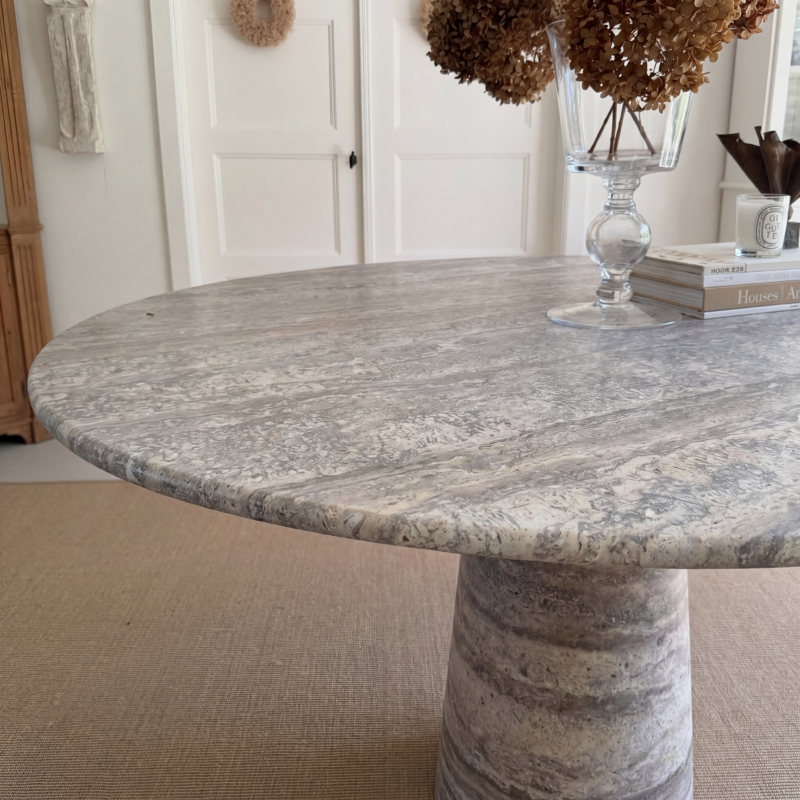
Silver Travertine Vein Cut Honed Surface
Unlike engineered materials, natural stone is never identical from one slab to another. Every block extracted from the quarry contains unique mineral formations, color transitions, and geological patterns created over millions of years.
This individuality is one of the greatest advantages of natural stone furniture.
Rather than searching for perfect uniformity, designers increasingly embrace variation because it gives interiors authenticity and depth. The flowing linear movement of Silver Travertine Vein Cut, the dramatic veining of Calacatta Marble, or the bold contrast of Rosso Levanto all create furniture that cannot be replicated by manufactured surfaces.
Working with carefully selected slabs also allows fabricators to position veins intentionally, ensuring that tabletops, waterfall edges, and sculptural bases become cohesive design elements instead of random compositions.
When natural stone is thoughtfully selected and professionally fabricated, each piece becomes more than furniture—it becomes a lasting expression of craftsmanship and nature.
Why Natural Stone Furniture Remains Timeless
Natural stone furniture is an investment in design quality rather than short-term trends. While colors, finishes, and furniture styles evolve over time, authentic stone continues to offer a level of permanence that manufactured materials rarely achieve.
From elegant Calacatta marble console tables to sculptural Muğla Calacatta dining tables, dramatic Rosso Levanto coffee tables, and contemporary Silver Travertine furniture, every piece reflects the uniqueness of the material from which it is created.
Choosing the right stone, selecting an appropriate finish, paying attention to fabrication details, and working with experienced manufacturers ensures that each piece performs as beautifully as it looks.
Whether your project is residential or commercial, natural stone furniture introduces architectural character, exceptional durability, and timeless appeal that can be appreciated for generations.
In the end, the best natural stone furniture is not simply chosen for today’s interior—it is selected to remain relevant for decades to come.
Frequently Asked Questions About Natural Stone Furniture
Is natural stone furniture durable enough for everyday use?
Yes. High-quality natural stone furniture is designed for daily residential and commercial use when it is fabricated correctly. Marble, travertine, quartzite, limestone, and other natural stones have been used in architecture for centuries because of their durability and structural stability. Choosing the appropriate stone for its intended application and maintaining it properly ensures long-lasting performance.
Does marble furniture require a lot of maintenance?
Not necessarily. Modern sealers help protect marble surfaces from moisture and everyday staining. Routine cleaning with a pH-neutral stone cleaner and avoiding harsh acidic products is generally sufficient. With simple care, marble furniture can maintain its beauty for many years.
Is travertine suitable for dining tables?
Absolutely. Travertine has become one of the most popular materials for contemporary dining tables thanks to its warm color palette, natural movement, and timeless appearance. Honed and filled travertine surfaces are especially favored for modern residential interiors because they combine elegance with practicality.
Which finish is better: polished or honed?
Neither finish is universally better—it depends on the desired aesthetic.
- Polished finishes highlight color depth and natural veining while reflecting more light.
- Honed finishes create a softer matte appearance with a contemporary architectural feel and reduced glare.
Both finishes are widely used for premium natural stone furniture.
Can every natural stone slab be used for furniture?
Not every slab is ideal. Furniture-grade slabs are carefully selected based on structural integrity, veining consistency, color harmony, and fabrication requirements. Professional manufacturers inspect each slab before production to ensure it meets both aesthetic and technical standards.
Explore Custom Natural Stone Furniture
Whether you are furnishing a private residence, designing a luxury hospitality project, or specifying materials for a commercial interior, natural stone furniture offers a unique combination of craftsmanship, durability, and timeless elegance.
At Efesus Stone, every furniture piece is produced from carefully selected natural stone blocks processed in our own facilities. From Calacatta marble console tables and sculptural dining tables to Silver Travertine statement pieces and Rosso Levanto coffee tables, each design reflects the individuality of the stone and the precision of expert craftsmanship.
Our production capabilities include custom dimensions, bespoke edge profiles, various surface finishes, and project-specific fabrication tailored to architects, interior designers, wholesalers, and furniture brands worldwide.
If you are looking for furniture that combines natural beauty with architectural quality, natural stone remains one of the most enduring choices available.