
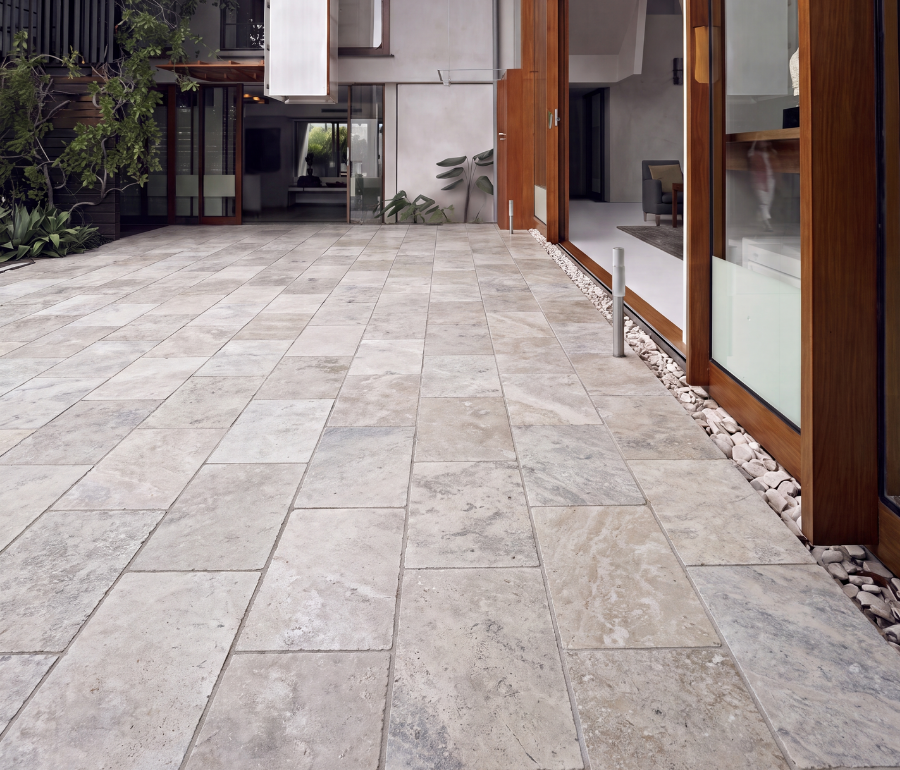
Silver Travertine is one of the most versatile natural stones used in contemporary architecture. Its layered gray, silver, taupe, beige, and occasional warm brown tones allow it to connect modern materials with the softer character of nature. Depending on the selected block, cut direction, surface finish, and lighting conditions, the stone can appear calm and uniform or expressive and highly directional.
This flexibility explains why Silver Travertine is used across residential, hospitality, commercial, and landscape projects. It can cover expansive exterior façades, define an indoor feature wall, create a transition between different flooring materials, surround a swimming pool, form architectural stairs, or become a custom dining table.
Unlike a manufactured surface, natural travertine contains tonal variations, mineral movement, layered patterns, and characteristic pores. These differences are not added during production. They are part of the stone’s geological identity and help every completed project develop an individual appearance.
The success of a Silver Travertine application, however, depends on more than choosing an attractive photograph or sample. Designers and property owners must also consider the stone selection, cut direction, tile or slab dimensions, surface treatment, filling method, edge details, installation system, exposure conditions, and maintenance expectations.
An interior wall does not require the same finish as a pool surround. A decorative dining table should not be evaluated in the same way as an exterior stair. A façade project also requires technical planning that goes far beyond the stone’s color.
This guide explains where Silver Travertine can be used, which applications suit its visual character, and what should be considered when specifying it for indoor and outdoor spaces.
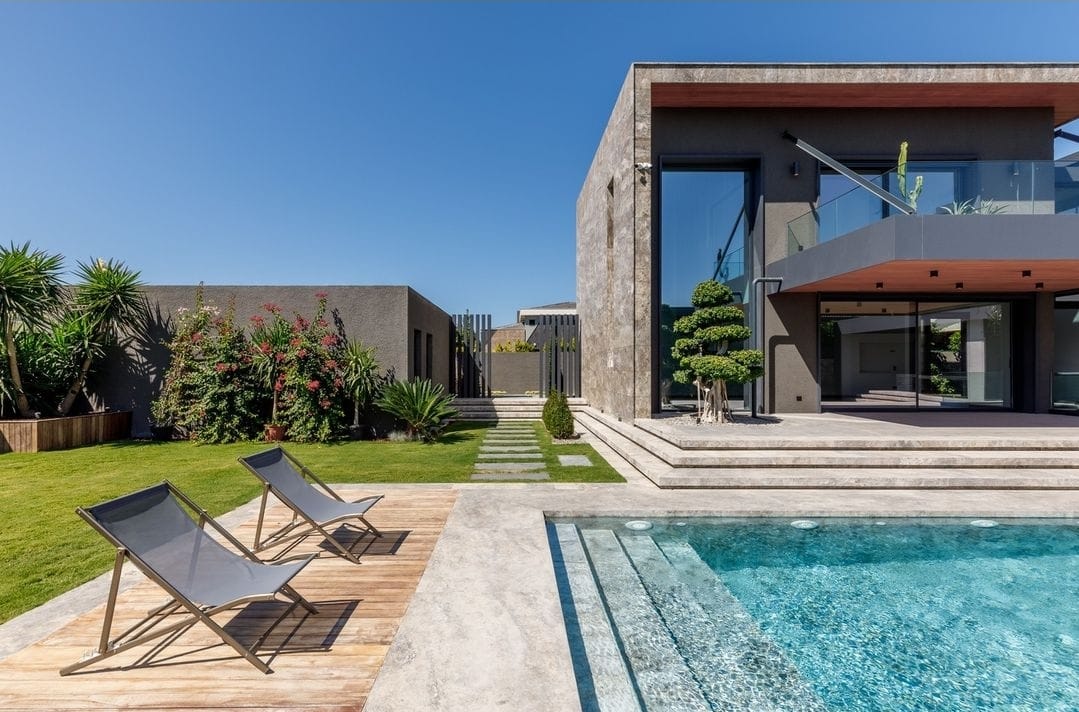
Silver Travertine Used Across a Modern Villa, Pool Surround, Steps, and Exterior Architecture
Modern villa with Silver Travertine façade, pool surround, patio flooring, and exterior steps
Why Silver Travertine Works Across Complete Architectural Projects
The opening project shows one of the greatest strengths of Silver Travertine: it can connect several architectural zones without making the property look repetitive.
In this modern villa, the stone appears around the swimming pool, across the terrace, on the broad exterior steps, and as part of the building envelope. Although the applications serve different functions, the consistent natural palette creates visual continuity between the architecture and landscape.
Silver Travertine is especially effective in projects combining:
- Glass façades
- Dark metal frames
- Warm timber soffits
- Charcoal walls
- Landscaped gardens
- Water features
- Minimalist outdoor furniture
Its cool gray tones coordinate naturally with black and dark anthracite elements, while its warmer beige and taupe passages prevent the overall composition from feeling severe.
For architects, this balance is valuable. A strongly colored stone may limit the surrounding material palette. Silver Travertine, by contrast, can act as a flexible foundation for wood, metal, glass, concrete, greenery, and water.
It is also suitable for projects where the same stone language needs to move from outside to inside. Used carefully, Silver Travertine can continue from a terrace into an entrance hall, from exterior steps into a staircase, or from a garden wall into an interior feature panel.
The finish and installation should still change according to the application. A smoother interior surface may be paired with a more textured exterior finish, even when both areas use material selected from the same quarry and color range.
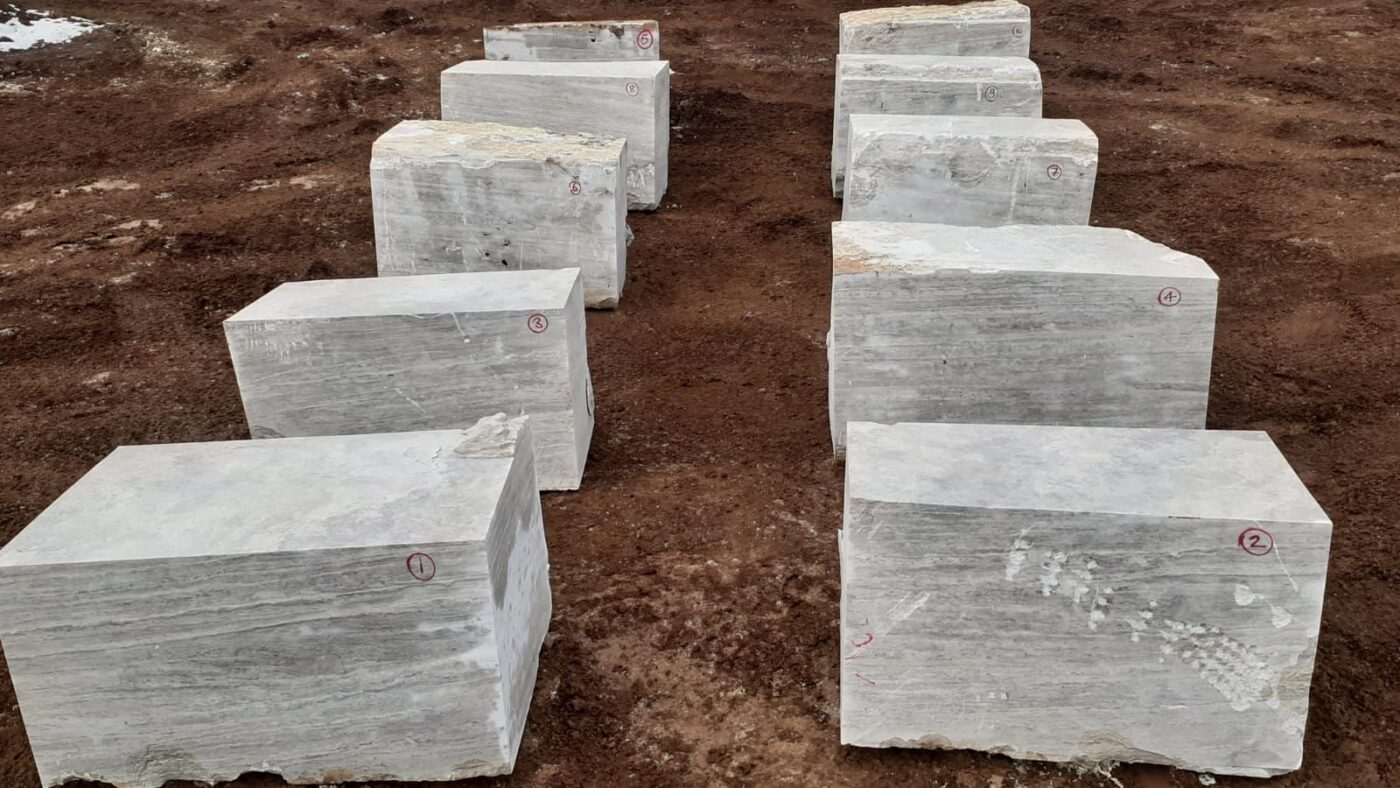
Large Turkish Silver Travertine blocks selected and numbered at the quarry
From Quarry Block to Finished Architectural Surface
Every Silver Travertine project begins with block selection. The quarry image helps explain why large natural stone applications must be planned from the source rather than treated like the purchase of a completely uniform manufactured material.
Blocks can vary in:
- Overall shade
- Layer direction
- Gray-to-beige balance
- Porosity
- Vein intensity
- Mineral markings
- Suitable slab dimensions
When a project requires a large quantity of material, selection consistency becomes particularly important. The blocks should be reviewed according to the desired visual range and grouped carefully before cutting.
For façade, flooring, and wall-cladding projects, the quantity should also be calculated with cutting direction, pattern layout, breakage allowance, replacement material, and future maintenance in mind.
The appearance of the final stone will also depend on how the block is cut.
Vein-Cut Silver Travertine
Vein cutting follows the natural bedding layers of the stone. The result is a directional, linear pattern that emphasizes the geological formation.
Vein-cut material is particularly suitable for:
- Exterior façades
- Feature walls
- Architectural panels
- Stair risers
- Fireplace walls
- Reception desks
- Custom furniture
Cross-Cut Silver Travertine
Cross cutting passes across the natural layers. This can produce a softer, more cloud-like or irregularly distributed pattern.
Cross-cut material can work well for:
- Large-format flooring
- Bathrooms
- Terraces
- Courtyards
- Pool areas
- Broad wall surfaces
Neither direction is universally better. The correct option depends on the desired design language and how the pattern will continue across adjacent pieces.
Expert Note
For large projects, full slab or tile-layout reviews provide more reliable information than small samples. A small sample may show the color, but it cannot fully communicate the scale, direction, and variation of the finished installation.
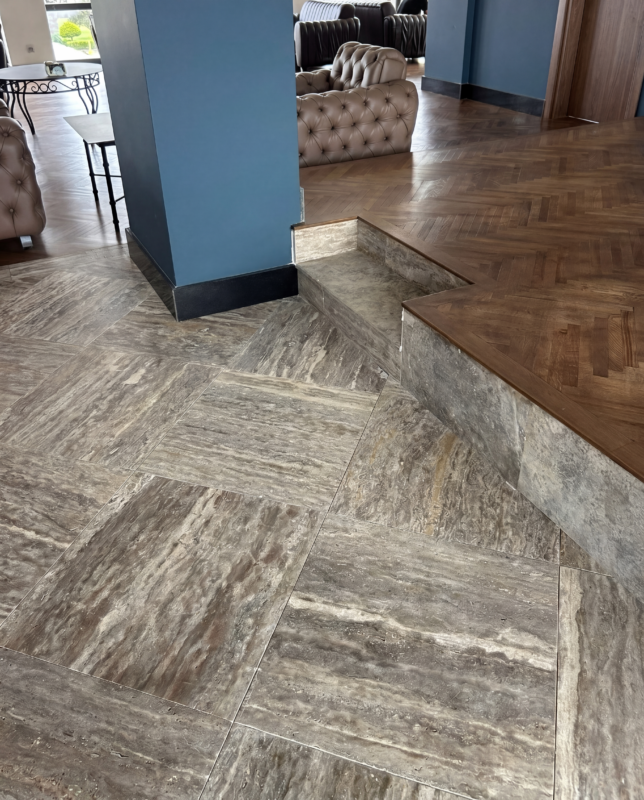
Silver Travertine Flooring Used as an Architectural Transition
Silver Travertine floor tiles and step details beside dark wood parquet flooring
Silver Travertine for Interior Flooring
Silver Travertine can create distinctive interior floors in residential, hotel, retail, and commercial environments. Its layered movement introduces more visual depth than a plain gray surface while remaining neutral enough to coordinate with furniture and architectural finishes.
The image shows the stone used beside a dark wood parquet floor. Instead of attempting to hide the material transition, the design allows the contrast to become an intentional architectural detail.
This pairing works because the travertine and timber share warm undertones despite their different surface characters. The stone introduces mineral movement, while the wood adds visual warmth and a finer geometric rhythm.
Silver Travertine flooring can be considered for:
- Entrance halls
- Living rooms
- Dining spaces
- Corridors
- Hotel lobbies
- Reception areas
- Retail interiors
- Spa circulation zones
- Transitional areas between rooms
Choosing the Right Flooring Format
Large tiles create a broader, more architectural appearance, while smaller tiles produce greater pattern rhythm and may adapt more easily to irregular room layouts.
Popular approaches include:
- Large rectangular tiles
- Linear vein-cut layouts
- Mixed-size patterns
- Modular sets
- Narrow strips
- Custom-cut architectural formats
The direction of the stone should be planned together with the room geometry. Linear movement can visually lengthen a corridor, reinforce the direction of an entrance, or guide the eye toward a focal point.
Suitable Interior Finishes
Depending on the project, interior Silver Travertine floors may use:
- Filled and honed finish
- Brushed and filled finish
- Honed unfilled finish
- Brushed unfilled finish
- Tumbled finish for more rustic schemes
The most appropriate option depends on maintenance expectations, traffic level, desired texture, and the natural characteristics of the selected material.
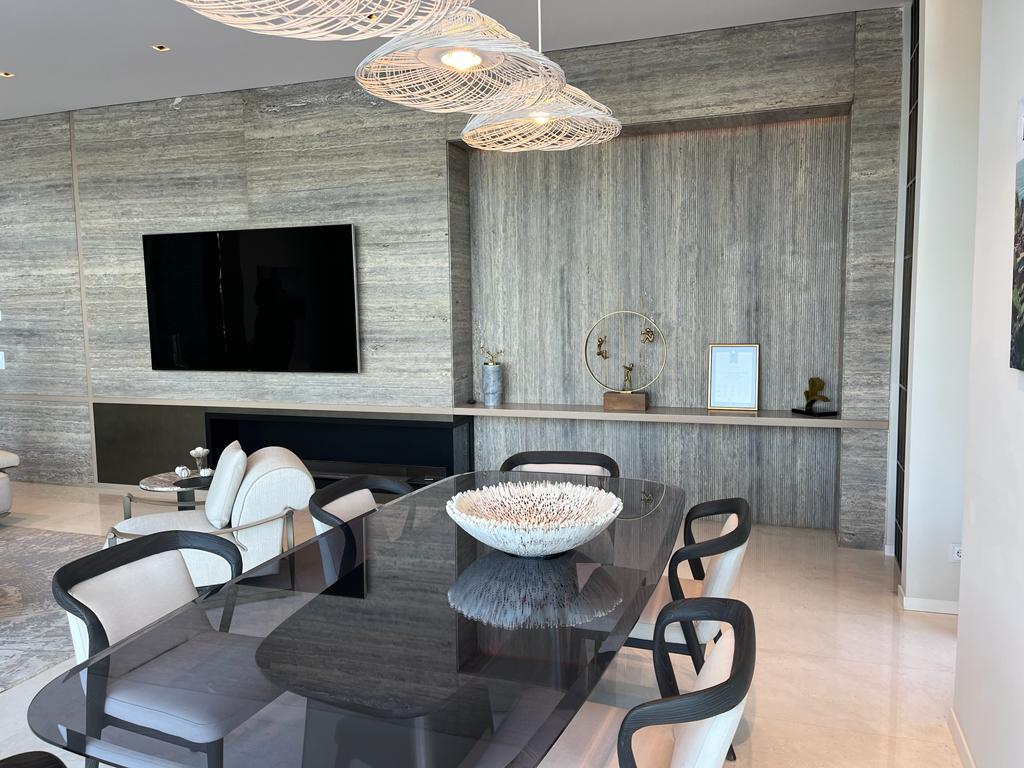
Silver Travertine Wall Cladding in a Contemporary Living and Dining Area
Contemporary dining room with Silver Travertine wall cladding and fluted stone panel
Silver Travertine for Feature Walls and Interior Cladding
Wall cladding allows Silver Travertine to be appreciated vertically, where its linear movement becomes especially visible. In the pictured interior, the stone covers a large architectural wall that incorporates a television, fireplace, shelving, and a textured central panel.
This approach is stronger than treating the wall as a collection of unrelated decorative surfaces. The travertine unifies the entire composition and connects the dining and living zones.
Silver Travertine can be used for:
- Television walls
- Full-height living room cladding
- Fireplace walls
- Dining room feature panels
- Entrance walls
- Hotel reception walls
- Restaurant interiors
- Elevator surrounds
- Column cladding
- Decorative niches
Flat and Textured Surfaces in One Composition
The image demonstrates how flat travertine panels can be combined with fluted or vertically textured stone. This adds depth without introducing another color or material.
The changing shadows across the grooves create visual movement throughout the day. Meanwhile, the flat surrounding panels preserve the natural layered structure of the stone.
This combination is especially effective in:
- Contemporary interiors
- Organic Modern spaces
- Quiet Luxury schemes
- Minimalist hospitality projects
- Custom residential architecture
Panel joints and vein direction should be planned before fabrication. Poorly aligned movement can interrupt the visual flow, particularly across large walls.
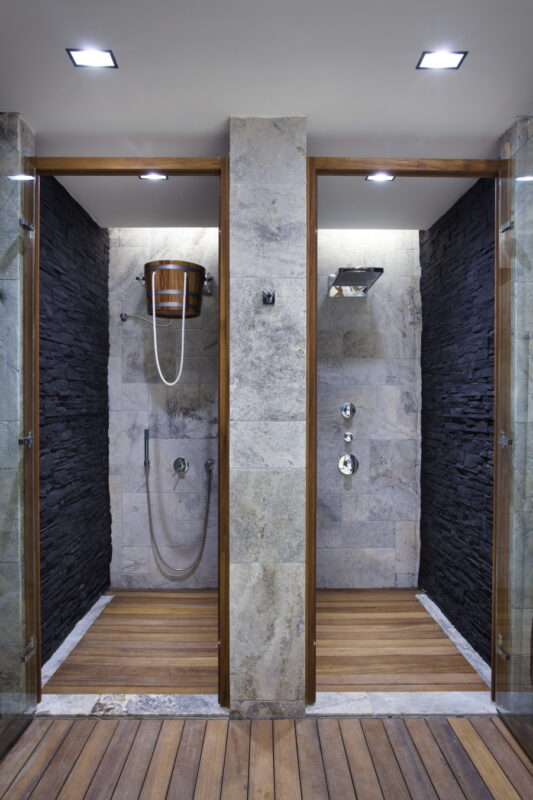
Spa shower walls clad with Silver Travertine tiles and contrasting dark stone
Can Silver Travertine Be Used in Bathrooms and Showers?
Silver Travertine can be used in bathrooms, spa areas, shower walls, vanity surrounds, and other wet spaces when the material, finish, waterproofing, installation, and maintenance systems are selected correctly.
The photographed shower design combines light Silver Travertine with dark split-face stone and natural timber flooring. This creates a spa-like atmosphere based on texture rather than decorative color.
Suitable bathroom applications include:
- Shower walls
- Bathroom floors
- Vanity walls
- Tub surrounds
- Custom stone basins
- Bench seating
- Decorative niches
- Spa walls
- Hammam and wellness interiors
Travertine’s natural pores are part of its appearance. Depending on the required look and maintenance plan, these pores may be filled or intentionally left more visible.
Bathroom Planning Considerations
For wet areas, designers should evaluate:
- Surface texture
- Water drainage
- Waterproofing system
- Joint layout
- Stone-safe adhesives
- Cleaning products
- Suitable sealers
- Local slip-resistance requirements
- Ventilation
A polished appearance may not be suitable for every wet-floor application. Surface finish should be specified according to the location and relevant project requirements rather than selected only for visual effect.
Acidic bathroom cleaners should not be used on travertine. Products containing vinegar, strong acids, or harsh descaling ingredients can damage the surface.
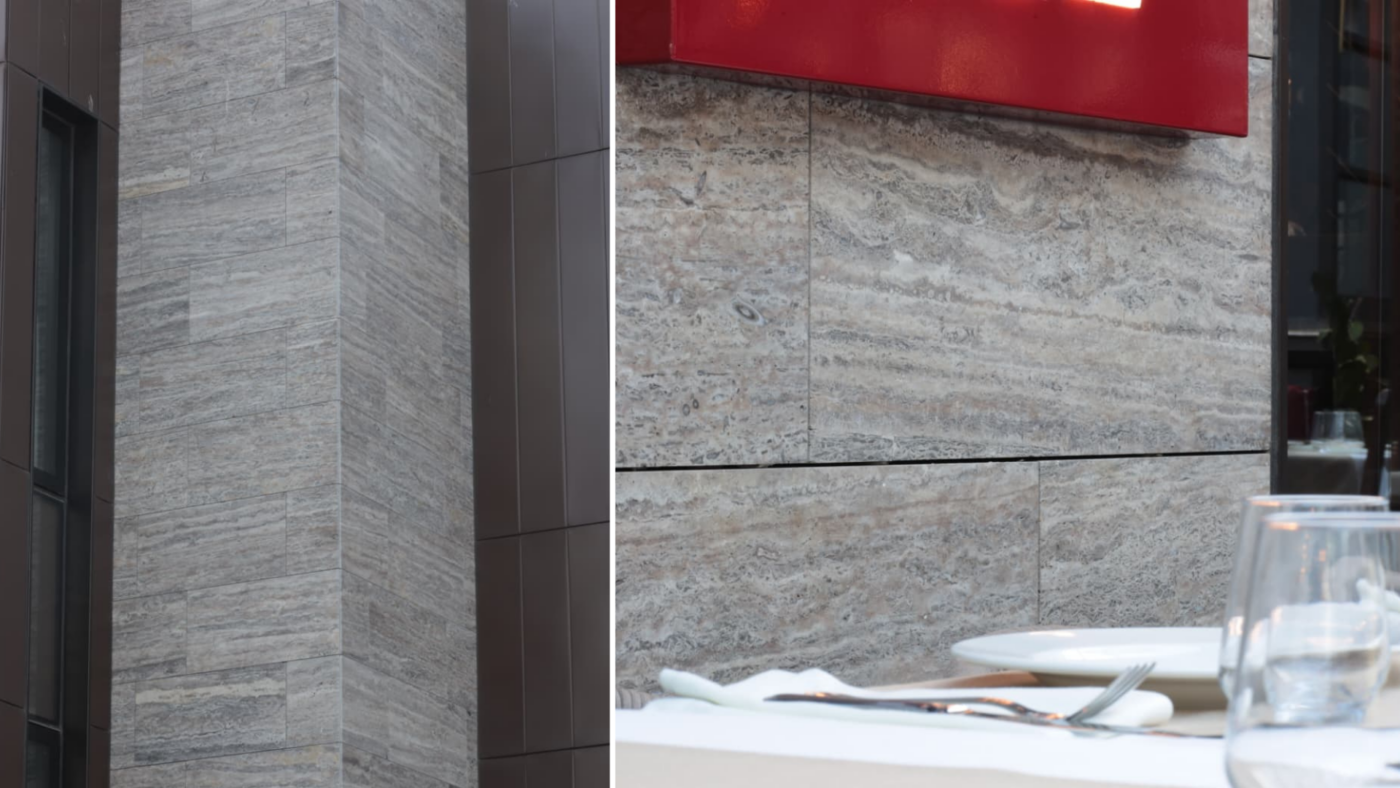
Commercial dining area with vein-cut Silver Travertine wall and column cladding
Silver Travertine for Hotels, Restaurants, and Commercial Interiors
Silver Travertine is not limited to private homes. Its neutral color range and architectural movement make it suitable for hospitality, restaurant, office, retail, and public-facing commercial environments.
The image shows vein-cut travertine used on a wall and column in a dining setting. The horizontal linear pattern creates a calm architectural backdrop while allowing furniture, lighting, signage, and table settings to remain visually prominent.
Commercial applications may include:
- Hotel lobbies
- Reception desks
- Restaurants
- Café interiors
- Spa and wellness facilities
- Corporate entrances
- Retail walls
- Elevator halls
- Columns
- Feature counters
Natural stone can also contribute to a more permanent visual identity. Unlike short-lived decorative finishes, Silver Travertine can become part of the architecture itself.
For commercial projects, maintenance procedures, traffic conditions, replacement quantities, edge protection, and cleaning protocols should be planned from the beginning.
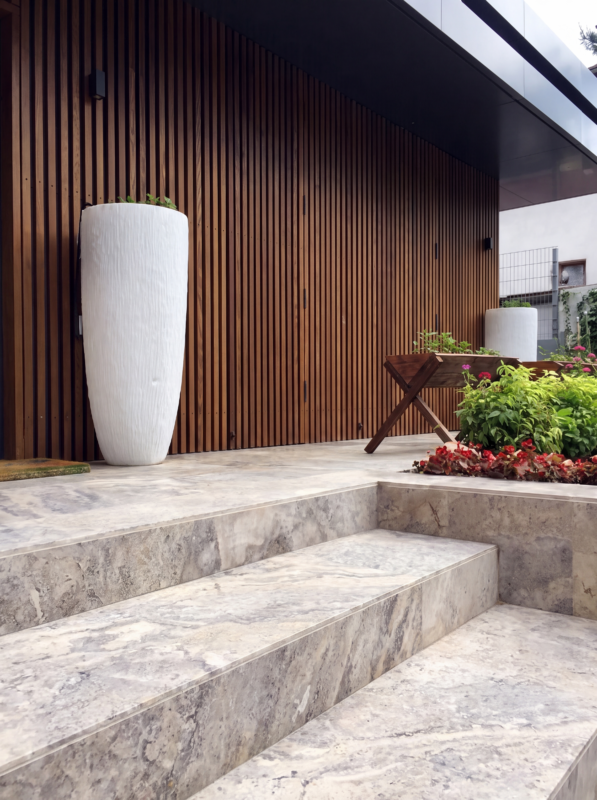
Silver Travertine Steps Connecting a Garden and Modern Entrance
Wide Silver Travertine outdoor steps beside a timber-clad modern entrance
Silver Travertine for Stairs, Steps, and Changes in Level
Stairs are both functional and visually prominent. Silver Travertine can help connect different levels while continuing the material palette of the floor, façade, terrace, or landscape.
In the pictured entrance, wide stone steps create a clear transition between the lower garden level and the timber-clad doorway. The gray-beige stone palette complements the warm vertical wood elements and dark roof structure.
Silver Travertine can be used for:
- Interior stair treads
- Exterior entrance steps
- Garden steps
- Stair risers
- Landings
- Split-level transitions
- Hotel staircases
- Pool access steps
Details That Matter in Stair Design
Successful natural stone stairs require attention to:
- Tread depth
- Riser height
- Edge profile
- Surface finish
- Water drainage
- Vein direction
- Piece thickness
- Substrate condition
- Exterior weather exposure
- Local building requirements
For exterior stairs, the selected surface must be appropriate for the project conditions. A textured, brushed, sandblasted, or otherwise specified finish may be considered depending on the design and performance requirements.
Darker areas or strong linear bands should also be arranged carefully so that the stair reads as a coordinated composition rather than a random collection of pieces.
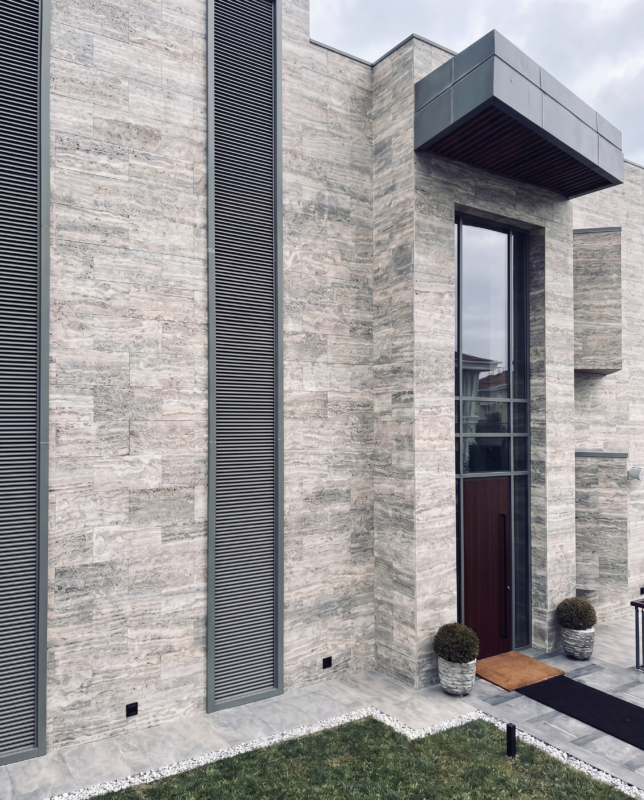
Silver Travertine Exterior Façade on a Contemporary Residence
Contemporary residential façade clad with vein-cut Silver Travertine panels
Silver Travertine for Exterior Façade Cladding
Exterior façades are among the most architecturally impressive applications of Silver Travertine. Its layered linear pattern reinforces horizontal movement across wide walls, while its mixed gray and beige tones respond naturally to changes in daylight.
The pictured residence combines travertine cladding with dark metal screens, black-framed windows, timber details, and landscaped planting. The stone softens the sharp geometry of the building without reducing its contemporary character.
Silver Travertine façades work particularly well on:
- Private villas
- Luxury residences
- Hotels
- Commercial buildings
- Entrance portals
- Columns
- Garden walls
- Courtyard elevations
- Mixed-material façades
Why Architects Use It on Modern Façades
Silver Travertine can connect both cool and warm materials. It pairs effectively with:
- Black aluminum
- Anthracite metal
- Clear glass
- Warm timber
- Architectural concrete
- Bronze details
- Green landscaping
- White render
The natural layers provide visual movement without requiring an artificial printed pattern. Because the appearance changes slightly across the day, the façade can look cooler under overcast light and warmer in direct sun.
Exterior installation systems, panel dimensions, anchors, substrate design, climate, freeze-thaw exposure, water management, and local engineering requirements must be determined by qualified project professionals.
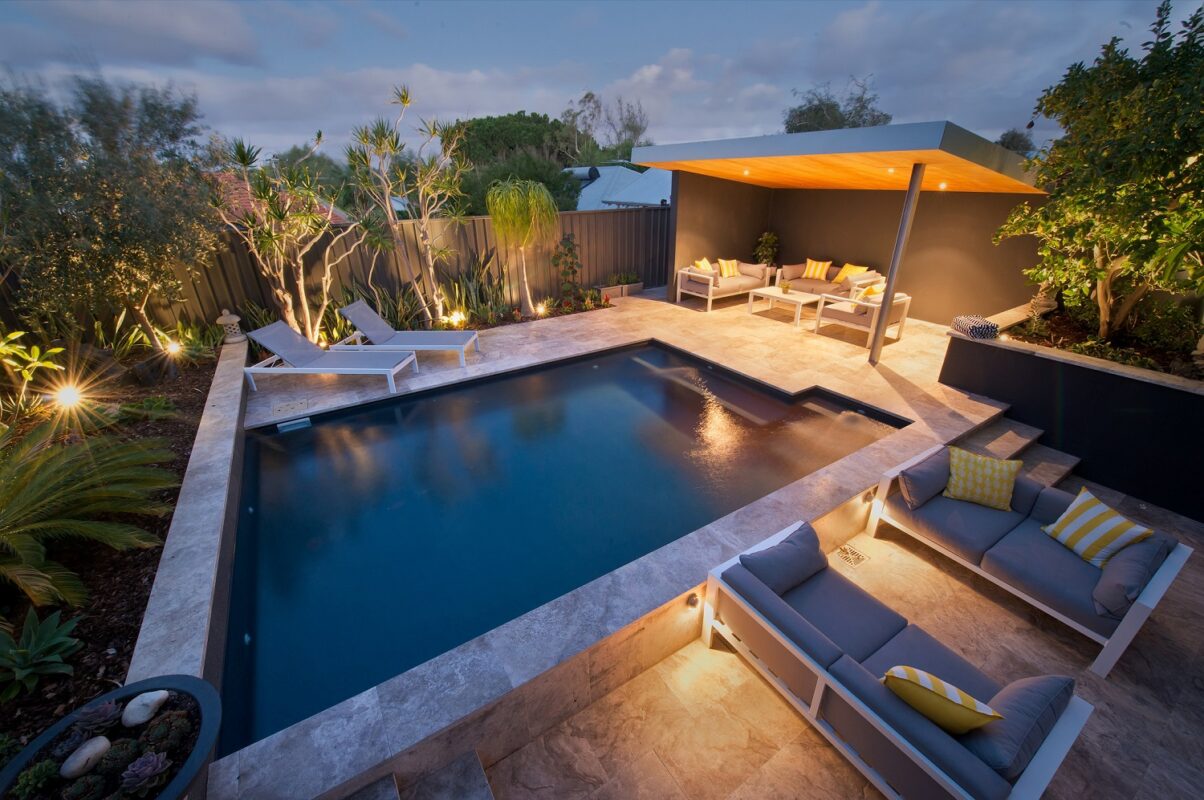
Silver Travertine Around a Landscaped Swimming Pool
Landscaped swimming pool with Silver Travertine coping and outdoor paving
Silver Travertine for Pool Surrounds and Coping
Silver Travertine is widely associated with outdoor living because its natural color range works beautifully beside water, planting, and contemporary garden architecture.
In the pictured project, the stone surrounds a dark swimming pool and continues into the outdoor seating area. The warm artificial lighting emphasizes its beige tones, while the daylight reveals its cooler gray movement.
Possible pool applications include:
- Pool coping
- Pool decks
- Water-feature surrounds
- Outdoor shower areas
- Steps near pools
- Raised pool walls
- Seating zones
- Integrated landscape details
Surface Selection Around Pools
Pool environments require careful technical specification. The stone should not simply be described as “non-slip” without reference to a specific surface, test result, installation, and use condition.
Instead, project teams should select a finish that is appropriate for wet exterior circulation and complies with relevant local requirements.
Potentially suitable finishes may include:
- Brushed
- Tumbled
- Sandblasted
- Textured
- Unfilled and brushed
- Other project-specific treatments
The final decision should account for barefoot comfort, water drainage, climate, pool chemicals, maintenance, and local regulations.
Pool coping profiles should also be detailed carefully. Edge comfort, water shedding, joint placement, piece dimensions, and compatibility with the pool system all influence long-term performance.
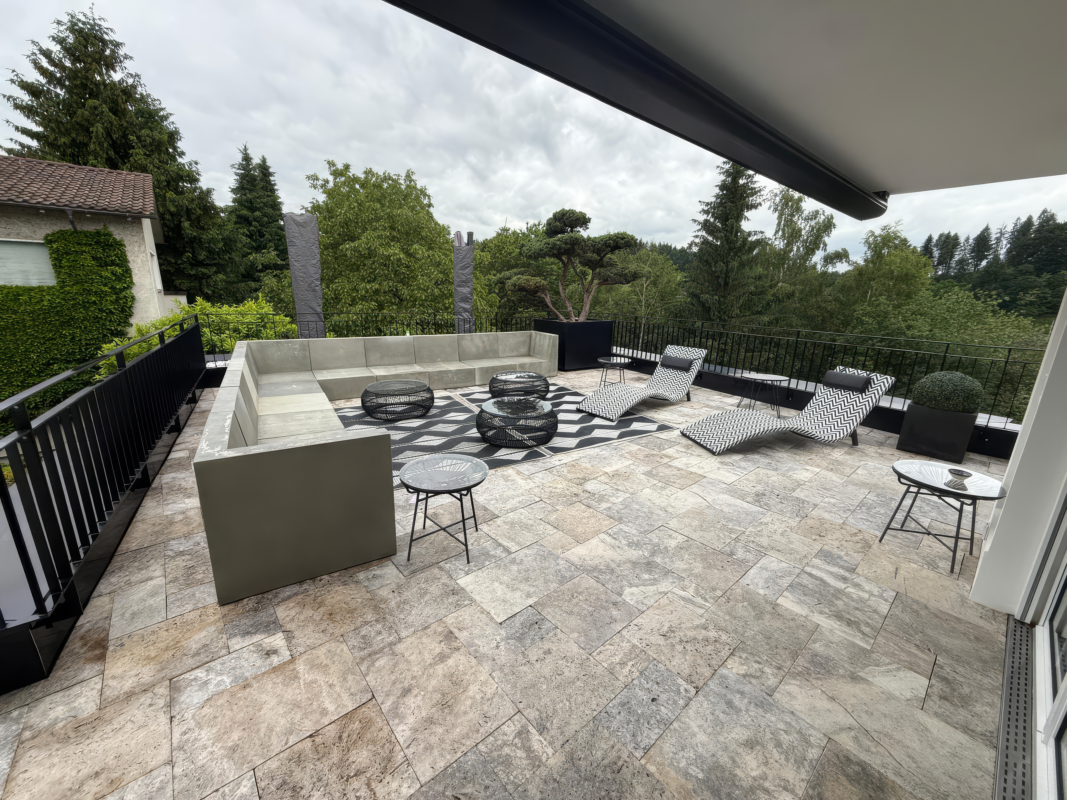
Silver Travertine Terrace Flooring in an Outdoor Living Area
Large rooftop terrace paved with mixed-tone Silver Travertine tiles
Silver Travertine for Terraces, Patios, and Outdoor Living Areas
Terraces and patios are among the most practical places to use Silver Travertine. The stone provides a natural transition between interior architecture and the surrounding landscape while offering a richer visual surface than plain concrete or uniform ceramic paving.
The rooftop terrace shown here uses a mixed selection of rectangular travertine pieces. The variation creates an informal, layered appearance that suits the greenery, black metal railings, and monochrome outdoor furniture.
Silver Travertine can be considered for:
- Roof terraces
- Patios
- Courtyards
- Verandas
- Balconies
- Garden seating areas
- Outdoor dining spaces
- Walkways
- Poolside lounges
The size and pattern of the paving strongly influence the final mood. Large aligned formats feel more formal and architectural, while modular or mixed-size layouts create a relaxed landscape character.
Exterior paving requires suitable substrate preparation, drainage, movement joints, bedding or fixing systems, and weather-appropriate finishes.
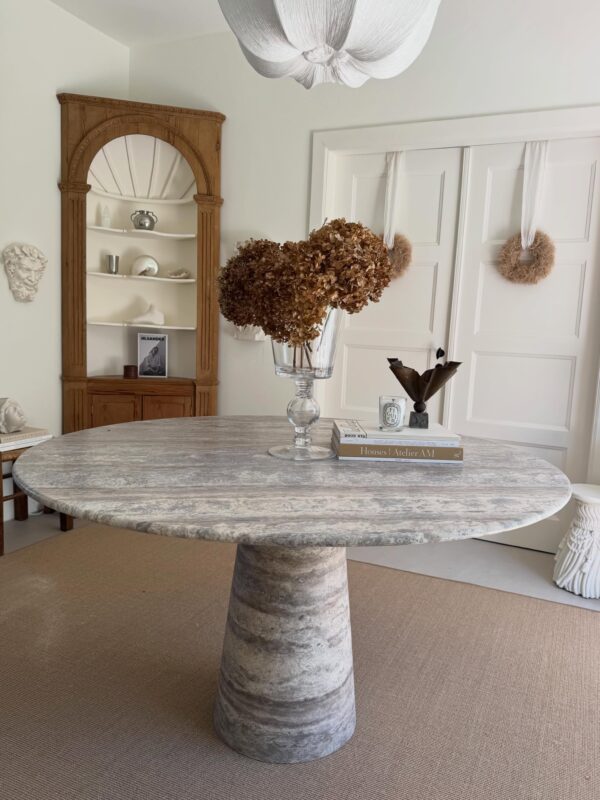
Round Silver Travertine dining table with a conical natural stone pedestal base
Silver Travertine for Custom Furniture
Silver Travertine is also used beyond architectural surfaces. Its layered pattern can turn a dining table, console, coffee table, side table, pedestal, or custom basin into a sculptural object.
The pictured dining table features a rounded top and tapered stone base. This simple geometry allows the travertine’s horizontal layers to remain the main visual focus.
Possible furniture applications include:
- Dining tables
- Coffee tables
- Console tables
- Side tables
- Pedestals
- Cube tables
- Benches
- Custom basins
- Display plinths
- Reception furniture
Stone furniture requires careful engineering because weight, support, transport, assembly, edge strength, and floor loading must be considered.
Styling Silver Travertine Furniture
The stone coordinates especially well with:
- White oak
- Walnut
- Linen
- Bouclé
- Aged brass
- Dark bronze
- Black metal
- Off-white plaster
- Natural woven rugs
- Soft gray textiles
A strongly patterned travertine piece usually needs little additional decoration. Restrained styling allows the natural movement to remain visible.
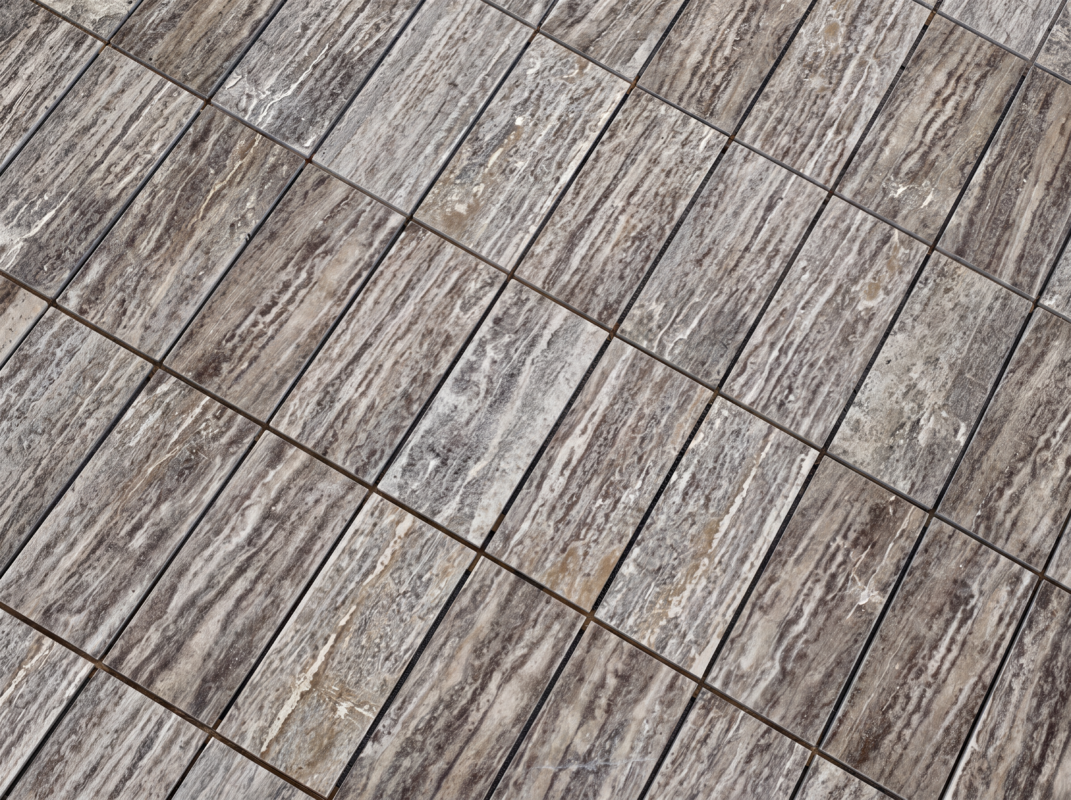
Vein-cut Silver Travertine pieces prepared in custom dimensions for architectural projects
Silver Travertine Cut-to-Size Production for Architectural Projects
Silver Travertine can be fabricated into project-specific dimensions for flooring, wall cladding, façades, stairs, landscape applications, and custom architectural details.
The image shows narrow vein-cut Silver Travertine pieces prepared in consistent dimensions. The linear pattern of the stone remains visible across each piece, making this format suitable for designs that require rhythm, repetition, and controlled directional movement.
Cut-to-size production allows architects and designers to move beyond standard tile dimensions. Pieces can be prepared according to technical drawings, installation modules, façade layouts, stair details, or decorative wall compositions.
Suitable applications include:
- Interior flooring
- Exterior paving
- Wall cladding
- Façade panels
- Stair treads and risers
- Column cladding
- Decorative strips
- Poolside details
- Garden paths
- Custom architectural modules
The selected dimensions should be determined according to the stone structure, cut direction, thickness, installation system, and intended use.
Why Cut-to-Size Production Matters
Project-specific fabrication can improve visual consistency and reduce unnecessary cutting on site. It also allows the stone pattern to be planned more carefully before installation.
The main benefits include:
- Dimensions prepared according to project drawings
- Better control of vein direction
- More consistent joint spacing
- Reduced on-site cutting
- Easier installation planning
- Coordinated production for floors, walls, and stairs
- Custom edge and surface options
- More efficient material use
For directional Silver Travertine, piece orientation should be clearly marked during production and packaging. This helps installers maintain the intended linear flow across the finished surface.
Factors to Confirm Before Production
Before cut-to-size manufacturing begins, the project team should confirm:
- Final dimensions
- Required thickness
- Vein-cut or cross-cut direction
- Surface finish
- Filled or unfilled structure
- Edge treatment
- Joint width
- Installation method
- Quantity and cutting allowance
- Packaging sequence
- Piece numbering where required
For complex projects, production drawings and dry-layout planning can help coordinate adjacent pieces and reduce visual interruptions.
Where Can Silver Travertine Be Used?
Silver Travertine can be considered for a broad range of applications, provided the specific stone, finish, thickness, installation, and maintenance system are appropriate for the project.
| Application | Recommended Design Approach | Main Considerations |
|---|---|---|
| Interior flooring | Large tiles, cut-to-size pieces, or directional vein layouts | Traffic, finish, cleaning, joint planning |
| Feature walls | Slabs, panels, fluted details, or custom modules | Vein continuity and anchoring |
| Bathrooms | Tiles, cut-to-size panels, basins, and wall cladding | Waterproofing, drainage, cleaning products |
| Commercial interiors | Wall panels, columns, flooring, and reception areas | Traffic, maintenance, replacement stock |
| Interior stairs | Coordinated treads and risers | Edge profiles, thickness, and dimensions |
| Exterior steps | Textured cut-to-size treads and risers | Drainage, climate, and local regulations |
| Façades | Vein-cut panels and custom architectural formats | Engineering and installation system |
| Pool surrounds | Coping, paving, and custom edge pieces | Wet conditions and slip requirements |
| Terraces | Modular, large-format, or cut-to-size paving | Drainage and weather exposure |
| Furniture | Tables, consoles, basins, and pedestals | Weight, support, transport, and sealing |
| Custom production | Project-specific sizes and directional layouts | Drawings, tolerances, labeling, and packaging |
Which Interior Styles Suit Silver Travertine?
Silver Travertine works across several interior and architectural styles because it combines cool gray movement with warmer mineral tones.
Organic Modern
Natural stone, warm wood, linen, soft curves, and earthy colors form a balanced composition. Silver Travertine contributes geological texture without making the interior overly rustic.
Contemporary
Large panels, linear cuts, dark window frames, and restrained furniture allow the stone’s layered pattern to become part of the architecture.
Modern Mediterranean
Travertine connects naturally with limewash walls, warm timber, aged metal, outdoor courtyards, and sunlight-focused interiors.
Japandi
The stone’s muted palette can complement pale woods, handcrafted objects, and minimal forms when a quieter selection is used.
Industrial
Gray travertine works well with black steel, concrete, dark glass, and strong architectural geometry while adding natural variation.
Quiet Luxury
Carefully selected slabs, precise joints, custom dimensions, and understated furniture can create a refined result without relying on obvious ornament.
Choosing the Right Surface Finish
The same Silver Travertine can look and perform differently depending on the selected surface treatment.
Filled and Honed
This treatment creates a smoother, matte surface by filling many of the natural pores and then honing the face. It is frequently considered for interior floors, walls, bathrooms, and contemporary architectural panels.
Brushed
A brushed finish adds gentle surface texture and a softer, aged character. It may be selected for interior or exterior applications depending on the project requirements.
Tumbled
Tumbled travertine has softened edges and a more weathered appearance. It is often associated with courtyards, Mediterranean interiors, patios, and informal outdoor layouts.
Unfilled
An unfilled surface leaves more of the natural pores visible. This reinforces the stone’s geological character but changes cleaning and maintenance expectations.
Sandblasted or Textured
Textured finishes may be evaluated for façades, exterior stairs, terraces, and wet outdoor circulation, subject to project-specific performance requirements.
Polished
Polishing can deepen the color and increase reflection. It may be used for selected decorative interior applications but is not the default choice for every travertine surface.
Common Mistakes When Using Silver Travertine
Selecting the Material from a Small Sample Only
Small samples cannot show the full movement, tonal variation, or scale of the stone. Full slabs, dry layouts, or representative tile batches should be reviewed for important projects.
Ignoring the Cut Direction
Vein-cut and cross-cut travertine create very different results. Using both without a clear design plan can make the installation appear inconsistent.
Using the Same Finish Everywhere
The finish suitable for an interior wall may not be appropriate for a pool deck, exterior stair, or high-traffic commercial floor.
Failing to Plan Vein Alignment
Directional pieces should be reviewed before cutting and installation. Random changes in orientation can disrupt the architectural rhythm.
Ordering Standard Sizes for a Custom Layout
A project may require modules that coordinate with room dimensions, façade joints, stair widths, or landscape patterns. Confirming cut-to-size requirements early can reduce on-site modifications and material waste.
Expecting Complete Uniformity
Natural pores, mineral markings, veins, and tonal shifts are part of travertine. A realistic approved selection range should be established before production.
Treating Sealer as Complete Protection
A sealer may support maintenance, but it does not make natural stone permanently stain-proof or maintenance-free.
Neglecting Drainage in Outdoor Areas
Water management is critical for terraces, pool surrounds, façades, and exterior steps. The stone alone cannot correct an unsuitable substrate or drainage design.
Silver Travertine Care and Maintenance
Routine maintenance should be planned according to the location, finish, and exposure conditions.
For regular cleaning:
- Remove loose dust and debris with a soft brush or cloth.
- Use pH-neutral cleaners intended for natural stone.
- Clean spills promptly.
- Avoid acidic products.
- Do not use abrasive pads unless approved for the finish.
- Review exterior surfaces periodically.
- Follow the sealer manufacturer’s instructions where a sealer is used.
Products containing vinegar, lemon, strong acids, or harsh descaling agents should generally be avoided because they can etch calcium-based natural stones.
Furniture and interior surfaces should also be protected from prolonged contact with acidic foods, strongly colored liquids, and metal objects that may scratch the face.
Frequently Asked Questions About Silver Travertine Uses
Is Silver Travertine suitable for indoor flooring?
Yes. It can be used for entrance halls, living rooms, corridors, hotels, commercial interiors, and other indoor floors when the finish and installation are appropriate.
Can Silver Travertine be used outdoors?
Yes. It can be specified for terraces, façades, garden paths, exterior steps, courtyards, and pool surrounds. Climate, finish, drainage, and installation must be evaluated for the project.
Is Silver Travertine suitable for pool coping?
It can be fabricated as pool coping. The edge profile, finish, water management, barefoot comfort, and local requirements should be reviewed before production.
Can it be used in bathrooms and showers?
Yes. It can be used on bathroom walls, shower walls, floors, niches, vanities, and custom basins with suitable waterproofing, installation, finish, and maintenance.
Is Silver Travertine slippery?
Slip performance depends on the specific finish, surface condition, installation, water exposure, and testing. No natural stone should be described as universally non-slip without reference to these factors.
What is the difference between vein-cut and cross-cut Silver Travertine?
Vein-cut material shows more linear horizontal or vertical layers. Cross-cut material generally has a softer, cloud-like or less directional pattern.
Can Silver Travertine be produced in custom sizes?
Yes. It can be fabricated according to project drawings for flooring, façades, walls, stairs, pool coping, paving, and custom architectural details.
Can Silver Travertine be used on façades?
Yes. It can create expressive exterior cladding, particularly in contemporary projects. The façade system and engineering details must be designed by qualified professionals.
Can Silver Travertine be made into furniture?
Yes. It is used for dining tables, coffee tables, consoles, pedestals, basins, and custom architectural furniture.
Which colors work with Silver Travertine?
It pairs well with black, anthracite, bronze, warm white, beige, taupe, walnut, light oak, dark green, and muted earth tones.
Is Silver Travertine difficult to maintain?
Routine maintenance is manageable when stone-safe products are used and the finish is appropriate for the location. Exterior and wet-area applications may require more periodic care.
Can it be used with underfloor heating?
Natural stone flooring is often used in projects with underfloor heating, but the complete floor build-up, movement joints, adhesive system, and heating design should be planned professionally.
Are the pores in Silver Travertine defects?
No. Natural pores are a characteristic feature of travertine. Depending on the design, they may be filled, partially filled, or left more visible.
A Natural Stone for Complete Project Design
Silver Travertine can move through architecture in ways few materials can. It can define a large exterior façade, create a calm interior wall, connect different floor levels, surround a pool, cover a terrace, or form a custom furniture piece.
Its greatest advantage is not a single color or finish. It is the ability to adapt to different architectural conditions while maintaining a consistent natural identity.
The strongest projects begin with careful material selection and continue with considered decisions about cut direction, dimensions, surface finish, joint layout, fabrication, and installation. When these elements are coordinated, Silver Travertine can support both expressive contemporary architecture and quieter, nature-led interiors.
Efesus Stone supplies Silver Travertine in block, slab, tile, cut-to-size, paving, cladding, and project-specific formats. Extracted from the company’s own quarry in Emirdağ, Afyonkarahisar, the material can be prepared for residential, commercial, hospitality, landscape, and custom furniture applications according to project requirements.