Homeblogs10 Timeless Marble Fireplace Ideas for Elegant Living Rooms
10 Timeless Marble Fireplace Ideas for Elegant Living Rooms
A fireplace has always been more than a source of warmth. In today’s interiors, it serves as an architectural centerpiece that defines the atmosphere of an entire room. Whether designed for a contemporary residence, a traditional home, or a luxury apartment, the fireplace often becomes the first element people notice when entering the space.
Among the many materials available for fireplace surrounds, marble continues to stand apart. Appreciated for centuries in architecture and interior design, marble offers a unique combination of natural beauty, durability, and timeless elegance. Every slab tells its own geological story through distinctive veining, subtle movement, and natural color variation, ensuring that no two marble fireplaces are ever exactly alike.
Unlike manufactured materials that often follow short-lived trends, natural marble remains relevant across generations. Its versatility allows it to complement a wide range of interior styles—from classic and transitional homes to minimalist, Organic Modern, Scandinavian, and contemporary spaces. Whether paired with warm wood flooring, neutral furnishings, or bold architectural details, a marble fireplace creates a sophisticated focal point without overwhelming the room.
Today’s designers are increasingly moving away from heavily ornamented fireplaces in favor of clean lines, carefully proportioned surrounds, and premium natural materials. Italian Calacatta Marble, Carrara Marble, and Volakas Marble have become three of the most sought-after choices for luxury fireplace designs, each offering a distinct personality while maintaining the timeless qualities associated with natural stone.
Italian Calacatta Marble is admired for its bold veining and luxurious appearance, making it ideal for statement interiors. Carrara Marble brings understated elegance through softer gray veining and a refined aesthetic that has remained popular for centuries. Volakas Marble, with its flowing linear patterns and warm white background, introduces a softer, more organic character that works beautifully in contemporary homes.
Choosing the right marble fireplace is about more than selecting a beautiful stone. Scale, proportion, veining, finish, and architectural detailing all influence the final design. A thoughtfully fabricated fireplace surround can elevate an entire living room, creating a space that feels inviting, balanced, and timeless.
In this guide, we’ll explore ten inspiring marble fireplace ideas while showcasing how different marble varieties can transform interior spaces. You’ll also learn how to choose the right marble, style your fireplace mantel, avoid common design mistakes, and maintain natural stone so it continues to look exceptional for years to come.
Italian Calacatta Marble Fireplace: A Statement of Luxury and Timeless Design
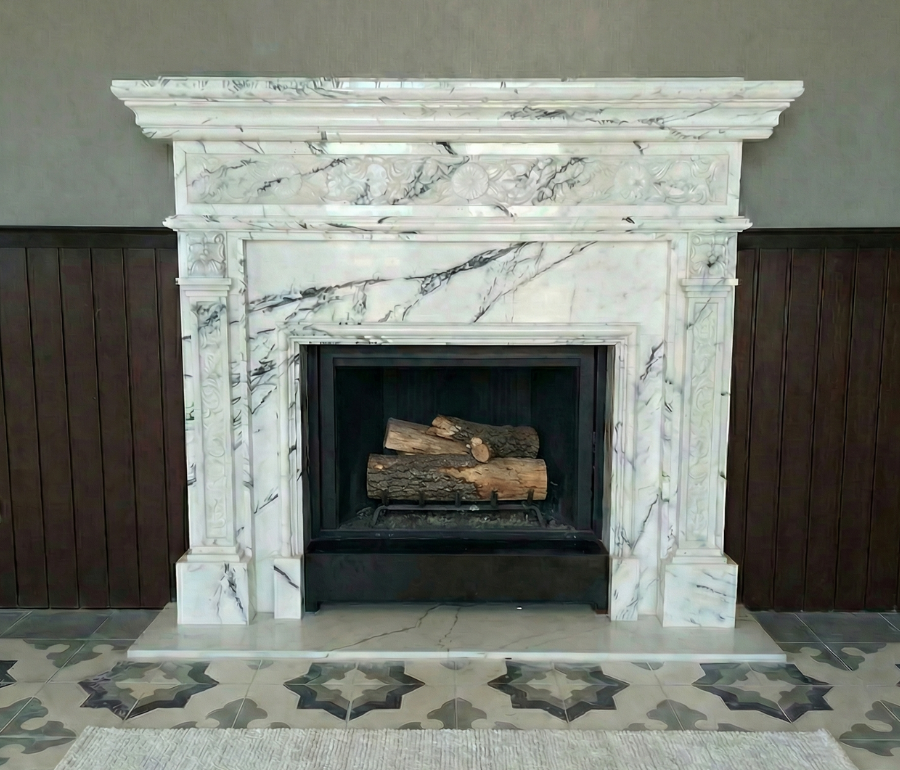
Few natural stones command attention like Italian Calacatta Marble. Recognized worldwide for its bright white background and dramatic gray veining, it has long been associated with luxury residences, boutique hotels, and prestigious architectural projects. When incorporated into a fireplace surround, Calacatta Marble transforms an everyday living space into an elegant focal point that immediately captures attention.
The fireplace shown here perfectly demonstrates why Calacatta Marble remains one of the most desirable materials for custom fireplace surrounds. Rather than relying on excessive ornamentation, the design embraces refined proportions and the natural beauty of the stone itself. Every vein flows organically across the fireplace opening, creating visual movement that gives the entire installation a sense of depth and individuality.
One of the defining characteristics of Italian Calacatta Marble is its bold veining. Unlike more uniform marbles, Calacatta features expressive natural patterns that become works of art in their own right. Because every slab is unique, each fireplace possesses its own identity, ensuring that no installation can ever be exactly replicated.
The classic mantel profile featured in this design further enhances the stone’s elegance. Clean moldings and carefully balanced proportions create a timeless architectural composition that feels equally appropriate in traditional homes, transitional interiors, and contemporary residences. Rather than following short-term design trends, this type of fireplace draws inspiration from classical European architecture while remaining relevant in modern living environments.
Beyond aesthetics, the restrained color palette contributes significantly to the room’s atmosphere. The warm white marble reflects natural daylight, making the living room feel brighter and more spacious. Soft gray veining introduces subtle contrast without overwhelming surrounding furnishings, allowing the fireplace to anchor the room while maintaining visual harmony.
This versatility explains why Calacatta Marble is frequently specified by architects and interior designers for premium residential projects. It complements an extraordinary range of materials, including:
White oak flooring
Walnut cabinetry
Natural linen upholstery
Bouclé accent chairs
Brushed brass hardware
Bronze lighting fixtures
Matte black metal details
Handcrafted ceramics
Neutral wool rugs
Large-format artwork
Together, these materials create interiors that feel layered, sophisticated, and welcoming rather than overly formal.
Why Italian Calacatta Marble Remains a Designer Favorite
Luxury interiors often rely on one defining architectural element to establish the character of the space. A Calacatta Marble fireplace fulfills this role exceptionally well because it combines natural artistry with timeless architectural presence.
Interior designers frequently specify Calacatta Marble because it offers:
A distinctive and luxurious appearance
Naturally dramatic veining that creates visual interest
Excellent compatibility with both classic and modern interiors
A bright color palette that enhances natural light
Long-term design value that transcends changing trends
Unique slabs that make every fireplace one of a kind
Rather than acting as a decorative accessory, a well-designed marble fireplace becomes an integral part of the home’s architecture.
Design Tip
For the most refined appearance, architects often bookmatch adjacent marble slabs so the natural veining flows continuously across the fireplace surround. This fabrication technique creates symmetry while emphasizing the inherent beauty of the stone, resulting in a truly bespoke installation.
Carrara Marble Fireplace: Timeless Simplicity That Never Goes Out of Style
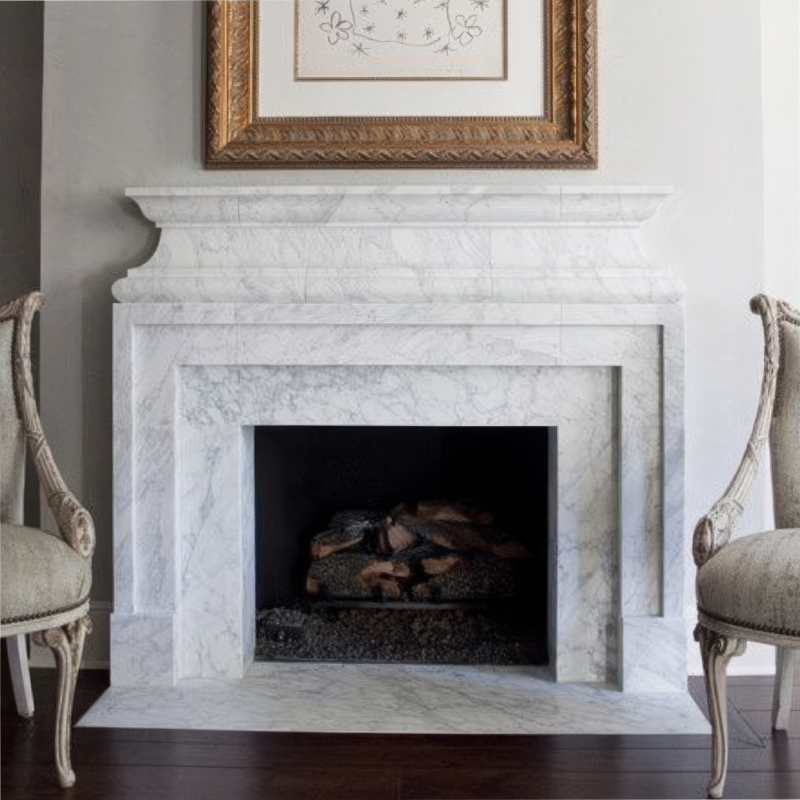
For centuries, Carrara Marble has been one of the world’s most celebrated natural stones. Quarried in the Apuan Alps of northern Italy, it has been used in iconic sculptures, historic architecture, and luxury interiors for generations. Today, Carrara Marble remains one of the most versatile choices for fireplace surrounds thanks to its understated elegance and enduring appeal.
Unlike the bold veining of Italian Calacatta Marble, Carrara Marble is characterized by its soft gray veining and gentle movement across a cool white background. This subtle appearance allows it to blend effortlessly into a variety of interiors while still adding the depth and authenticity that only natural stone can provide.
The fireplace featured here demonstrates how Carrara Marble creates a calm architectural presence without dominating the room. The clean mantel profile highlights the beauty of the stone, while the delicate veining introduces texture that feels refined rather than dramatic.
Because of its balanced appearance, Carrara Marble works beautifully in homes where simplicity and timelessness are the primary design goals. It complements both traditional architectural details and contemporary furnishings, making it one of the safest long-term investments for homeowners seeking a fireplace that will remain stylish for decades.
Why Carrara Marble Continues to Be a Classic Choice
Carrara Marble has remained popular for hundreds of years because its appearance feels naturally balanced. Rather than relying on bold patterns, it introduces quiet sophistication through subtle movement and soft tonal variation.
Homeowners appreciate Carrara Marble because it:
Creates bright and airy interiors
Complements virtually any color palette
Works with both traditional and contemporary architecture
Ages gracefully over time
Offers timeless elegance without feeling overly formal
Pairs effortlessly with wood, metal, and natural textiles
This versatility explains why Carrara Marble is frequently specified for custom homes, luxury apartments, boutique hotels, and high-end renovation projects.
Best Interior Styles for Carrara Marble Fireplaces
Carrara Marble integrates seamlessly into many of today’s most popular design styles, including:
Scandinavian
Transitional
Contemporary
Modern Classic
Coastal
Minimalist
European-inspired interiors
Its restrained veining allows surrounding furniture, artwork, and architectural details to remain visually balanced while the fireplace quietly anchors the room.
Recommended Material Combinations
Carrara Marble pairs exceptionally well with:
White oak flooring
Walnut furniture
Linen upholstery
Soft wool rugs
Brushed nickel accents
Antique brass fixtures
Warm white walls
Handcrafted ceramics
Natural woven textures
Together, these materials create interiors that feel inviting, elegant, and effortlessly timeless.
Designer Insight
If your goal is to create a fireplace that remains visually relevant for decades rather than following short-lived design trends, Carrara Marble is one of the most reliable natural stone choices available.
Volakas Marble Fireplace: Organic Beauty Inspired by Nature
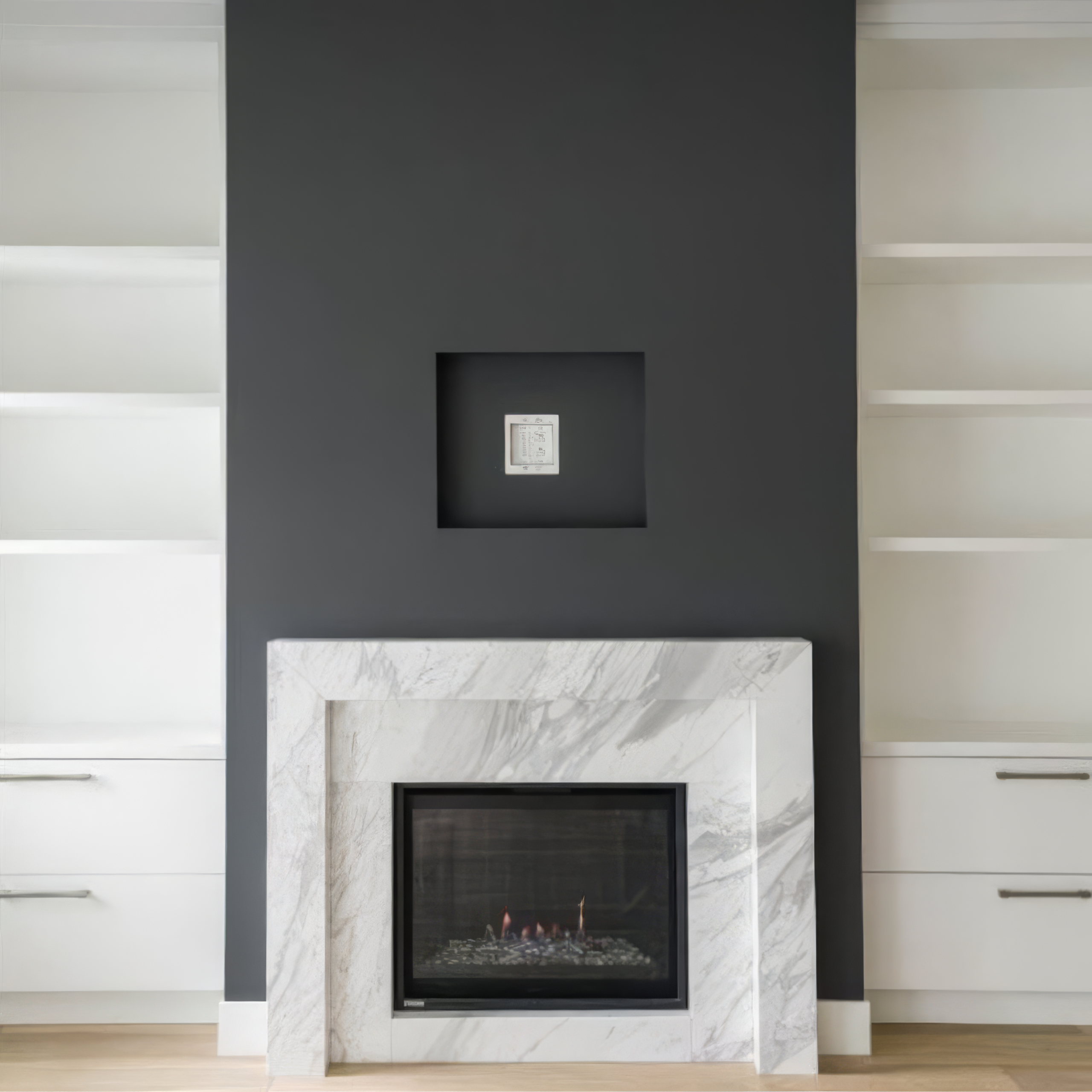
Known for its graceful gray veining and luminous white background, Volakas Marble has become one of the most sought-after natural stones for contemporary interiors. Quarried in Greece, this marble is admired for its flowing, linear patterns that resemble delicate brushstrokes across the surface, creating a softer and more organic appearance than many other white marbles.
A Volakas Marble fireplace introduces warmth and movement without overpowering the surrounding architecture. Its natural veining creates a sense of calm that makes it particularly well suited for living rooms designed around comfort, simplicity, and natural materials.
The fireplace shown here highlights how understated detailing allows the stone itself to become the centerpiece. Rather than relying on decorative moldings or excessive ornamentation, the clean architectural profile emphasizes the marble’s elegant movement, resulting in a sophisticated focal point that feels both contemporary and timeless.
Why Designers Choose Volakas Marble
Volakas Marble has gained significant popularity because it bridges the gap between classic marble elegance and modern interior design. Its softer veining creates a more relaxed atmosphere while still delivering the luxury associated with premium natural stone.
Key characteristics include:
Soft flowing gray veining
Bright white background
Natural movement unique to every slab
Elegant and understated appearance
Excellent versatility across multiple design styles
A warm, welcoming aesthetic
Because every slab features different vein patterns, each fireplace becomes a bespoke architectural feature that cannot be duplicated.
Perfect Pairings for Volakas Marble
Volakas Marble works beautifully alongside natural materials commonly found in today’s luxury interiors.
Consider combining it with:
Light oak flooring
Walnut shelving
Limewash walls
Bouclé seating
Linen curtains
Bronze lighting
Matte black fireplace inserts
Soft neutral textiles
Handmade pottery
Indoor greenery
These combinations create interiors that feel layered, balanced, and connected to nature.
Ideal Design Styles
Volakas Marble is particularly suited for:
Organic Modern
Contemporary
Japandi
Scandinavian
Modern Mediterranean
Quiet Luxury
Transitional interiors
Its gentle veining provides visual interest without overwhelming minimalist spaces, making it an excellent choice for homeowners seeking a refined yet approachable atmosphere.
Architect’s Tip
Large-format Volakas Marble slabs with carefully aligned veining create a seamless fireplace surround that enhances the natural flow of the stone while showcasing exceptional craftsmanship.
Fluted Volakas Marble Fireplace: Where Modern Architecture Meets Natural Stone
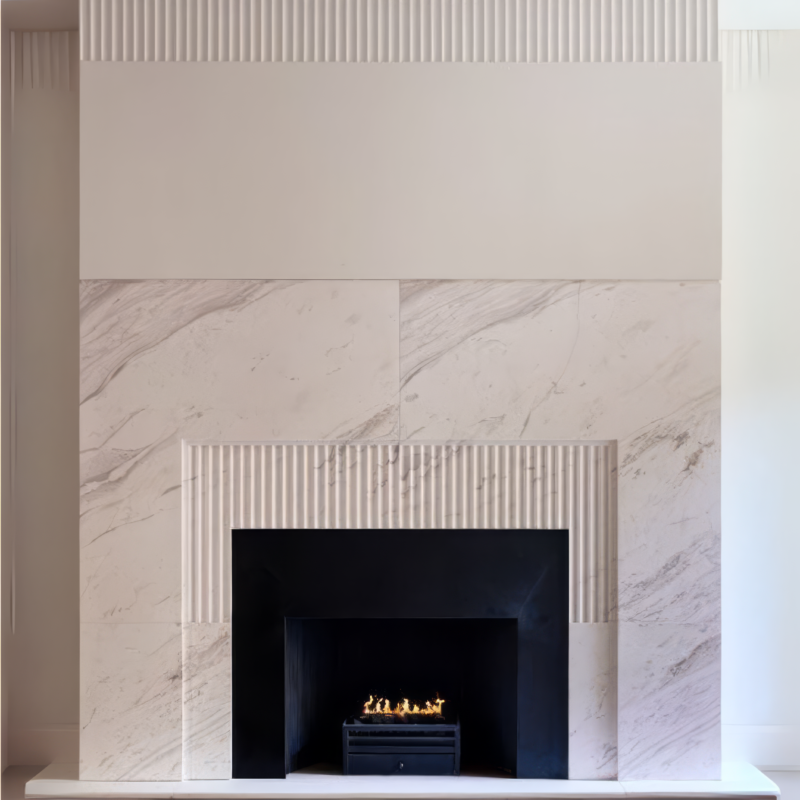
Contemporary fireplace design has evolved beyond traditional mantelpieces. Today, architects and interior designers are creating fireplaces that function as integrated architectural features, combining clean geometry with premium natural materials. One of the strongest examples of this trend is the fluted Volakas Marble fireplace.
The fireplace shown here demonstrates how texture can completely transform a minimalist design. Rather than relying on decorative moldings, the vertical fluted detailing introduces rhythm, depth, and shadow, allowing the marble to become both a functional surface and a sculptural design element.
Volakas Marble is particularly well suited for this application because its soft gray veining flows naturally across the stone while the fluted texture adds another layer of visual interest. The result is sophisticated without appearing excessive—a hallmark of today’s luxury residential interiors.
The large-format marble wall panels surrounding the fireplace further strengthen the architectural composition. Instead of treating the fireplace as a separate feature, the design integrates it into the entire wall, creating a seamless focal point that feels custom-made for the space.
Why Fluted Marble Fireplaces Are Trending
Fluted detailing has become one of the defining features of modern interior architecture. Originally inspired by classical columns, vertical grooves are now being incorporated into furniture, wall panels, kitchen islands, bathroom vanities, and fireplace surrounds.
When combined with natural marble, fluting offers several design advantages:
Adds architectural depth
Creates subtle light and shadow throughout the day
Enhances craftsmanship
Introduces texture without excessive decoration
Complements minimalist interiors
Creates a custom-built appearance
Because the grooves interact with natural light, the fireplace changes character throughout the day, giving the stone a dynamic quality that flat surfaces cannot achieve.
A Fireplace That Becomes Part of the Architecture
One of the biggest shifts in contemporary interior design is moving away from fireplaces that simply sit against a wall. Instead, designers increasingly create feature walls where shelving, lighting, wall panels, and fireplaces work together as one architectural composition.
Large-format marble slabs help reinforce this concept by minimizing visible joints and allowing the natural veining to flow continuously across the installation. This creates a cleaner, more luxurious appearance while showcasing the quality of both the stone and the fabrication.
Best Design Styles for Fluted Marble Fireplaces
This type of fireplace is especially suitable for:
Contemporary homes
Luxury apartments
Organic Modern interiors
Minimalist architecture
High-end custom residences
Boutique hospitality projects
Its restrained elegance ensures that it remains timeless rather than trend-driven.
Design Insight
Combining fluted detailing with bookmatched or vein-matched marble panels creates an architectural centerpiece that balances texture, proportion, and natural beauty while highlighting the craftsmanship behind every installation.
Marble Fireplace Design Styles
A marble fireplace can transform the atmosphere of a room, but selecting the right architectural style is just as important as choosing the stone itself. The proportions, mantel profile, and overall detailing should complement the home’s interior rather than compete with it.
Traditional Marble Fireplaces
Traditional fireplaces feature classic mantel profiles, decorative moldings, and balanced proportions inspired by European architecture. Italian Calacatta and Carrara Marble are particularly well suited for these timeless designs.
Best suited for:
Traditional homes
Colonial architecture
Transitional interiors
Luxury residences
Contemporary Marble Fireplaces
Contemporary fireplaces emphasize clean geometry, minimal detailing, and seamless integration with surrounding walls. Large-format marble slabs are often used to create uninterrupted surfaces.
Best suited for:
Modern homes
Open-concept living spaces
Luxury apartments
Contemporary villas
Minimalist Fireplace Surrounds
Minimalist designs remove unnecessary ornamentation and allow the natural stone to speak for itself. Thin joints, simple profiles, and carefully selected marble slabs create an understated elegance.
Best suited for:
Scandinavian interiors
Japandi homes
Modern architecture
Urban residences
Floor-to-Ceiling Marble Feature Walls
One of today’s most desirable fireplace trends is extending the marble beyond the surround to create a full-height feature wall. This approach transforms the fireplace into the architectural centerpiece of the room while emphasizing the scale and beauty of natural stone.
Best Marble Types for Fireplace Surrounds
Different marble varieties create different visual effects. Choosing the right stone depends on the atmosphere you want to achieve.
Marble
Character
Best Interior Style
Italian Calacatta Marble
Bold veining and luxurious appearance
Luxury, Transitional, Contemporary
Carrara Marble
Soft gray veining and timeless elegance
Scandinavian, Traditional, Minimalist
Volakas Marble
Flowing natural movement with a warm white background
Organic Modern, Contemporary, Japandi
Afyon White Marble
Bright white tones with refined texture
Classic and Modern Interiors
Marmara White Marble
Distinctive linear veining
Contemporary and Architectural Spaces
Rather than selecting marble based solely on color, homeowners should also consider veining, slab size, finish, and how the fireplace will relate to the surrounding flooring, furniture, and natural light.
Marble Fireplace vs. Other Fireplace Surround Materials
The fireplace surround has a major influence on both the visual character and long-term performance of the installation. While several materials can be used around a fireplace, each creates a different architectural effect.
Material
Visual Character
Key Advantage
Best Suited For
Marble
Refined, natural, and timeless
Unique veining and strong architectural presence
Luxury, traditional, and contemporary interiors
Limestone
Soft, warm, and understated
Calm texture and neutral color palette
Organic Modern and Mediterranean spaces
Travertine
Textured, earthy, and relaxed
Natural pores and warm tonal variation
Rustic, contemporary, and warm minimalist interiors
Wood
Familiar, warm, and decorative
Easy to coordinate with cabinetry and flooring
Traditional and farmhouse-style homes
Porcelain
Clean and consistent
Wide pattern selection and low maintenance
Modern and high-use interiors
Concrete
Raw and minimalist
Strong monolithic appearance
Industrial and contemporary architecture
Marble remains one of the most distinctive choices because every slab is naturally different. Unlike printed surfaces, genuine marble has depth, mineral variation, and movement that changes subtly under daylight and artificial lighting.
It also offers exceptional design flexibility. A marble fireplace can feature carved traditional moldings, a simple rectangular frame, a dramatic floor-to-ceiling wall, or fluted architectural panels. This versatility makes marble suitable for both period properties and newly built contemporary homes.
Is Marble Better Than Porcelain for a Fireplace?
Porcelain can be practical where consistency and simplified maintenance are the main priorities. However, it does not offer the individuality or geological depth of natural marble.
Marble is generally preferred when the fireplace is intended to become a bespoke architectural centerpiece. Porcelain may suit projects where visual uniformity, lighter installation systems, or a specific manufactured pattern is required.
The choice should therefore be based on the design objective rather than appearance alone.
How to Choose the Right Marble Fireplace Design
Selecting a marble fireplace involves more than choosing the stone with the most attractive color. The best results come from considering the room, architecture, slab characteristics, and fabrication details as one complete composition.
Consider the Scale of the Room
A large fireplace can look impressive in a spacious living room with high ceilings, but the same design may overwhelm a compact interior.
Before finalizing the mantel dimensions, consider:
Ceiling height
Fireplace opening
Wall width
Nearby windows and doors
Furniture proportions
Viewing distance
Existing architectural moldings
The surround should feel substantial enough to anchor the room without interrupting its balance.
Match the Veining to the Desired Atmosphere
Different veining patterns create different visual effects.
Bold Calacatta veins make the fireplace more dramatic, while Carrara’s finer movement creates a quieter result. Volakas can introduce flowing linear character that works especially well in modern and organic interiors.
A full-slab review is preferable to selecting marble from a small sample. Small pieces may not accurately represent the scale, direction, or intensity of the overall veining.
Decide Between a Classic Mantel and a Full-Height Feature Wall
A classic mantel introduces architectural framing and works beautifully in traditional, transitional, and modern classic homes.
A full-height marble wall creates a cleaner, more contemporary result and is especially effective in open-plan living rooms. The latter approach also allows the stone pattern to become a larger part of the interior composition.
Select the Right Finish
The finish changes how marble reflects light and how strongly its color and veining appear.
Polished Marble
A polished finish creates a reflective surface and makes the marble colors appear deeper and more defined. It works well in formal and luxurious interiors.
Honed Marble
A honed finish has a softer, more matte appearance. It reduces reflection and often feels more relaxed and contemporary.
Textured or Fluted Marble
Textured treatments add depth and craftsmanship. Fluted or carved details create changing shadows and are ideal for architectural statement fireplaces.
Expert Recommendation
The finish should be selected according to the room’s lighting and wider material palette. In a highly reflective interior, a honed surface may feel more balanced. In a formal room with controlled lighting, polished marble can provide greater visual richness.
How to Style a Marble Fireplace Mantel
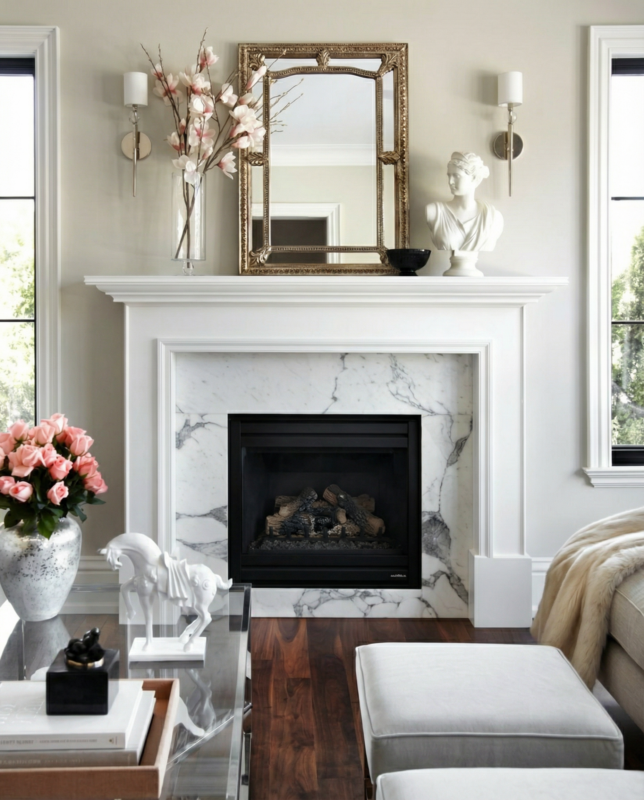
A marble fireplace already carries strong visual character, so mantel styling should support the architecture rather than compete with it.
Use One Large Artwork
A single oversized painting or framed artwork can reinforce the vertical scale of the fireplace. Choose a piece that relates to the room’s color palette without repeating every shade exactly.
Abstract art works well with contemporary marble fireplaces, while landscapes, portraits, and classical compositions can complement traditional mantels.
Add an Organic Mirror
Mirrors reflect daylight and make the fireplace wall feel more open. Rounded, arched, or irregularly shaped mirrors can soften the geometry of a rectangular marble surround.
For a more formal interior, a symmetrical mirror with a slim metal or carved frame may be more appropriate.
Create Asymmetry with Sculptural Objects
Perfect symmetry is not always necessary. A tall vase on one side and a smaller group of objects on the other can create a more relaxed, collected appearance.
Suitable accessories include:
Ceramic vessels
Stone sculptures
Candlesticks
Art books
Decorative boxes
Natural branches
Small framed artworks
Keep the Marble Visible
One of the most common styling mistakes is covering too much of the mantel surface. The marble itself is part of the decoration.
Leaving intentional open space allows the veining, profile, and craftsmanship to remain visible.
Coordinate with the Room, Not Only the Fireplace
Mantel accessories should relate to the wider interior. Materials such as aged brass, bronze, dark timber, handmade ceramic, and clear glass can help connect the fireplace to nearby furniture and lighting.
Common Marble Fireplace Design Mistakes
1. Choosing the Stone Without Reviewing the Full Slab
A small sample can show color but rarely communicates the overall veining pattern. For a large fireplace, slab selection is one of the most important stages of the project.
2. Ignoring Vein Direction
Veins that end abruptly at corners or change direction unexpectedly can make the final design feel disconnected.
The layout should be planned before cutting so the natural movement continues as harmoniously as possible across the mantel, legs, hearth, or wall panels.
3. Using a Mantel That Is Too Small
A narrow or undersized surround can appear visually weak, particularly in rooms with high ceilings or wide walls.
The fireplace should be proportioned in relation to the room, not selected as an isolated product.
4. Combining Too Many Competing Patterns
Bold marble veining can conflict with heavily patterned wallpaper, flooring, upholstery, and artwork.
When the fireplace features expressive Calacatta or Volakas movement, quieter surrounding materials often create a more balanced result.
5. Selecting the Wrong Lighting Temperature
Cool lighting can make white marble appear gray or harsh.
Warm white lighting generally complements marble more effectively and helps emphasize soft veining and natural depth.
6. Overdecorating the Mantel
Too many accessories reduce the architectural impact of the fireplace and can make the composition feel cluttered.
A few carefully selected pieces usually create a stronger result.
7. Treating Natural Variation as a Defect
Marble is not a manufactured surface. Veining, tonal variation, mineral markings, and small natural characteristics are part of its identity.
These qualities should be understood and reviewed before fabrication rather than expected to appear completely uniform.
Marble Fireplace Maintenance and Care
A marble fireplace can retain its refined appearance for many years when maintained correctly. Routine care is generally simple, but products intended for ordinary household surfaces may not always be suitable for natural stone.
Regular Cleaning
Dust the marble with a soft, dry microfiber cloth. For deeper cleaning, use a lightly dampened cloth and a pH-neutral cleaner specifically formulated for natural stone.
Avoid soaking carved details or joints with excessive water.
Products to Avoid
Do not use cleaners containing:
Vinegar
Lemon
Bleach
Strong acids
Abrasive particles
Harsh degreasers
Acidic products may dull or etch the surface, especially on polished marble.
Remove Soot Carefully
Where soot accumulates near the fireplace opening, clean it before the residue becomes deeply embedded.
Use a stone-safe cleaning product and a soft cloth. Persistent marks should be assessed by a natural stone care specialist rather than scrubbed aggressively.
Protect the Hearth Area
The hearth may be exposed to ash, tools, decorative logs, or fireplace accessories. Avoid dragging metal objects across the marble.
Protective pads beneath heavy accessories can help reduce scratching.
Sealing
Depending on the marble, finish, and installation, a suitable natural stone sealer may be recommended.
Sealing does not make marble completely stain-proof, but it can provide additional time to clean spills or residue before they penetrate the surface.
The appropriate product and maintenance schedule should be determined according to the specific stone and application.
Frequently Asked Questions About Marble Fireplaces
Is marble suitable for a fireplace surround?
Yes. Marble has been used around fireplaces in architecture for centuries. The final design, installation method, heat source, and local building requirements should be evaluated by qualified professionals.
Which marble is best for a fireplace?
Italian Calacatta, Carrara, Volakas, Afyon White, and Marmara White are all strong decorative choices. The best option depends on the preferred veining, color, architectural style, and available slab dimensions.
What is the difference between Calacatta and Carrara Marble?
Calacatta typically has a brighter background and bolder, more dramatic veining. Carrara generally features softer gray movement and a more understated appearance.
Is Volakas Marble suitable for modern fireplaces?
Yes. Its flowing gray veining and light background work particularly well with clean-lined, fluted, floor-to-ceiling, and minimalist fireplace designs.
Should a marble fireplace be polished or honed?
Both finishes can work well. Polished marble has more reflection and stronger color depth, while honed marble has a softer and more contemporary appearance.
Can marble be used for a floor-to-ceiling fireplace wall?
Yes. Large marble slabs can create an impressive full-height feature wall. Slab size, joints, support, layout, and installation requirements should be professionally planned.
Does every marble fireplace look different?
Yes. Natural veining and color variation mean that every marble slab is unique. Even fireplaces produced from the same marble variety will have individual characteristics.
Can marble fireplace panels be bookmatched?
Yes, when suitable slabs are available. Bookmatching creates mirrored veining and can produce a highly distinctive symmetrical feature.
How should a marble mantel be decorated?
Use a restrained selection of artwork, mirrors, ceramics, books, candlesticks, or sculptural objects. Leave enough open space for the marble itself to remain visible.
Is marble difficult to maintain?
Routine maintenance is manageable when suitable products are used. A soft cloth, pH-neutral stone cleaner, prompt soot removal, and avoidance of acidic chemicals are the main principles.
Does white marble make a room feel brighter?
Light marble can reflect natural and artificial light, helping a living room feel more open. The result also depends on wall color, flooring, windows, and lighting design.
Can a marble fireplace work in a small living room?
Yes. A simple surround with carefully controlled proportions can add architectural character without overwhelming the room. Lighter marble and restrained detailing are often effective in compact spaces.
Internal Linking Opportunities
To strengthen the blog’s SEO structure, the following phrases can link naturally to related Efesus Home or Efesus Stone pages:
Italian Calacatta Marble
Carrara Marble
Volakas Marble
custom marble fireplace
natural stone furniture
marble coffee tables
marble console tables
luxury living room design
custom natural stone fabrication
marble care guide
Internal links should be added only where the destination page directly supports the reader’s intent. Repeating the same link too frequently can make the article feel unnatural.
A Timeless Architectural Centerpiece
A marble fireplace brings together natural material, craftsmanship, and architecture in one defining feature. Italian Calacatta creates a bold and luxurious statement, Carrara delivers quiet classical elegance, and Volakas introduces flowing movement suited to softer contemporary interiors.
The most successful design is not necessarily the most elaborate. Careful proportions, considered veining, appropriate surface finishes, and a restrained material palette often produce the strongest and most enduring result.
Whether designed as a traditional mantel, a minimalist surround, a fluted architectural composition, or a floor-to-ceiling feature wall, marble gives the fireplace an individual character that manufactured surfaces cannot fully reproduce. Each natural variation becomes part of the room’s identity, ensuring that the finished installation feels specific to the home rather than copied from a standard design.
At Efesus Home, custom marble fireplaces can be developed according to architectural drawings, selected stone slabs, project dimensions, and preferred surface details. With thoughtful stone selection and precise fabrication, a marble fireplace can remain the visual heart of a living room for generations.