
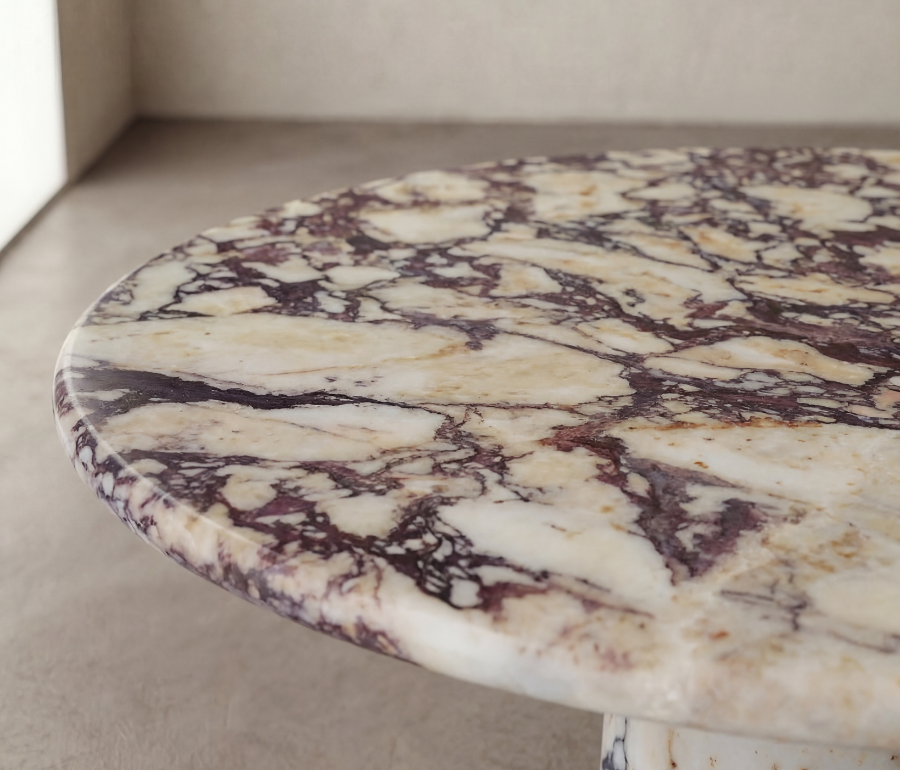
Calacatta Viola Marble has become one of the most distinctive natural stones used in contemporary interior design. Recognized for its creamy white background, dramatic violet and burgundy veining, and highly individual slab movement, this marble creates a strong visual identity in both architectural surfaces and custom furniture.
Unlike quieter white marbles, Calacatta Viola is often selected when the natural stone itself is intended to become part of the design statement. Its bold veining can transform a simple coffee table, a fluted architectural column, a bathroom sink or a mosaic floor into a focal element.
This versatility is one of the reasons Calacatta Viola Marble works so well across residential interiors, hospitality projects, bathrooms, living spaces, decorative flooring and bespoke natural stone furniture.
In this guide, we explore four different ways to use Calacatta Viola Marble in interior design and examine its color, veining, material combinations, fabrication possibilities and design potential.
What Is Calacatta Viola Marble?
Calacatta Viola Marble is known for its light cream to white background combined with expressive violet, burgundy and darker mineral veining. Depending on the block and slab selection, the veining may appear as broad dramatic movements, fragmented patterns or dense networks of contrasting color.
This variation is an essential part of the stone’s character.
Because Calacatta Viola is a natural material, no two slabs are completely identical. Some selections may show a more open white background, while others contain much denser purple and burgundy movement. For designers, this means slab selection can have a major impact on the final appearance of a project.
Calacatta Viola works particularly well when the design allows enough surface area for its natural pattern to remain visible. Large furniture pieces, columns, sinks, vanity elements and decorative flooring can all benefit from this strong visual movement.
The stone can also be combined with warm timber, brass, bronze, cream-colored textiles and neutral wall finishes to create interiors that feel rich without becoming visually chaotic.
1. Calacatta Viola Marble Coffee Table: A Sculptural Statement for Living Spaces
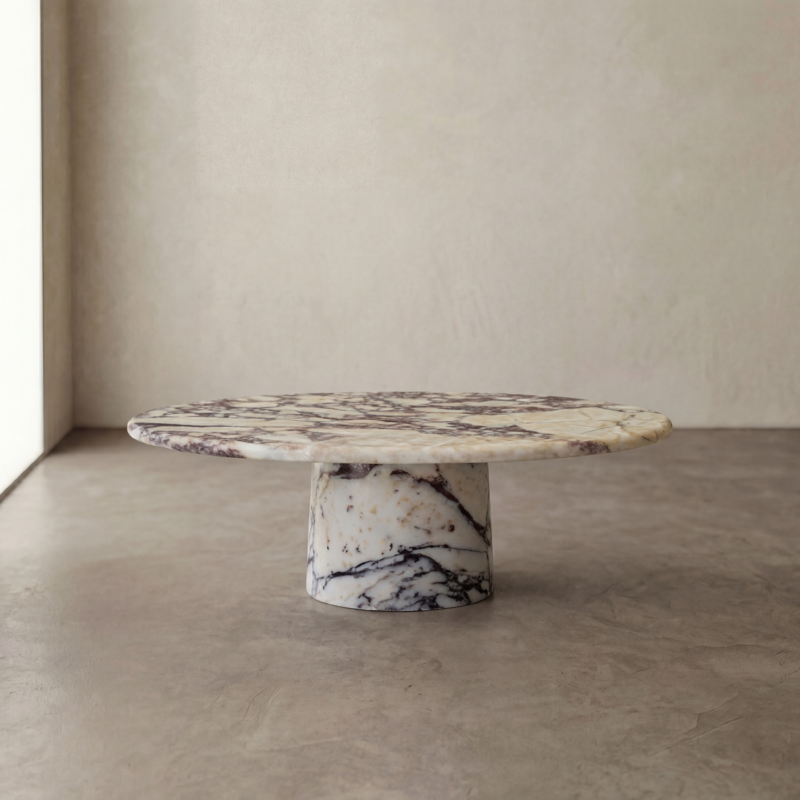
Calacatta Viola Marble Coffee Table
A Calacatta Viola Marble coffee table is one of the most effective ways to introduce this stone into a living room without covering a large architectural surface.
The table shown here uses a simple circular top and a cylindrical stone base. This restrained geometry allows the natural marble pattern to become the main decorative feature.
The white and cream background creates a light overall impression, while the violet and burgundy veining introduces contrast and movement. Because the form itself is minimal, the eye is naturally drawn toward the stone.
This type of coffee table works particularly well in interiors with neutral sofas, textured rugs, warm beige walls and natural wood. The marble introduces a stronger visual layer without requiring additional decorative elements.
Why Calacatta Viola Works Well for Coffee Tables
Coffee tables provide enough horizontal surface area for the marble pattern to be appreciated from above. This is particularly important with highly veined stones such as Calacatta Viola.
The design can be made even more refined by carefully selecting which section of the slab appears on the tabletop.
A more open white area creates a calmer look, while a section with heavier violet veining creates a more dramatic statement.
For custom natural stone furniture, slab layout should therefore be considered part of the design process rather than simply a fabrication detail.
Where to Use a Calacatta Viola Coffee Table
A Calacatta Viola coffee table can work in:
- Contemporary living rooms
- Luxury residential interiors
- Hotel suites
- Boutique hospitality spaces
- Reception lounges
- Minimalist interiors requiring a strong focal element
Its natural variation also means each finished table has its own visual identity.
2. Fluted Calacatta Viola Marble Column Cladding for Architectural Interiors
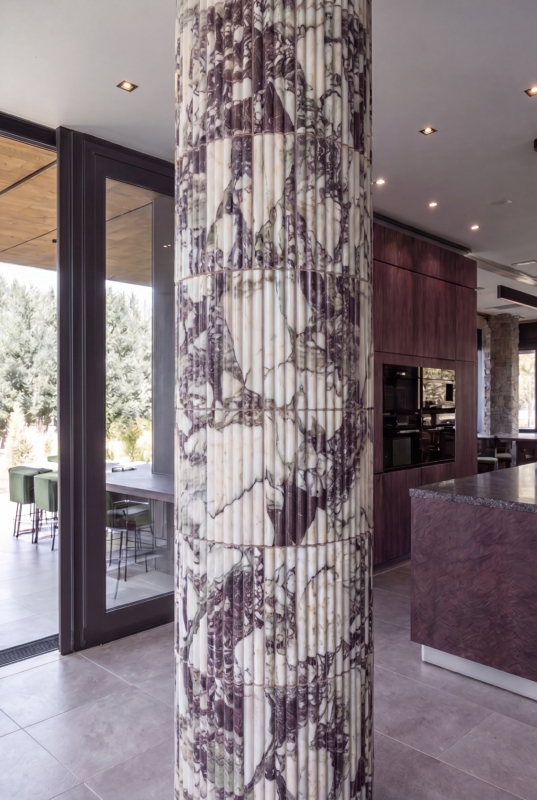
Fluted Calacatta Viola Marble Column Cladding
The second application demonstrates how Calacatta Viola can move from furniture into full architectural design.
The column shown here is clad in fluted Calacatta Viola Marble, combining the natural pattern of the stone with a three-dimensional vertical texture.
This is particularly effective because fluting changes the way light interacts with the marble surface. Instead of seeing only the color and veining, the viewer also perceives shadow, depth and rhythm.
The vertical grooves strengthen the architectural presence of the column while the marble’s natural violet movement prevents the surface from feeling repetitive.
Why Fluted Marble Works So Well
Fluted stone surfaces are especially effective when designers want to introduce texture without adding another material.
The marble itself remains continuous, but the carved profile creates an additional visual layer.
With Calacatta Viola, this approach is particularly powerful because the fluting breaks the bold veining into vertical fragments. As a result, the natural pattern becomes more dynamic as the viewer moves around the column.
This type of application can be used on:
- Interior columns
- Feature walls
- Reception desks
- Bar fronts
- Kitchen islands
- Vanity fronts
- Decorative panels
- Custom architectural cladding
Calacatta Viola for Statement Architecture
In architectural interiors, Calacatta Viola can function almost like an artwork.
A single column, wall panel or sculptural stone surface may be enough to define the visual identity of a room.
Because of the intensity of the veining, it is often effective to combine the marble with quieter materials such as dark wood, warm metal, matte plaster or neutral flooring.
This contrast allows the natural stone to remain the focal point.
3. Fluted Calacatta Viola Marble Sink for Contemporary Bathrooms
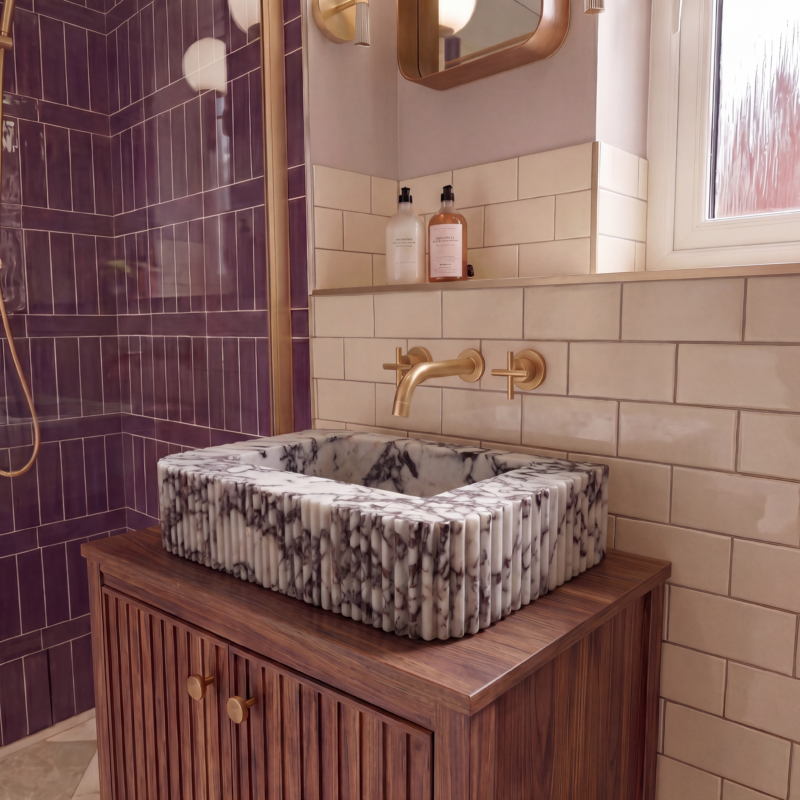
Bathrooms are another area where Calacatta Viola Marble can be used to strong effect.
The sink shown here combines a rectangular stone basin with fluted exterior detailing. The result is both functional and sculptural.
The white background of the marble keeps the overall piece visually bright, while the violet and burgundy movement creates depth across the basin.
The fluted exterior surface adds another level of detail and makes the sink more architectural than a conventional countertop basin.
Why Use Calacatta Viola in Bathroom Design?
Bathrooms often contain relatively controlled material palettes, which makes expressive natural stone particularly effective.
Calacatta Viola can be used to introduce color and movement without adding multiple finishes.
A single sink, vanity or backsplash can create enough contrast to define the entire space.
It works especially well with:
- Brushed brass fittings
- Bronze fixtures
- Warm wood cabinetry
- Cream or beige wall tiles
- Soft grey surfaces
- Smoked glass
- Off-white plaster
The combination shown in the image is a good example of how Calacatta Viola can sit comfortably alongside warm timber and brass.
Calacatta Viola Sink Design Considerations
When using marble for sinks, proper fabrication and detailing are important.
Drainage, internal geometry, edge treatment, sealing and maintenance should all be planned according to the intended use of the piece.
For natural stone sinks, it is also important to consider the exact slab selection and vein placement. Since the sink is viewed from multiple angles, the relationship between top surfaces, side faces and front details can significantly affect the final result.
4. Calacatta Viola Marble Mosaic Flooring: Pattern, Contrast and Natural Veining
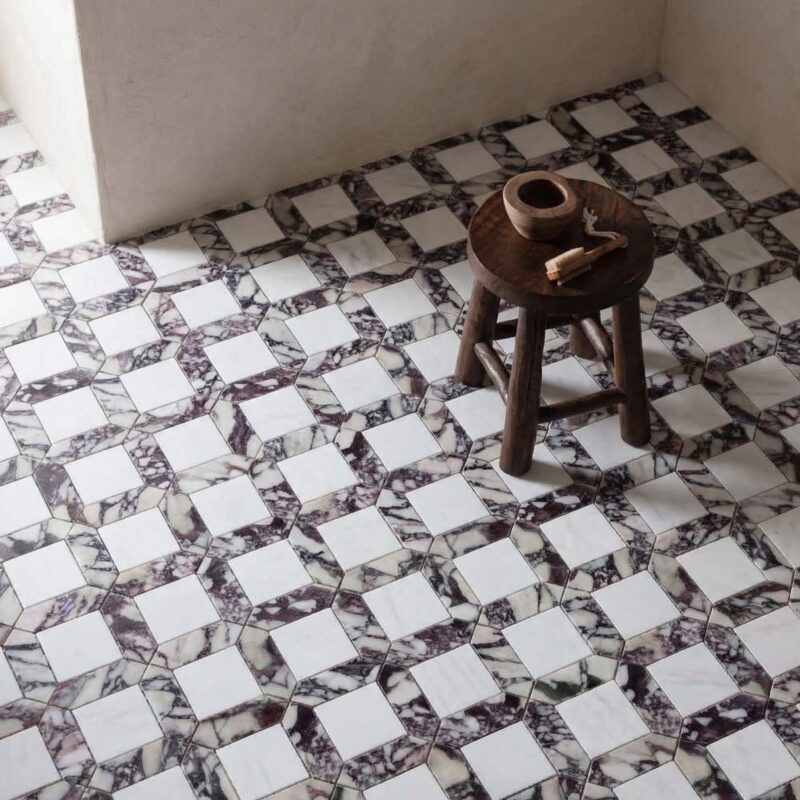
Calacatta Viola Marble Mosaic Flooring
Calacatta Viola is not limited to large slabs or furniture.
It can also be transformed into highly decorative marble mosaic flooring, where smaller stone pieces create repeated geometric patterns.
The mosaic shown here combines white sections with Calacatta Viola elements to create a strong contrast between clean geometry and natural veining.
This is particularly effective because the natural purple and burgundy movement appears inside a highly structured pattern.
The result is decorative without feeling artificial.
Why Use Calacatta Viola in Mosaic Design?
Mosaics allow designers to use expressive stones in a more controlled way.
Instead of covering an entire floor with heavily veined marble, the stone can be introduced as part of a repeating pattern.
This gives the space visual interest while maintaining balance.
Calacatta Viola mosaics can work well in:
- Entrance halls
- Bathrooms
- Powder rooms
- Dressing areas
- Boutique retail interiors
- Decorative flooring
- Feature wall applications
The material can also be combined with white marble, beige limestone or other complementary natural stones depending on the design concept.
Geometry and Natural Stone
One of the most interesting aspects of marble mosaic design is the contrast between controlled geometry and natural variation.
Every piece follows a precise shape, yet the veining inside each piece is unique.
This is what gives natural stone mosaic floors a visual richness that cannot be fully replicated by manufactured materials.
Calacatta Viola Marble Color and Veining
The appeal of Calacatta Viola Marble comes largely from its color composition.
The background generally ranges from warm white to cream, while the main veins introduce violet, burgundy, plum and occasionally grey or greenish mineral tones.
Some slabs show large dramatic clusters, while others contain more fragmented networks of color.
Because of this variation, slab selection is especially important for projects where visual continuity matters.
For large wall panels or furniture surfaces, designers may prefer slabs with strong movement. For smaller elements such as side tables or sink components, quieter selections may work better.
The right choice depends on the scale and role of the stone within the interior.
How to Combine Calacatta Viola Marble with Other Materials
Calacatta Viola has a strong visual identity, so material pairing should generally support rather than compete with the marble.
Warm timber is one of the strongest combinations. Walnut, dark oak and other rich wood tones balance the cool white background while complementing the burgundy veining.
Brass and bronze are also highly effective because they introduce warmth without overpowering the stone.
Neutral materials such as beige plaster, cream textiles and soft grey flooring create a quieter background that allows the marble to remain dominant.
For more dramatic interiors, Calacatta Viola can also be paired with dark surfaces such as black metal, smoked glass or deep brown cabinetry.
Where Can Calacatta Viola Marble Be Used?
Calacatta Viola Marble can be considered for a wide variety of architectural and interior applications, depending on project requirements and technical suitability.
Common applications include:
- Coffee tables
- Dining tables
- Side tables
- Consoles
- Sinks
- Bathroom vanities
- Column cladding
- Fluted wall panels
- Kitchen islands
- Fireplace surrounds
- Decorative wall cladding
- Mosaic flooring
- Feature floors
- Reception desks
- Custom natural stone furniture
The material works best when its natural pattern is treated as part of the design rather than hidden.
Calacatta Viola Marble for Custom Furniture
Calacatta Viola is particularly suitable for custom natural stone furniture because its strong veining gives even simple geometric forms a unique appearance.
Round tables, pedestal bases, cube forms and sculptural pieces can all benefit from the natural contrast of the stone.
For custom furniture, slab selection and fabrication planning are especially important. The direction of the veins, the position of the cut and the way different faces meet can determine whether the final piece looks balanced or visually fragmented.
This is why experienced natural stone fabrication is important when working with expressive materials such as Calacatta Viola.
Calacatta Viola Marble for Architectural Projects
In architecture, Calacatta Viola can be used as both a focal material and a secondary decorative surface.
A fluted column, a wall panel, a sink or a mosaic detail can be enough to introduce the stone into a project without dominating the entire space.
For larger applications, designers should consider slab matching, vein direction, finish and the relationship between adjacent pieces.
These decisions can substantially change the final appearance of the material.
Calacatta Viola Marble: Polished or Honed?
The finish can significantly change the appearance of Calacatta Viola.
A polished finish generally increases contrast and makes the violet and burgundy veins appear stronger. It also creates a more reflective surface.
A honed finish produces a softer, more matte appearance and can make the marble feel more understated.
The right finish depends on the application and the desired design language.
Furniture pieces and decorative surfaces often benefit from polished or finely honed finishes, while larger architectural applications may use a softer finish to reduce reflection.
Natural Variation in Calacatta Viola Marble
As with all natural marble, variation is part of the material.
Differences in background color, vein density and mineral structure should be expected between slabs.
These differences are not necessarily defects. In many projects, they are precisely what gives the finished surface its individuality.
For larger installations, representative slab selection or production review can help designers understand how this variation will appear across the complete project.
Calacatta Viola Marble and Efesus Stone
Efesus Stone by Reisoğlu Mermer works with natural stone for architectural projects, custom fabrication and international supply.
Calacatta Viola Marble can be processed for different project requirements, including cut-to-size elements, decorative surfaces, sinks, columns, mosaics and custom stone furniture components.
With a production background extending back to 1943, the company combines natural stone knowledge with modern fabrication methods such as CNC processing, waterjet cutting and custom architectural production.
This makes it possible to use the same stone in very different forms within a single project, from large architectural surfaces to detailed decorative elements.
Calacatta Viola Marble and Efesus Home
Calacatta Viola also plays an important role in natural stone furniture.
Through Efesus Home, marble can be transformed into coffee tables, dining tables, side tables, consoles, sinks and other custom interior pieces.
The coffee table and sink shown in this article demonstrate how the same marble can create completely different results depending on form, scale and fabrication method.
This flexibility is one of the strongest reasons Calacatta Viola continues to attract attention in contemporary interior design.
Frequently Asked Questions About Calacatta Viola Marble
What is Calacatta Viola Marble?
Calacatta Viola Marble is a natural marble known for its creamy white background and dramatic violet, burgundy and darker mineral veining.
What colors are found in Calacatta Viola Marble?
The stone typically combines white or cream with violet, burgundy, plum, grey and occasionally subtle greenish mineral tones.
Where can Calacatta Viola Marble be used?
It can be used for tables, sinks, vanities, column cladding, wall panels, mosaics, fireplaces, kitchen islands and other custom architectural applications.
Is Calacatta Viola Marble suitable for furniture?
Yes. It is particularly effective for coffee tables, dining tables, side tables and sculptural furniture because of its strong natural veining.
Can Calacatta Viola be used in bathrooms?
Yes. It can be used for sinks, vanities, wall surfaces and decorative bathroom elements when the stone is properly fabricated, installed and maintained.
What is the best finish for Calacatta Viola Marble?
Polished finishes emphasize contrast and veining, while honed finishes create a softer and more matte appearance. The best choice depends on the project.
Is every Calacatta Viola slab the same?
No. Calacatta Viola is a natural stone, so background color, vein density and mineral movement vary from slab to slab.
Can Calacatta Viola Marble be fluted?
Yes. Fluted fabrication can add depth and texture to columns, vanity fronts, sinks, wall panels and other custom stone elements.