
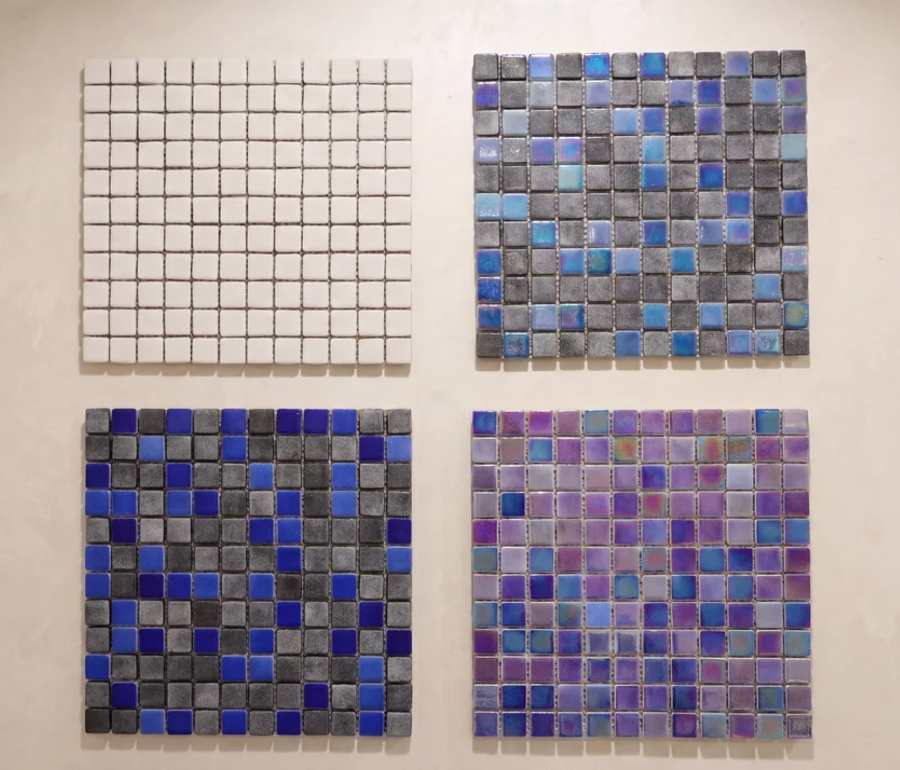
Light and Color Balance in Surfaces with Glass Mosaic Use
Glass mosaic use is one of the most effective ways to introduce light and color interaction into surface design. Thanks to the reflective nature of glass, these surfaces create dynamic visual effects while adding depth to the overall space.
Compared to natural stone or ceramic surfaces, glass mosaic tiles offer a more vibrant visual experience due to their ability to reflect and refract light. This characteristic becomes even more noticeable in areas with strong lighting or water interaction.
The Impact of Glass Mosaic on Surface Perception
Glass mosaic use transforms surfaces from static elements into dynamic features that change throughout the day. Light hitting the surface from different angles creates constantly shifting reflections.
This results in:
- More vibrant and lively surfaces
- Improved light balance within the space
- Enhanced depth perception
For this reason, glass mosaics are not only a decorative choice but also a design tool that influences how a space is perceived.
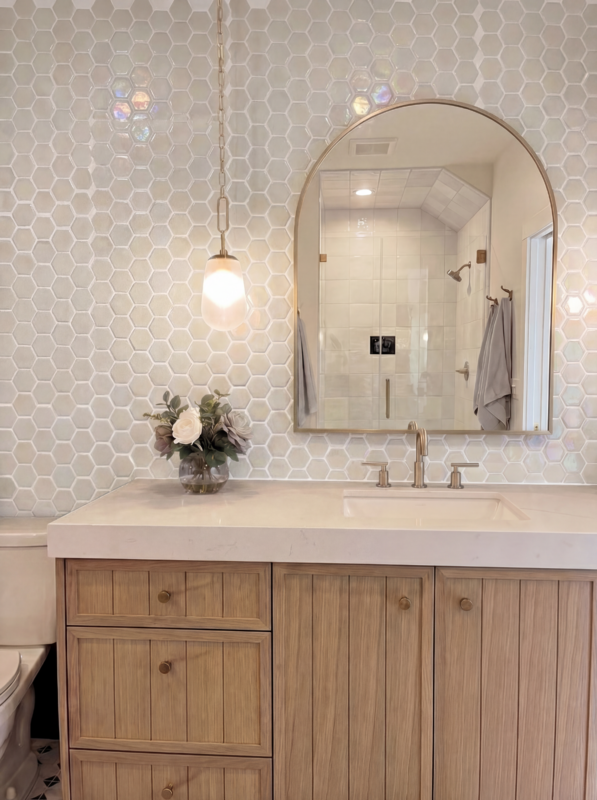
Glass Mosaic Bathroom Application
Color Variation and Visual Effect
One of the most distinctive aspects of glass mosaic tiles is the wide range of color options. By combining different tones, it is possible to create layered and fluid surface compositions.
With the right color selection:
- Movement is introduced to the surface
- The space gains energy
- More modern and dynamic designs are achieved
Light tones create a clean and airy look, while darker tones add depth and strong visual contrast.
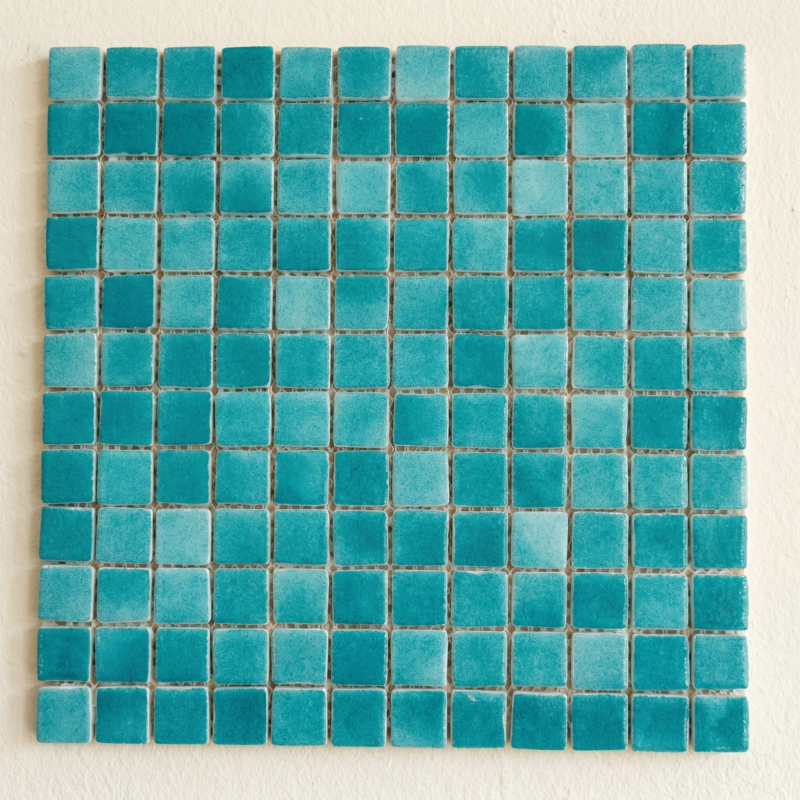
Texture and Reflection in Glass Mosaic Surfaces
Although glass mosaics may appear smooth at first glance, the combination of small pieces creates a micro-textured surface. This structure allows light to break and reflect in different directions, producing subtle tonal variations.
This effect:
- Prevents flat and uniform appearances
- Distributes light more evenly
- Adds a refined and sophisticated character
Because of this, glass mosaic surfaces are often used in areas where detail and visual richness are important.
Interaction Between Glass Mosaic and Water
Glass mosaic use becomes even more impactful when combined with water. In pool applications, the movement of water continuously changes how the surface is perceived.
This interaction:
- Enhances brightness and reflection
- Makes colors appear more vivid
- Creates a dynamic and living atmosphere
For this reason, glass mosaic tiles are one of the most preferred materials for pool surfaces.
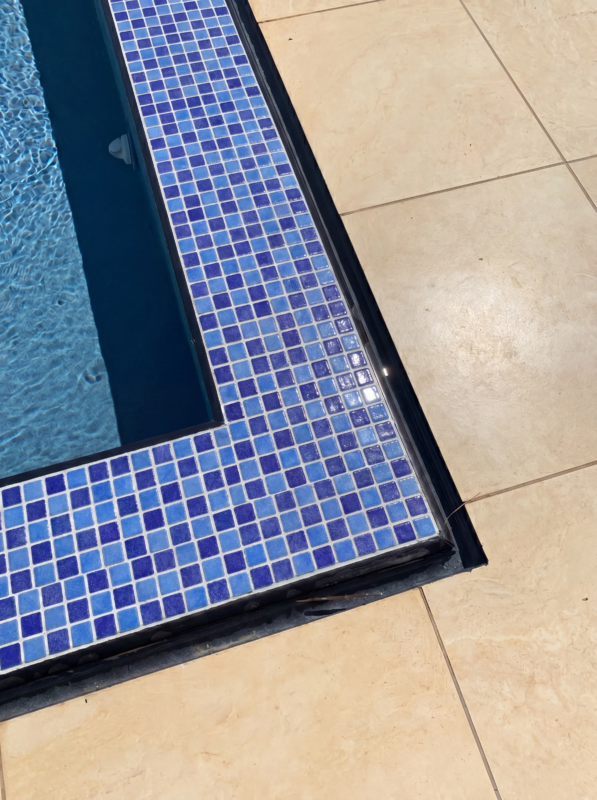
Blue Glass Mosaic Pool and Pool Deck Application
Applications of Glass Mosaic Tiles
Glass mosaic tiles offer a wide range of applications across both interior and exterior spaces.
Common usage areas include:
- Bathroom and shower walls
- Pool interiors
- Decorative wall surfaces
- Backsplash applications
- Spa and wellness areas
This versatility makes glass mosaic a flexible solution for various design concepts.
A Timeless Approach to Surface Design
Glass mosaic use is not driven by short-term trends. Thanks to its relationship with light, color, and reflection, it remains visually relevant over time.
With these qualities:
- Long-lasting design solutions are achieved
- The identity of the space becomes stronger
- Surfaces maintain a contemporary look
A Balanced Approach to Surface Design with Glass Mosaic
When used correctly, glass mosaic creates a strong balance between aesthetics and function in surface design. Its ability to manipulate light, enhance color, and introduce movement makes it a powerful architectural element.
In this sense, glass mosaic is not just a surface material, but a key component that shapes the perception and atmosphere of a space.