

Marble furniture brings natural variation, distinctive veining and a strong architectural presence into interior spaces. From marble bedside tables and cube side tables to consoles, fireplaces and larger statement pieces, every marble surface is unique. However, because marble is a natural stone, maintaining its appearance requires a different approach from caring for glass, porcelain or engineered surfaces.
One of the most common questions among homeowners, interior designers and buyers is simple: how do you clean and protect marble furniture without damaging the stone?
The answer begins with understanding the material. Marble is a calcium-based natural stone that can react with acidic substances. Liquids can also penetrate the surface if spills are left unattended, particularly on more absorbent varieties or inadequately protected surfaces. For this reason, marble care is less about aggressive cleaning and more about consistent, gentle maintenance and quick action when spills occur.
This guide explains how to clean marble furniture, prevent stains, reduce etching, protect frequently used surfaces and care for different marble applications, including Carrara Marble, Calacatta Marble, Afyon Sugar Marble and Nero Marquina Marble.
Why Does Marble Furniture Need Special Care?
Marble is durable, but durability does not mean complete resistance to every household substance.
Unlike some artificial surfaces, natural marble can respond to acids, oils, strongly pigmented liquids and abrasive cleaning products. The polished or honed finish of the stone can also influence how visible marks become over time.
Three issues are especially important when caring for marble furniture:
Staining occurs when a substance penetrates the stone and leaves discoloration.
Etching is different. It happens when acidic substances chemically react with marble and alter the surface finish, sometimes leaving a dull or lighter-looking mark.
Scratching or surface wear can result from abrasive particles, rough objects or unsuitable cleaning tools.
Understanding these differences is important because a stain, an etch mark and a scratch do not require the same solution.
1. Carrara Marble Bedside Table: Everyday Marble Care in the Bedroom
Carrara Marble is one of the most widely recognized natural stones in interior design. Its light grey-to-white background and delicate grey veining make it especially suitable for bedrooms, bathrooms and calm contemporary interiors.
The Carrara Marble bedside table shown here demonstrates how marble can function as both furniture and an architectural accent.
Because bedside tables are generally exposed to lower levels of food and beverage traffic than dining or coffee tables, they are relatively easy to maintain. However, cosmetics, perfumes, candles, water glasses and skincare products can still affect natural stone if they spill directly onto the surface.
How to Clean a Carrara Marble Bedside Table
For routine cleaning:
- Remove dust with a soft microfiber cloth.
- Wipe the surface with a slightly damp cloth.
- Use a pH-neutral cleaner specifically suitable for natural stone when deeper cleaning is required.
- Dry the surface after cleaning rather than allowing water to evaporate naturally.
Avoid spraying aggressive household cleaners directly onto the marble.
A tray can also be useful beneath cosmetics, perfume bottles or candles, especially when the furniture is used daily.
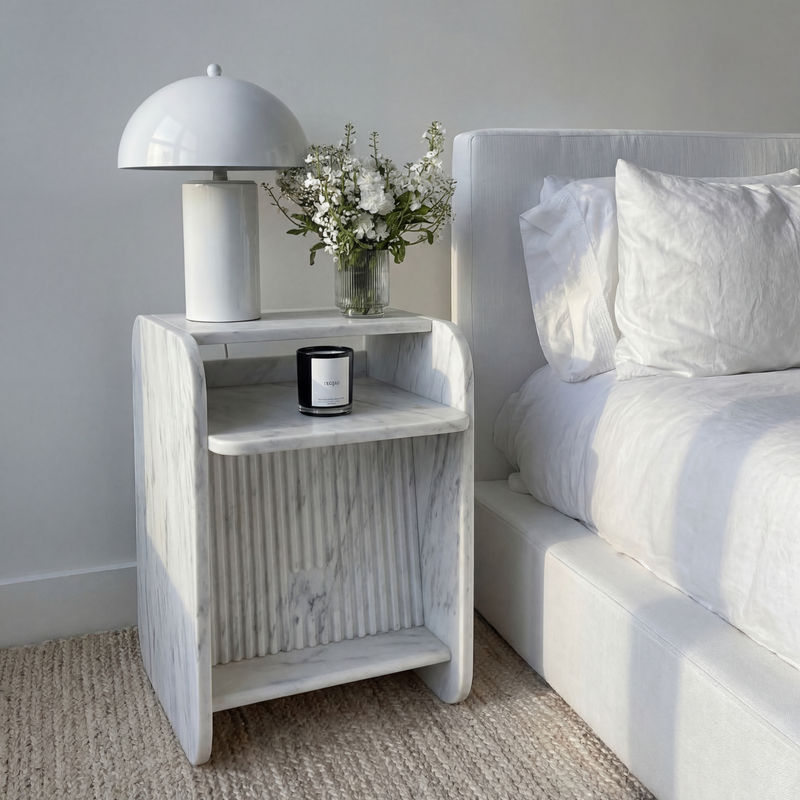
Carrara Marble Bedside Table in a Contemporary Bedroom Interior
What Is the Best Way to Clean Marble Furniture?
The safest routine is generally the simplest one.
Start by removing loose particles from the surface. Sand, dust and small abrasive particles can create micro-scratches if they are rubbed across polished marble.
Next, use clean lukewarm water or a diluted pH-neutral natural stone cleaner. Apply it using a soft cloth rather than a rough sponge.
After cleaning, wipe the marble dry.
For everyday maintenance, marble furniture usually does not require harsh chemicals or repeated polishing.
A Simple Marble Cleaning Routine
Step 1: Remove dust and loose debris.
Step 2: Use a soft damp microfiber cloth.
Step 3: Apply a pH-neutral stone cleaner when necessary.
Step 4: Wipe away cleaner residue.
Step 5: Dry the marble with a clean soft cloth.
This routine works for many marble furniture pieces, including side tables, dining tables, consoles, bedside tables and decorative furniture.
2. Calacatta Marble Cube Side Table: Protecting High-Visibility Marble Surfaces
Calacatta Marble is prized for its expressive veining and strong contrast. Unlike very uniform stones, the natural pattern of Calacatta often becomes the main visual feature of the furniture itself.
The Calacatta Marble cube side table in the image has a monolithic appearance, allowing the veining to continue across multiple visible faces.
Because cube tables are often positioned beside sofas and lounge chairs, they regularly hold drinks, coffee cups, flower pots and decorative objects.
This makes spill prevention particularly important.
How to Protect a Calacatta Marble Side Table
Use coasters beneath drinks, especially:
- coffee,
- tea,
- wine,
- fruit juice,
- sparkling beverages,
- citrus drinks.
Planters should also have a dry protective base. Moisture trapped beneath a pot or vase for long periods may discolor some natural stones.
Decorative objects with rough or metallic bases can be placed on felt pads to reduce the risk of scratching.
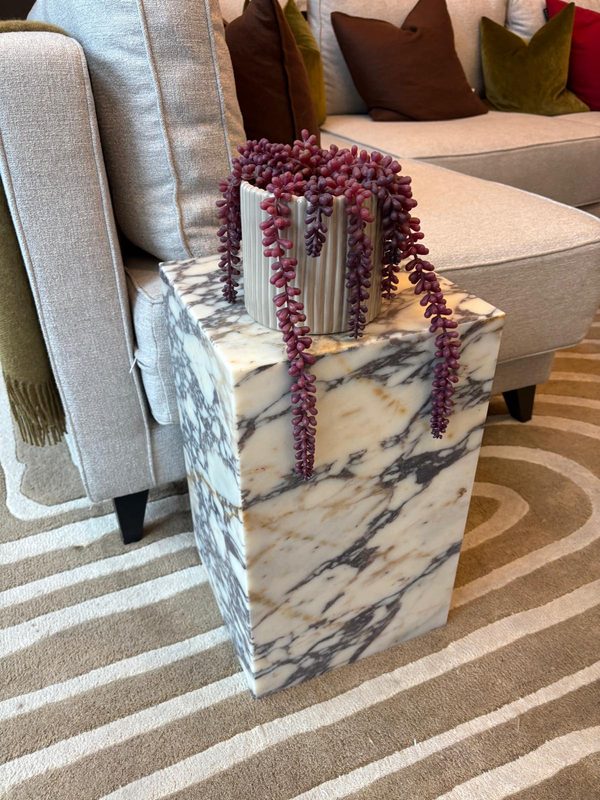
Calacatta Marble Cube Side Table With Natural Purple-Grey Veining
What Should You Never Use to Clean Marble?
One of the most important rules of marble care is to avoid acidic and overly aggressive cleaning products.
Products that may damage marble include:
- vinegar,
- lemon-based cleaners,
- acidic bathroom cleaners,
- aggressive descalers,
- highly alkaline degreasers,
- abrasive cleaning powders,
- rough scouring pads.
Even products marketed as “natural” are not automatically safe for natural stone.
For example, vinegar is frequently recommended as a general-purpose household cleaner, but it should not be used on marble because its acidity can react with the calcium carbonate in the stone.
When choosing a cleaning product, look specifically for wording such as safe for natural stone, marble-safe or pH-neutral.
Stain vs. Etching: What Is the Difference?
This distinction is essential for anyone owning marble furniture.
Marble Staining
A stain occurs when a substance penetrates the stone.
Common staining substances include:
- cooking oils,
- cosmetics,
- coffee,
- wine,
- strongly pigmented sauces,
- some plant materials.
A stain often appears darker than the surrounding marble.
Marble Etching
Etching occurs when acidic substances react with marble.
Common causes include:
- lemon juice,
- vinegar,
- wine,
- citrus fruit,
- some cleaning products.
An etched area may appear dull, lighter or different in sheen from the rest of the surface.
A sealer may help reduce absorption and staining, but it does not necessarily prevent acid etching.
This is one of the most important expectations to establish when using natural marble furniture.
Should Marble Furniture Be Sealed?
Depending on the marble type, finish and intended application, a penetrating natural stone sealer may be used to help reduce liquid absorption.
The key word is reduce.
A sealer does not make marble completely stain-proof, waterproof or maintenance-free. Instead, it may provide more time to clean spills before they penetrate deeply into the stone.
The appropriate sealing schedule varies significantly according to:
- marble type,
- porosity,
- surface finish,
- sealer product,
- frequency of use,
- cleaning routine,
- indoor environment.
For that reason, marble should not automatically be resealed according to a generic calendar without considering the stone and the sealer manufacturer’s recommendations.
How Often Should Marble Furniture Be Sealed?
There is no universal interval that applies to every marble surface.
A lightly used marble console may need very different maintenance from a dining table that is used several times every day.
Factors influencing resealing frequency include:
Surface finish: honed and polished surfaces can behave differently.
Stone porosity: different marbles absorb liquids at different rates.
Furniture use: dining and coffee tables receive significantly more exposure than decorative consoles.
Cleaning habits: frequent use of unsuitable products may weaken surface protection.
When in doubt, follow the recommendations provided for the specific natural stone sealer being used.
3. Afyon Sugar Marble Fireplace: Caring for Architectural Marble Elements
Marble care is not limited to tables.
Natural stone is also widely used for fireplace surrounds, wall elements, mantels and decorative architectural details.
The Afyon Sugar Marble fireplace shown here demonstrates how a pale Turkish marble can be used to create a sculptural focal point while remaining integrated into a neutral interior.
Fireplace marble requires a slightly different maintenance approach from furniture used for eating or drinking.
How to Clean a Marble Fireplace Surround
Dust should be removed regularly with a soft cloth or brush.
For general cleaning, use a damp microfiber cloth and a pH-neutral natural stone cleaner if necessary.
Soot or smoke residue should not be attacked immediately with highly aggressive household chemicals. Instead, use products that are specifically compatible with marble.
If the fireplace is actively used, heat, soot and fuel type may affect the surrounding materials differently, so the stone should be inspected periodically.

Afyon Sugar Marble Fireplace Surround in a Minimal Interior
How to Prevent Water Marks on Marble
Water itself does not always create permanent damage, but allowing moisture to remain on marble surfaces for prolonged periods can create visible marks, especially depending on the mineral composition and finish.
To reduce the risk:
Wipe water spills promptly.
Avoid leaving wet glasses directly on the surface.
Dry marble after cleaning.
Do not leave damp cloths resting on marble furniture.
Use protective mats beneath planters and flower vases.
Bathrooms and vanity areas require particular attention because water exposure is frequent.
How to Protect Marble Coffee Tables and Side Tables
Coffee tables and side tables are among the marble furniture pieces most exposed to everyday staining risks.
Use coasters for all drinks rather than only for hot beverages.
Use trays when serving food.
Place felt pads beneath decorative objects.
Do not drag heavy items across the stone.
Clean accidental spills as soon as possible.
Avoid leaving candles directly on marble if wax, fragrance oils or heat could affect the surface.
These small habits significantly reduce unnecessary wear.
4. Nero Marquina Marble Console: Maintaining Dark Marble
Dark marble makes a particularly strong statement in interior design.
Nero Marquina Marble, recognized for its dark background and contrasting light veins, can create a dramatic and architectural appearance in consoles, coffee tables, dining tables and bathroom furniture.
The Nero Marquina Marble console in the image illustrates how black marble can work with dark walls, warm wooden floors and metallic lighting.
Dark marble requires the same basic natural-stone care principles as lighter marble, but marks may appear differently.
Dust, dried water droplets and cleaning residue can sometimes be more visible on dark polished surfaces.
How to Clean Nero Marquina Marble
Use a clean microfiber cloth.
Avoid allowing cleaners to dry on the surface.
After damp cleaning, buff gently with a dry soft cloth.
Avoid abrasive products that can alter the polish.
Do not use acidic cleaners, even if they are intended to remove water spots.

Nero Marquina Marble Console Table in a Dark Contemporary Interior
Can You Put Hot Objects on Marble Furniture?
Marble has good heat resistance compared with many manufactured furniture surfaces, but placing extremely hot cookware directly onto marble furniture is still not recommended.
Sudden thermal changes can stress natural stone, coatings, adhesives or joints depending on the construction of the furniture.
For dining tables and kitchen-related marble furniture, use:
- trivets,
- heat-resistant mats,
- serving boards.
This protects both the natural stone and the furniture assembly.
Can Marble Furniture Scratch?
Yes.
Although marble is a durable stone, it is not scratch-proof.
Ceramics, metal decorative pieces, grit and certain stone objects can scratch polished marble if dragged across the surface.
A particularly simple prevention strategy is to use felt pads under decorative accessories.
When moving objects, lift them rather than sliding them.
This is especially important for polished marble tables because scratches may become visible when light reflects across the surface.
How to Remove Spills From Marble
Speed matters.
When a liquid spills:
Blot the liquid rather than spreading it.
Use an absorbent white cloth or paper towel.
Avoid aggressive rubbing.
Once the spill has been absorbed, clean the surface with water or an appropriate pH-neutral natural stone cleaner.
Dry the area completely.
If discoloration remains after the surface has dried, the mark may have penetrated the stone and require more specialized treatment.
What About Oil Stains on Marble?
Oil-based products can penetrate marble and create darker stains.
Possible sources include:
- cooking oils,
- skin oils,
- cosmetic products,
- scented oils,
- oily food.
Do not immediately apply aggressive household chemicals in an attempt to extract an oil stain.
Certain deeper stains may require a stone-specific poultice treatment. Because treatment varies depending on the type of stain and marble finish, valuable furniture should be assessed carefully before applying strong stain-removal products.
Polished vs. Honed Marble: Does Maintenance Change?
Yes, appearance and maintenance expectations can differ.
Polished Marble
Polished marble reflects more light and usually displays richer color and stronger contrast.
Small scratches, etching and dull marks can become noticeable because they interrupt the consistent gloss.
Honed Marble
Honed marble has a softer, more matte finish.
It may visually hide some minor surface wear better, but it can still stain and etch.
Neither finish eliminates the need for proper care.
The choice between polished and honed marble should therefore be based on both aesthetic preferences and expected use.
Marble Furniture in High-Traffic Areas
Not every marble furniture piece is exposed to the same level of use.
A decorative console in an entrance hall receives considerably less direct contact than a coffee table in a family room.
For high-use furniture such as:
- dining tables,
- coffee tables,
- kitchen tables,
- bathroom vanities,
protective habits should be part of daily use.
For lower-use furniture such as:
- consoles,
- bedside tables,
- decorative plinths,
- display tables,
routine dusting and occasional gentle cleaning may be sufficient.
How to Care for Marble Furniture With Plants and Flowers
Plants look especially attractive on marble because natural stone and organic materials complement each other visually.
However, plant pots are also a common source of moisture marks.
Always ensure planters have an appropriate waterproof base.
Do not allow irrigation water to sit beneath a pot.
Check the underside of flower vases for condensation.
When using fresh flowers, wipe any spilled water immediately.
This is especially relevant for marble bedside tables, side tables and consoles.
Does Marble Change Over Time?
Natural stone can develop signs of use.
Minor differences in sheen, small scratches or surface patina may become visible after years of use, particularly on frequently touched furniture.
Some owners value this natural aging because it gives stone furniture additional character.
Others prefer to maintain a more uniform appearance through professional refinishing when required.
Unlike printed surfaces, natural marble does not have an artificial repeat pattern. Its mineral structure, veins and tonal variations remain part of the identity of the stone throughout its life.
When Should Marble Furniture Be Professionally Refinished?
Routine maintenance can handle everyday care, but some issues may require professional stone restoration.
Professional attention may be appropriate when marble has:
- widespread etching,
- deep scratches,
- significant loss of polish,
- difficult stains,
- chipped edges,
- damaged corners.
Depending on the condition, marble specialists may use honing, polishing, filling or other restoration methods.
Trying to repair a valuable marble piece with inappropriate DIY abrasives can make the affected area more noticeable.
Marble Furniture Care by Application
| Marble Application | Main Risk | Recommended Care |
|---|---|---|
| Dining table | Food, wine, acid, oil | Coasters, placemats, quick spill cleaning |
| Coffee table | Drinks, decorative objects | Coasters, felt pads, pH-neutral cleaning |
| Bedside table | Cosmetics, perfume, water | Trays, quick wiping, gentle cleaning |
| Console | Dust, plant moisture | Dust regularly, protect beneath planters |
| Fireplace | Dust, soot, residue | Stone-safe cleaning, soft cloth |
| Bathroom furniture | Water, cosmetics | Dry regularly, avoid acidic products |
Frequently Asked Questions About Marble Furniture Care
What is the safest cleaner for marble furniture?
A pH-neutral cleaner formulated for natural stone is generally the safest choice. For light routine cleaning, a damp microfiber cloth may be sufficient.
Can I clean marble with vinegar?
No. Vinegar is acidic and can etch marble.
Can I use baking soda on marble?
Abrasive powders should not be used casually on marble furniture because they may alter the surface finish. For stains, use a treatment specifically designed for natural stone.
How do I prevent stains on a marble table?
Clean spills quickly, use coasters and trays, avoid leaving oily or strongly pigmented substances on the surface and consider an appropriate penetrating stone sealer.
Does marble need to be sealed?
Some marble furniture may benefit from a natural stone sealer, particularly when regularly exposed to liquids. Sealer suitability depends on the specific marble, finish and intended use.
Will sealer prevent lemon or vinegar from damaging marble?
Not necessarily. Sealers primarily help reduce absorption; they do not make marble acid-proof. Acidic substances can still cause etching.
Can water stain marble?
Prolonged moisture can create temporary or permanent discoloration depending on the stone and surface condition. Water should therefore be wiped away rather than left standing.
How do I keep black marble shiny?
Clean Nero Marquina and other dark marbles with stone-safe products, remove residues thoroughly and dry the surface with a soft cloth. Avoid abrasives and acidic cleaners.
How often should marble furniture be cleaned?
Dust and light marks can be removed whenever necessary. High-use surfaces such as dining and coffee tables should be wiped regularly, while decorative furniture may require less frequent cleaning.
Can scratched marble be repaired?
Many surface scratches can be professionally honed or polished, depending on their depth and the marble finish.
Marble Furniture as a Long-Term Interior Material
The key to maintaining marble furniture is not complicated maintenance; it is using the right maintenance.
Natural stone should not be treated like synthetic furniture laminate or ceramic tile. Stronger chemicals do not necessarily produce better results.
A gentle routine, immediate spill removal and simple protective measures are usually the most effective strategy.
Carrara Marble brings subtle veining to bedroom furniture. Calacatta Marble turns side tables into decorative statement pieces. Afyon Sugar Marble can create architectural fireplace surrounds, while Nero Marquina Marble offers dramatic contrast for consoles and contemporary furniture.
Despite their very different appearances, the same care principle applies to all of them:
respect the natural characteristics of the stone rather than trying to make it behave like an artificial surface.
With appropriate cleaning and maintenance, marble furniture can remain an important part of an interior for many years while preserving the natural variation that makes every piece unique.
Efesus Home and Natural Stone Furniture
Efesus Home transforms the natural stone experience of Reisoğlu Marble, established in 1943, into marble and travertine furniture and decorative products designed for contemporary interiors.
From marble dining and coffee tables to bedside tables, consoles, sinks and custom-designed architectural pieces, natural stone is selected according to the intended design, dimensions, vein movement and application requirements.
Because natural marble varies from block to block and slab to slab, these differences are not defects; they are part of what makes each finished piece unique.
Correct care helps preserve that natural character while allowing marble furniture to remain functional as well as visually distinctive.