
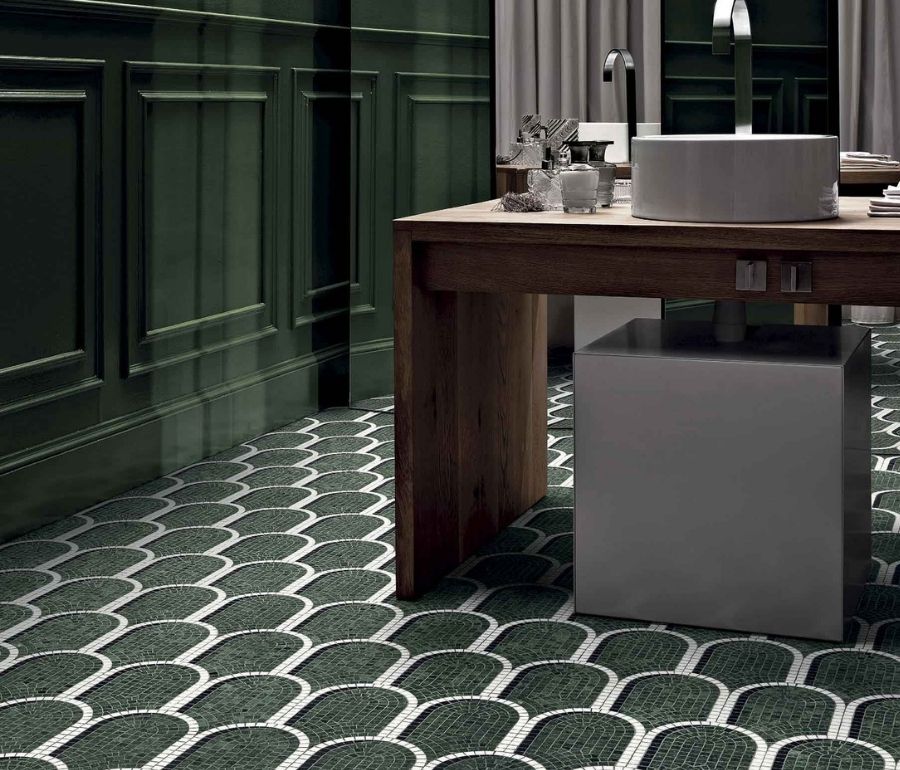
In an interior space, the first impression is often created not by the walls, but by the floor. Mosaic flooring goes beyond being a simple surface covering and becomes a powerful design layer that defines the character of a space. Regardless of the type of stone used, the true value of mosaics lies in their ability to create rhythm, texture, and composition.
In this article, mosaic flooring is approached not from a material perspective, but entirely through its spatial impact and design language.
Transforming the Floor from Background to Focal Point
Flat and uniform surfaces often remain visually quiet. Mosaic flooring, when used intentionally, transforms the floor from a passive background into an active part of the space. These surfaces, formed by the combination of small pieces, introduce a natural sense of movement.
This movement:
- Creates a more dynamic perception of the space
- Supports architectural details
- Defines the overall character of the environment
Visual Flow Through Pattern
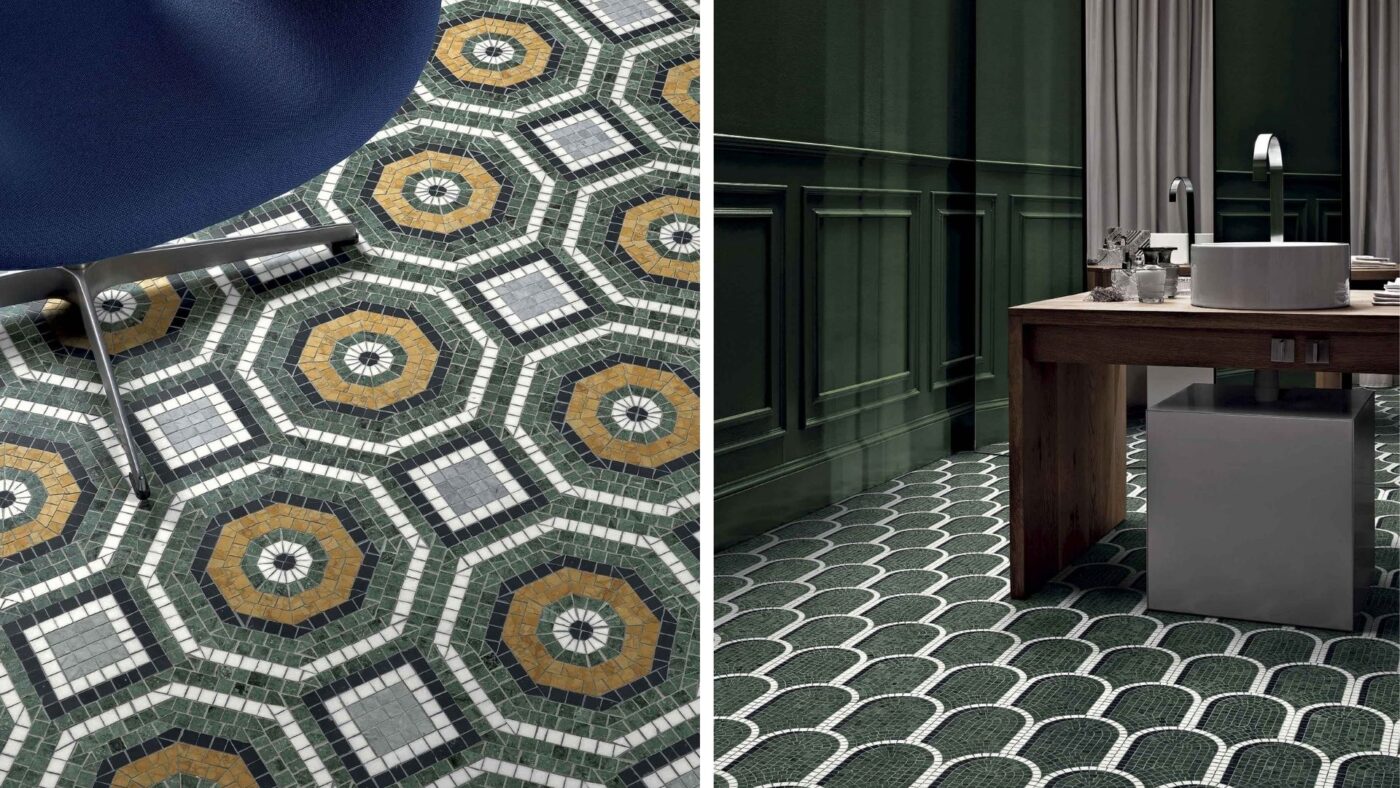
One of the strongest aspects of mosaic flooring is its ability to create visual flow through pattern. Repeating geometries, circular, or linear forms allow the floor to take on a guiding role within the space.
As a result:
- The space is perceived as more balanced
- Transition areas are clearly defined
- Large surfaces gain richness without fragmentation
In this sense, mosaic becomes a subtle yet powerful tool of architectural expression.
Consistent Impact Across Different Scales
Mosaic flooring is not limited to large areas; it can also create strong results in smaller spaces. When used in entryways, bathrooms, or specific zones, mosaics can establish a lasting spatial identity even within limited surfaces.
What matters most:
- The scale of the pattern
- The relationship between floor and wall
- The overall balance of color and light within the space
When this balance is achieved, mosaic enhances the perceived quality of the area.
Surfaces That Evolve with Light
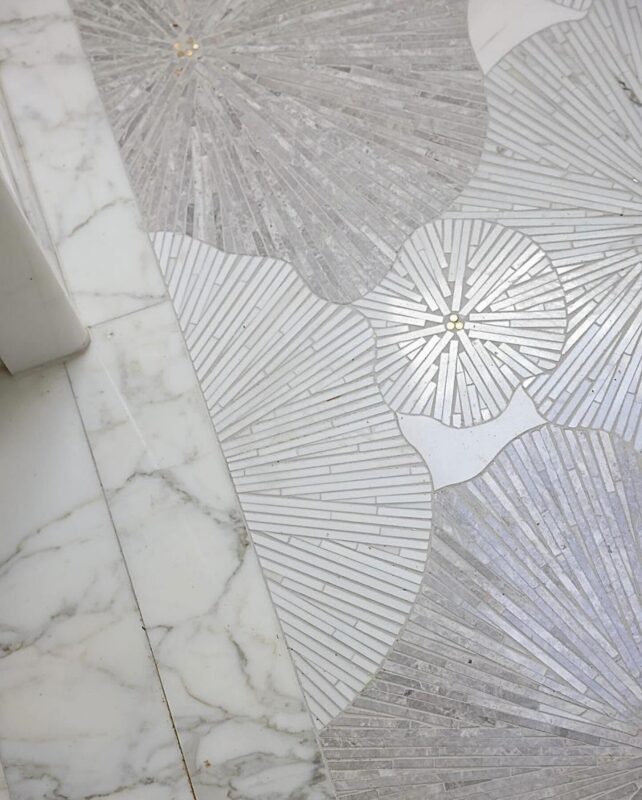
The perception of mosaic flooring changes throughout the day. Natural and artificial light interact with the small-scale surfaces, creating different reflections and adding depth.
This effect prevents the space from appearing static and instead creates a living atmosphere that evolves over time.
For this reason, mosaic flooring should be considered as a dynamic surface that works in harmony with light.
A Timeless Design Decision
Mosaic flooring is not a trend-driven choice; when designed correctly, it remains valuable for many years. Since pattern and composition are at the forefront, it does not depend on passing trends but evolves together with the space.
Because of this:
- It is a reliable choice for long-term projects
- It establishes a lasting identity for the space
- It reduces the need for frequent renovation
Mosaic flooring is not only an aesthetic choice in interior design. Through pattern, texture, and surface relationships, it becomes an architectural tool that transforms spatial perception. Regardless of the type of stone, when used with the right design approach, mosaic flooring adds character, depth, and uniqueness to any space.
For designs aiming to create a strong visual statement through the floor, mosaic remains a timeless and effective solution.