
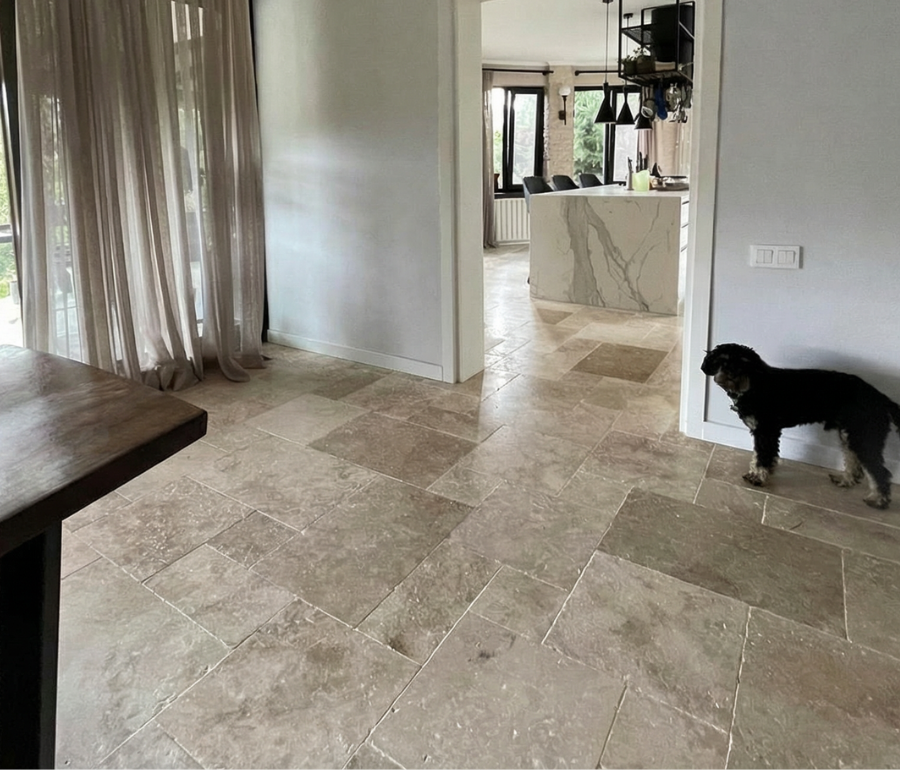
Light Travertine flooring creates balanced surfaces in both interior and exterior spaces through its soft beige tones, natural pores, and subtle color transitions.
One of travertine’s strongest qualities is its ability to produce completely different visual results through changes in cut, size, layout, and color combination. Small mosaic pieces can create detailed and decorative floors, while larger dimensional tiles produce calmer, more orderly surfaces that make expansive areas feel open. Pairing Light Travertine with darker natural stones such as Noce Travertine or Uludağ Black Marble adds rhythm and contrast to the pale background.
Stone selection should not be based only on appearance. The location of the project, interior or exterior use, pedestrian traffic, surface finish, grout layout, drainage requirements, and long-term maintenance should all be considered together.
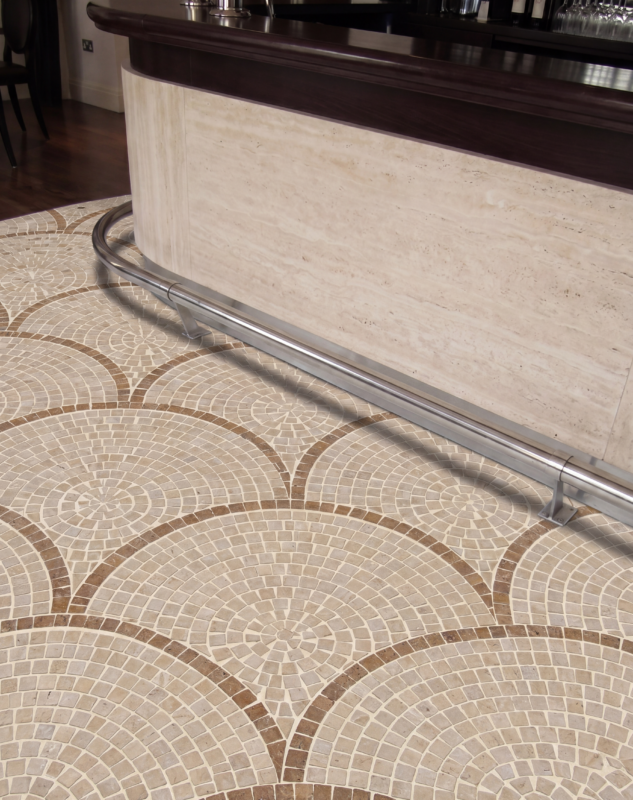
Natural Stone Fan Mosaic Flooring Created With Light Travertine And Noce Travertine
Fan Mosaic Flooring with Light Travertine and Noce Travertine
Fan-pattern mosaic flooring is created by arranging small natural stone pieces in curved rows. The pattern forms a sequence of semicircles and flowing lines, giving the floor a strong sense of movement. Pale Light Travertine establishes the main surface, while darker Noce Travertine strips define the borders and make the curves more visible.
The relationship between these two travertine varieties creates noticeable contrast without appearing harsh. Noce Travertine’s warm brown tones frame the cream and beige variations of Light Travertine. As a result, the fan pattern remains clearly visible from a distance, while the mineral differences between individual mosaic pieces become more apparent at close range.
The richness of the surface comes not only from the geometric design but also from the natural variation of the stone. Each small piece may display slightly different shades, pores, and mineral markings. These differences prevent the flooring from looking flat or mechanically repeated.
Fan mosaics are suitable for introducing a decorative identity to large or visually quiet floors. They can be used in hotel entrances, restaurants, bars, lobbies, reception areas, and selected zones within private residences. In the image, the mosaic flooring is positioned beside a curved bar front. The circular movement of the floor pattern reflects the rounded shape of the bar and strengthens the relationship between the architectural elements.
This type of design can also be used to define specific areas within an open-plan interior. A fan-pattern section may visually distinguish a reception desk, bar, dining area, or transition zone without requiring physical partitions. The floor becomes an active part of the spatial organization rather than functioning only as a background surface.
Scale, Grout, and Surface Balance in Mosaic Flooring
Grout lines are an important part of mosaic design because small stone pieces create a dense network of joints. Selecting a grout color close to Light Travertine helps the pieces blend together more softly. A very dark grout can make the joint grid excessively prominent, while a very pale grout may reduce the visual strength of the Noce Travertine outlines.
A balanced grout tone allows the pattern to remain readable while preserving the natural appearance of the stone. The selected grout should also be suitable for the expected traffic and maintenance conditions of the space.
Mosaic scale should correspond to the size of the room. In compact spaces, tightly repeated fan patterns may create a visually crowded effect. In larger interiors, the pattern has more space to unfold and the repeated curves form a stronger rhythm.
Before installation, the mosaic module should be planned in relation to the floor dimensions. This helps reduce awkward partial motifs and irregular cuts around walls, columns, counters, and doorways. Establishing the layout from a central reference line can produce a more balanced result.
Honed, tumbled, or lightly brushed finishes may be used for travertine mosaics. A honed finish offers a smoother and more controlled appearance for interiors. Tumbled finishes introduce softer edges and a more aged character. In commercial areas, slip resistance, cleaning requirements, and surface durability should be evaluated together.
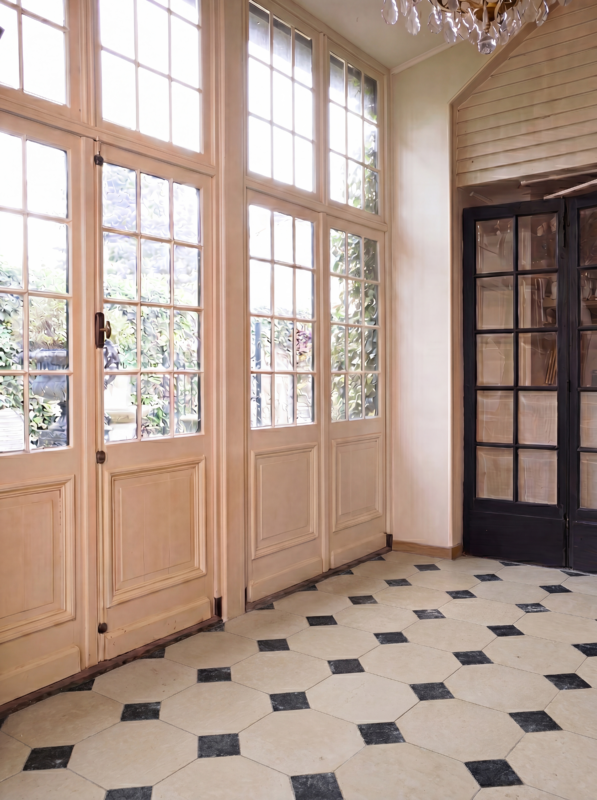
Octagonal Light Travertine Tiles Combined With Uludağ Black Marble Square Inserts
Octagon Light Travertine Flooring with Uludağ Black Marble Details
Octagon flooring is a classic geometric arrangement consisting of large eight-sided tiles separated by smaller square inserts. In the image, pale Light Travertine octagons are paired with Uludağ Black Marble squares. The black marble details repeat at regular intervals, creating a clear rhythm across the lighter surface.
One of the main advantages of this pattern is its ability to retain a traditional character while adapting to different interior styles. It is suitable for historic buildings, high-ceilinged entrances, conservatories, hallways, boutique hotels, residential foyers, and dining spaces.
When combined with paneled doors, decorative moldings, black-framed cabinetry, or traditional furnishings, the floor supports a more classical architectural language. When paired with simple furniture and restrained wall finishes, the same pattern can appear cleaner and more contemporary.
The warm beige tone of Light Travertine balances the visual strength of the black marble. Because Uludağ Black Marble is used only in small square inserts, the floor does not become dark or visually heavy. Instead, the black elements clarify the geometry and create a consistent pattern across the room.
Natural variation within the Light Travertine tiles also prevents the layout from looking artificial. Slight differences in tone, pore distribution, and mineral movement introduce softness into the otherwise precise geometric arrangement.
The dark inserts can also establish a connection with other black elements in the interior, including door hardware, lighting fixtures, window frames, furniture legs, or cabinetry. This helps the floor participate in the overall material palette rather than appearing as an isolated decorative feature.
Layout Planning and Architectural Coordination
The starting point of an octagon installation should be determined carefully. Planning how the pattern meets door thresholds, walls, columns, cabinets, and adjoining rooms can significantly improve the final result.
In long hallways, keeping the black square details aligned with the main axis strengthens perspective and creates a more orderly appearance. In wider rooms, beginning from a central line may distribute perimeter cuts more evenly.
Tile size should also correspond to the dimensions of the space. Larger octagons create a calmer and more open appearance in generous rooms. Smaller octagons produce a denser surface and may be more suitable for compact entries or narrow corridors.
The proportions of the black square inserts should remain balanced with the main travertine tiles. Oversized inserts can make the contrast feel too heavy, while very small inserts may become difficult to see from a distance.
Honed or lightly tumbled finishes can support the classical character of this flooring. In entrance areas, routine cleaning is important because sand and hard particles may scratch natural stone surfaces over time. Entry mats, felt pads beneath furniture, and pH-neutral natural stone cleaners can help maintain the appearance of the floor.
Where the flooring connects to another material, such as wood or ceramic tile, the transition should be designed carefully. Differences in thickness, movement, and edge alignment must be resolved during installation to maintain a clean threshold.
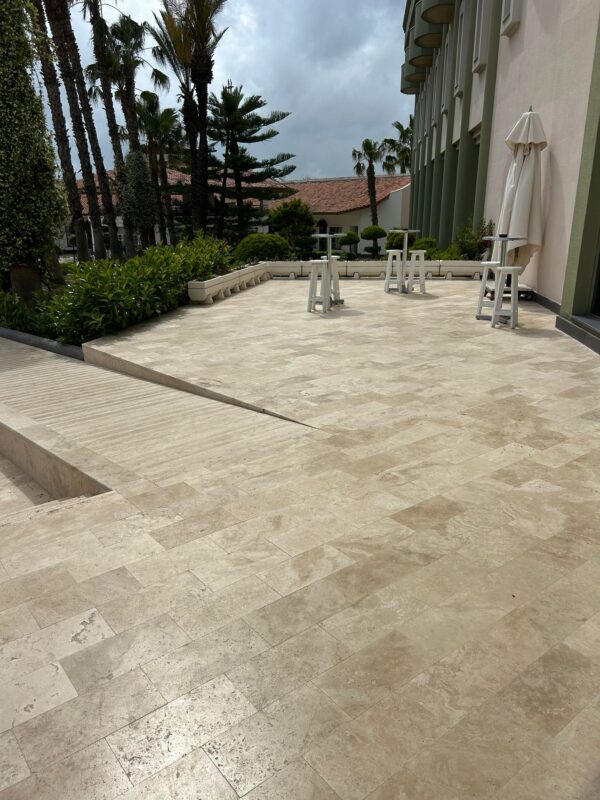
Light Travertine Tiles In Mixed Rectangular Sizes Used Across A Terrace And Outdoor Area
Expansive and Balanced Floors with Dimensional Light Travertine
Dimensional Light Travertine flooring presents the stone’s natural color and tonal movement through a simpler and more architectural layout. Rectangular pieces in different lengths create controlled variation while maintaining a quieter appearance than mosaic or octagon patterns.
This approach is especially suitable for large terraces, hotel courtyards, pool decks, garden walkways, restaurant patios, and outdoor social areas.
In the image, Light Travertine pieces of different sizes are installed in a staggered arrangement. This layout prevents long, uninterrupted grout lines from dominating the surface. Cream, pale beige, and soft gray variations create natural depth across the expansive floor.
Although the installation uses one primary stone color, subtle tonal differences between the pieces keep the surface from appearing flat or manufactured. The natural pores and mineral markings also contribute to the character of the flooring.
One of the strongest advantages of dimensional travertine is its ability to establish a clear and durable ground plane without competing with the surrounding architecture. The pale stone creates a bright appearance in sunlit spaces and coordinates naturally with landscaping, stucco, glass, timber, and metal.
This flexibility makes Light Travertine suitable for hotels, restaurants, villas, resorts, residential terraces, and public outdoor projects. It can support traditional Mediterranean architecture as well as cleaner contemporary buildings.
The mixed-size layout may also help organize large exterior areas. Different sections can be defined through changes in tile direction, borders, or drainage channels while maintaining the same stone throughout the project.
Surface Finish and Installation Details for Exterior Areas
Surface finish is important for both safety and comfort in exterior flooring. Highly polished stone may become slippery when wet, making honed, brushed, sandblasted, or tumbled finishes more suitable for many outdoor applications.
The appropriate finish depends on the project’s climate, rainfall, pedestrian traffic, surrounding landscaping, and intended use. Pool decks and uncovered terraces generally require greater slip resistance than protected outdoor seating areas.
Correct slope and drainage must be established beneath the stone. Standing water can reduce comfort, encourage staining, and create maintenance problems over time. Drain locations, surface falls, and edge details should be coordinated before installation begins.
Grout joints and movement joints should be planned according to exterior conditions. The substrate must be stable, properly prepared, and suitable for the weight and movement of natural stone.
Before installation, the color distribution and vein direction of the travertine should be reviewed. Light and dark pieces should be spread evenly rather than concentrated in one section. Dry laying part of the material before final installation can help identify strong color clusters and create a more balanced composition.
Edge conditions also require attention. Steps, ramps, drainage channels, pool edges, and changes in level should use appropriate profiles and slip-resistant treatments. These technical details influence both the appearance and long-term performance of the flooring.
Choosing the Right Light Travertine Flooring Pattern
Fan mosaic, octagon, and dimensional layouts represent three different design approaches using the same primary stone.
Fan mosaics are suitable for decorative and visually active surfaces. The darker Noce Travertine bands emphasize the curved pattern and transform the floor into a strong focal point. This approach works particularly well in restaurants, bars, lobbies, and entrance areas where the flooring is intended to attract attention.
Octagon flooring offers a more orderly character through its classical geometry and black marble inserts. The contrast between Light Travertine and Uludağ Black Marble introduces a historic reference while maintaining enough clarity for modern interiors. It is especially effective in hallways, conservatories, foyers, and architecturally detailed rooms.
Dimensional flooring creates a calmer and more unified surface across large areas. It allows the architecture, landscaping, and furniture to remain visually dominant while providing a warm natural stone background.
The choice should be based on more than visual preference. Room size, function, pedestrian traffic, maintenance expectations, and surrounding materials all influence the suitability of each pattern.
Highly decorative mosaics are often most effective in defined feature areas. Dimensional stone is generally better suited to expansive terraces and outdoor surfaces. Octagon patterns provide a strong alternative for transitional spaces and interiors with a clear architectural identity.
The same project may also combine more than one format. A dimensional Light Travertine floor can be framed by a mosaic border, or an octagon pattern can be used in an entrance before transitioning into larger rectangular tiles. Consistent color selection and careful detailing help maintain continuity between different layouts.
Care and Long-Term Use of Natural Stone Flooring
Light Travertine flooring can provide long-term performance when it is installed correctly and maintained regularly. Daily cleaning should avoid acidic products, harsh chemicals, abrasive pads, and stiff brushes that may affect the stone or its surface finish.
pH-neutral cleaners formulated for natural stone are recommended. Dust, sand, and hard particles should be removed regularly because repeated foot traffic can cause surface wear or fine scratches.
Spilled acidic or pigmented liquids should be cleaned promptly. This is particularly important in restaurants, bars, kitchens, and hospitality spaces where coffee, wine, citrus products, oils, and food may come into contact with the floor.
A suitable impregnating sealer may be considered according to the stone finish, installation location, and exposure conditions. The product should be compatible with travertine and should not create an unwanted glossy film or significantly change the natural color.
In exterior areas, drainage paths should remain clear and vegetation-related staining should be addressed before it becomes established. In interior entrances, floor mats can reduce the amount of grit carried onto the stone.
Travertine naturally varies in pore distribution, banding, mineral marks, and color. These differences are not manufacturing defects. They are part of the geological character of the material and contribute to the individuality of each installation.
Light Travertine flooring can therefore support a wide range of architectural expressions. Fan mosaics create movement and decorative detail, octagon layouts establish geometric rhythm, and dimensional tiles form calm, expansive surfaces. Through appropriate pattern selection, surface treatment, installation planning, and maintenance, the stone can create warm and balanced floors across residential, commercial, hospitality, and outdoor projects.