
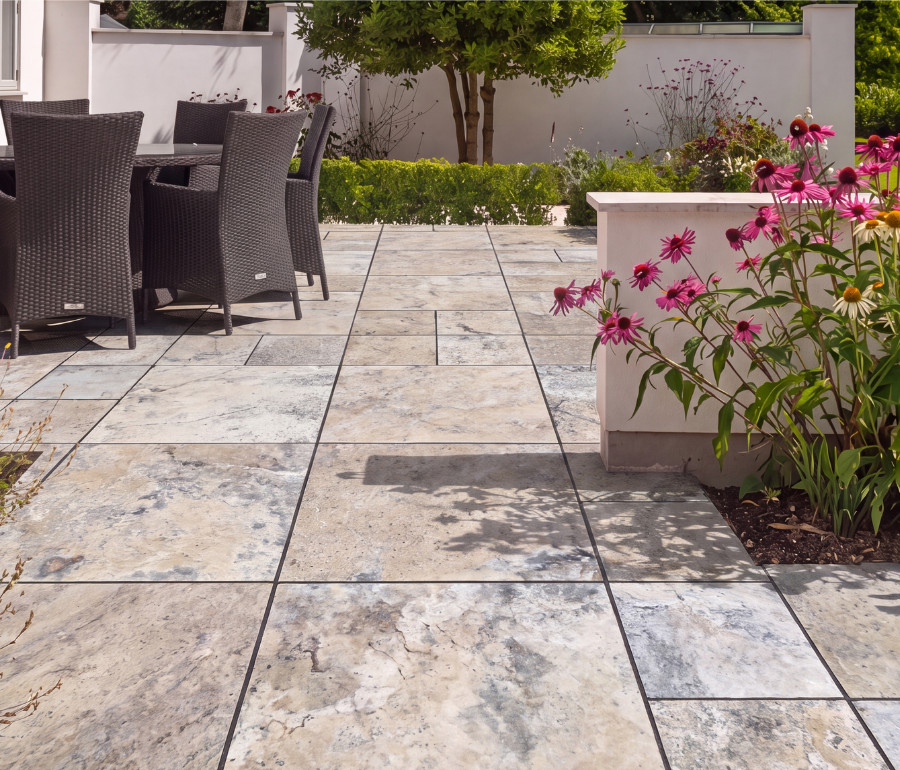
Silver Travertine pavers bring together gray, beige, cream, taupe, and soft brown tones, creating naturally layered surfaces for patios, courtyards, verandas, walkways, and landscaped garden areas. Rather than producing a uniform gray floor, the stone introduces subtle tonal variation that works well with both architecture and planting.
One of the most recognizable characteristics of Silver Travertine is its linear movement and mineral variation. Some pavers may appear predominantly pale gray or cream, while others display deeper charcoal, taupe, or brown bands. When these pieces are distributed carefully, the finished installation feels varied without appearing visually disorganized.
The size of the area, paver format, installation pattern, surface finish, drainage system, and surrounding materials all influence the final result. Long rectangular pavers create a more streamlined appearance in contemporary courtyards, while mixed-size modular layouts produce a more relaxed character in garden settings.
For this reason, selecting Silver Travertine pavers involves more than choosing a preferred color. The architectural style, direction of movement, exposure to weather, expected foot traffic, and long-term maintenance requirements should all be considered during the planning stage.
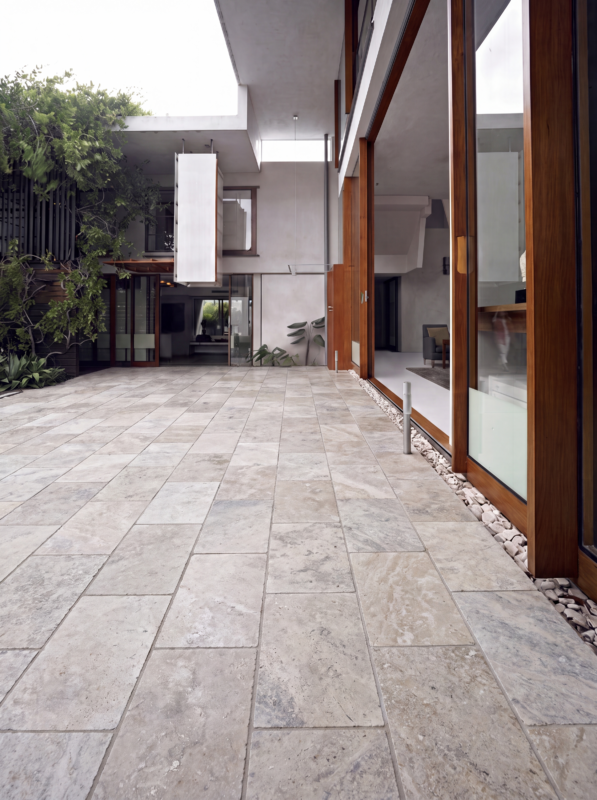
Rectangular Silver Travertine Pavers Used Across A Contemporary Courtyard And Passageway
Silver Travertine Pavers in Modern Courtyards
In the first image, Silver Travertine pavers are used throughout a contemporary courtyard and covered passageway. The rectangular pieces are installed lengthwise, reinforcing the perspective of the space and guiding the eye toward the interior entrance.
This arrangement is particularly effective in long courtyards, side passages, covered outdoor corridors, and transitional spaces connecting interior rooms with landscaped areas. The direction of the pavers strengthens the architectural lines without making the surface feel excessively rigid.
The gray, cream, and soft brown tones coordinate naturally with the building’s concrete finishes, timber frames, glass surfaces, and dark architectural details. The mineral texture of the stone softens the controlled geometry of the structure, while its warmer bands establish a relationship with the surrounding wood.
As a result, the flooring does not appear as a separate decorative layer. It becomes part of the overall architectural material palette.
The rectangular pavers are arranged in a staggered layout, preventing long continuous joints from dominating the floor. Different lengths introduce controlled movement while preserving the streamlined character of the courtyard.
Silver Travertine is especially effective across large surfaces because its natural tonal variation prevents the flooring from appearing flat. A uniformly gray material could make the courtyard feel cold, while the beige and taupe areas within the travertine bring visual warmth.
The surface may also change throughout the day. Direct sunlight emphasizes pale cream and silver tones, while shaded areas reveal deeper gray and brown mineral movement. This gives the courtyard a more responsive and naturally varied appearance.
Coordinating Paver Direction with Architectural Lines
The direction of the pavers can influence how an outdoor area is perceived. Installing them parallel to the main circulation route can make a narrow courtyard feel longer and more orderly.
In wider areas, the layout may follow the building façade, door openings, window lines, or planting borders. Aligning the grout joints with important architectural axes helps the entire project feel more intentional.
In the image, the paver direction supports the linear arrangement of the timber doors and structural openings. The relationship between the flooring and the façade strengthens the visual continuity of the courtyard.
Before installation, the pavers should be dry-laid or reviewed across the site to control the distribution of color. Concentrating several dark gray pieces in one section may create an unintended patch. Mixing pale and dark tones throughout the area produces a more balanced result.
The finish must also be suitable for exterior use. Brushed, tumbled, sandblasted, or appropriately textured surfaces may provide greater grip in areas exposed to rain, cleaning water, and outdoor moisture.
Even partially covered courtyards should be treated as exterior environments. Drainage, slip resistance, temperature changes, and water exposure remain important technical considerations.
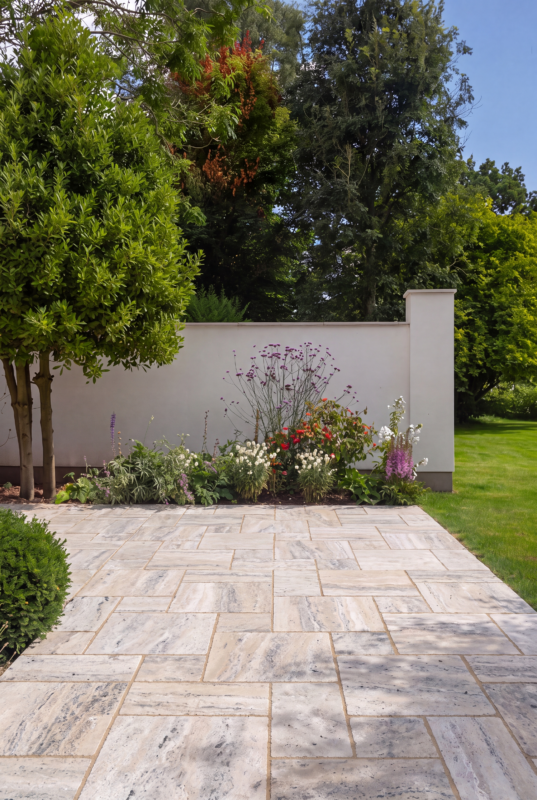
Mixed-Size Silver Travertine Pavers Arranged In A Modular Garden Flooring Pattern
Balanced Silver Travertine Surfaces for Patios and Verandas
In the second image, Silver Travertine pavers cover a broad outdoor living area positioned between two sections of a residence. Long rectangular pieces in mixed lengths create a linear layout that feels structured without becoming repetitive.
The surrounding white walls, dark doors, exterior lighting, and green landscaping form a strong contrast with the natural stone. Pale gray and beige areas connect with the light-colored façade, while deeper veins relate to the dark brown and black architectural details.
Silver Travertine works particularly well in these settings because it can complement both traditional and contemporary buildings. Its naturally weathered appearance suits Mediterranean-style homes, garden courtyards, and relaxed outdoor spaces.
When installed with cleaner joints and more regular dimensions, the same material can support a contemporary architectural language. The appearance depends greatly on the format, surface finish, edge treatment, and installation pattern.
Patios and verandas function as transitional zones between the house and garden. The paving material therefore needs to coordinate with interior finishes, exterior architecture, furniture, and planting.
Silver Travertine has a flexible color range that works with wood dining furniture, black metal chairs, outdoor lighting, stucco walls, glass doors, stone planters, and natural vegetation.
Its gray tones provide a calm foundation, while the warmer beige and brown movement keeps the patio from feeling cold. This balance makes the space suitable for dining tables, lounge seating, planters, and other outdoor furnishings.
Paver Size and Joint Layout for Large Patios
The size of the pavers should relate to the scale of the outdoor area. Very small pieces can create an overly dense network of joints across a wide patio.
Long rectangular Silver Travertine pavers create a calmer appearance and support the visual length of the space. They also allow the stone’s natural veining to remain more visible across each piece.
A staggered installation prevents joints from meeting at the same points throughout the surface. This creates greater variation and reduces the dominance of uninterrupted grid lines.
However, the layout should still follow a controlled rhythm. Completely random placement may produce awkward joint relationships or clusters of similar sizes.
The grout color should remain close to the overall tone of the stone. Very dark joints can outline every paver and fragment the floor visually. Light gray, taupe, or stone-colored grout generally produces a softer transition.
Proper slope is essential in patios and verandas exposed to rain. Water should move away from doors, walls, and seating areas toward suitable drains or open landscape edges.
Drainage channels, thresholds, expansion joints, and wall connections should be resolved before the stone is installed. These details have a direct effect on long-term performance.
Protective pads beneath furniture legs can reduce scratching. Planters should also be raised slightly or placed on suitable supports so that water does not remain trapped beneath them for extended periods.
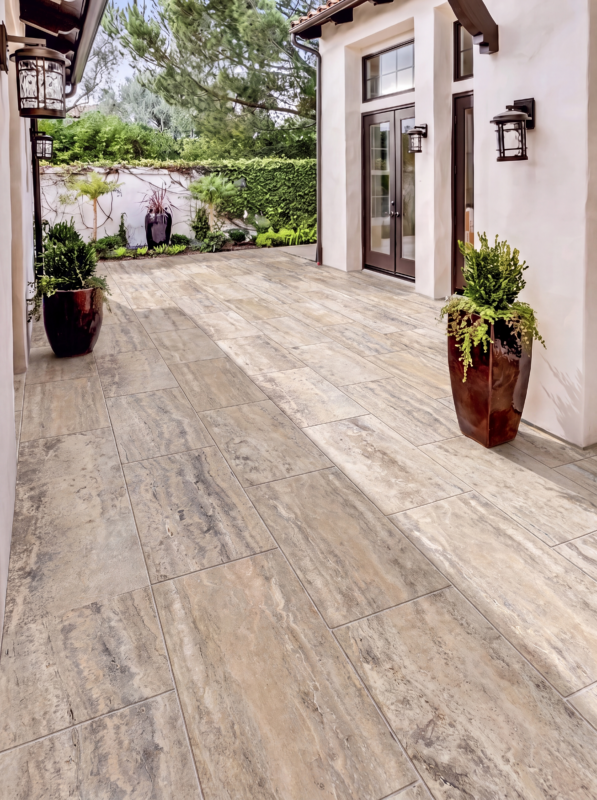
Long Rectangular Silver Travertine Pavers Installed Across A Residential Outdoor Living Area
Modular Silver Travertine Pavers in Garden Design
In the third image, Silver Travertine pavers are installed in a modular pattern using multiple rectangular sizes. Unlike the more directional layouts shown in the first two applications, this arrangement combines pieces in different orientations.
The result feels less formal and more closely connected to the natural character of the garden. Modular paving can be used for garden terraces, outdoor seating areas, walkways, poolside zones, villa landscaping, and courtyard extensions.
A modular layout is based on a planned combination of several dimensions. The sizes repeat within a controlled system, creating visual variation without losing order.
Because no single direction dominates the installation, the eye moves across the entire surface rather than following one continuous line. This can make a garden area feel broader and more relaxed.
The gray, cream, beige, and taupe tones of Silver Travertine establish a clear contrast with green foliage. Pale stone brightens the area, while darker mineral bands create depth and connect with soil, tree bark, and shaded planting beds.
The natural variation of the stone also supports the organic quality of the landscape. Some pavers display strong linear bands, while others contain softer, cloud-like mineral movement.
Distributing these different patterns across the installation prevents repetitive areas and gives the garden floor a more balanced composition.
The way the paving meets lawn, planting beds, walls, and pathways is also important. Clean perimeter lines create a controlled edge without separating the stone completely from the landscape.
Border pieces, contrasting orientations, or carefully cut pavers may be used to define the perimeter and improve the transition between hardscape and planting.
Color and Texture Transitions within the Landscape
Silver Travertine should not be considered only a gray material. Its warm beige, cream, brown, and taupe areas make it compatible with timber furniture, terracotta planters, natural soil, gravel, and planted borders.
This variation also works well across seasonal changes. During spring and summer, the paving contrasts with strong green vegetation. In autumn, the warmer bands of the stone coordinate with brown, gold, and red foliage.
Pale stone surfaces help sunny gardens feel brighter and more open. In shaded areas, darker gray veins may become more visible and give the installation greater depth.
For this reason, the stone should ideally be reviewed in natural outdoor light before final selection. Indoor lighting may not show the full range of colors accurately.
The balance between small and large pavers is important in a modular layout. Too many large pieces may weaken the pattern, while an excessive number of small units can make the surface appear busy.
Repeating the dimensions within a coordinated module creates both visual consistency and practical installation control.
Choosing the Right Finish for Silver Travertine Pavers
The surface finish should be selected according to the function and exposure of the area. Slip resistance is especially important on patios, verandas, garden paths, pool surroundings, and uncovered courtyards.
A brushed finish can preserve the natural character of the stone while introducing a lightly textured surface. Tumbled pavers provide softened edges and a more aged appearance.
Sandblasted or textured finishes may be suitable where greater surface grip is required. Honed finishes create a smoother and cleaner appearance, but their suitability for exposed exterior floors should be evaluated carefully.
Highly polished finishes are generally not recommended for outdoor floors that may become wet.
Travertine naturally contains pores and small cavities. Depending on the design and maintenance requirements, these may be filled or left partially visible.
Filled surfaces can be easier to clean, while unfilled or lightly filled finishes emphasize the geological texture of the stone. In heavily used outdoor areas, an appropriate fill may reduce the accumulation of dirt and standing water in deeper openings.
Installation, Drainage, and Maintenance
The long-term performance of Silver Travertine pavers depends on correct preparation and installation. The substrate must be stable, level, and capable of supporting the stone and expected traffic.
Exterior-grade setting materials, grout, waterproofing systems, and movement joints should be selected according to the local climate and installation method.
The surface must be sloped toward drainage points so that rainwater does not remain on the paving. Particular attention should be given to door thresholds, wall edges, stair landings, garden borders, and changes in level.
Routine cleaning should avoid acidic chemicals, abrasive products, and very stiff brushes. pH-neutral products formulated for natural stone are generally more suitable.
Leaves, soil, plant residue, and organic debris should not remain on the surface for long periods, as they may contribute to staining or discoloration.
A compatible penetrating sealer may be considered according to the installation location, surface finish, and exposure conditions. The selected product should not significantly darken the stone or create an artificial glossy film.
Silver Travertine pavers can be adapted to a wide range of outdoor settings, from streamlined contemporary courtyards to relaxed garden terraces. In modern passages, they reinforce architectural lines. On patios and verandas, they create a natural transition between interior and exterior spaces. In gardens, modular patterns integrate the paving with planting, lawn areas, and landscape features.
Because every paver contains different tonal movement, pores, and mineral details, each completed installation develops a distinctive appearance shaped by the natural character of the stone.