
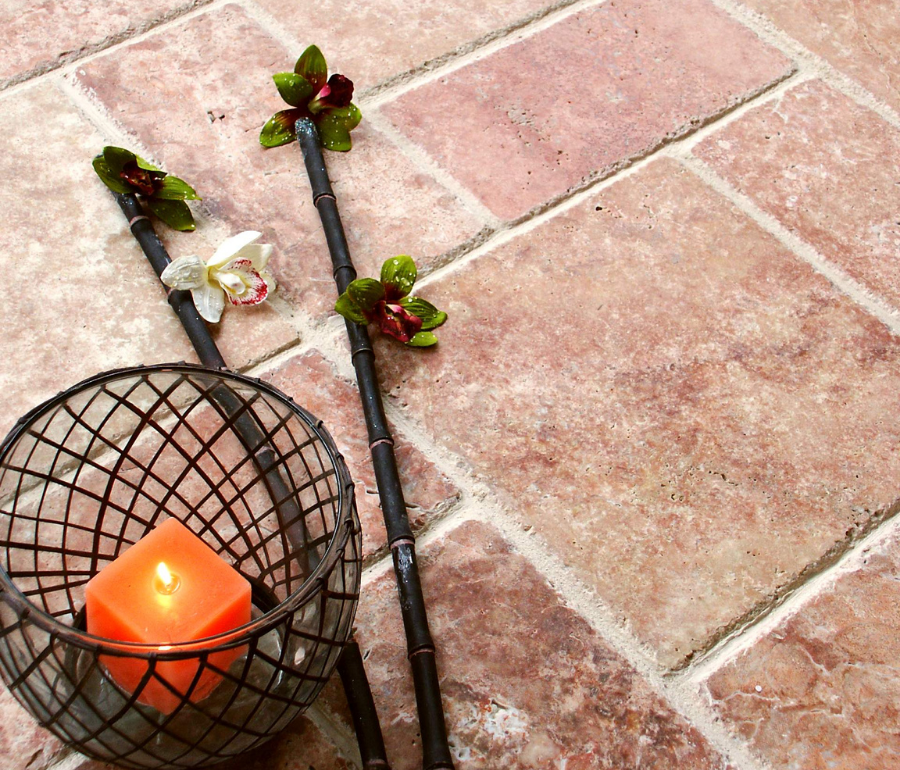
Natural stone is more than a surface material; it is an architectural element capable of shaping the atmosphere, visual identity, and material language of an entire space. Color, texture, mineral movement, and surface finish all influence how an interior is perceived. Within this context, Red Travertine stands out for its warm palette, porous natural texture, and ability to connect different applications through one consistent material. From expansive floors to kitchen countertops and sculptural furniture, it allows designers to create interiors that feel layered, connected, and deliberately composed.
Its palette brings together terracotta, muted red, dusty pink, cinnamon, and earthy brown tones. These natural variations prevent large surfaces from appearing flat and give each installation an individual identity. Since every slab and tile displays different tonal transitions, Red Travertine introduces a level of authenticity that cannot be reproduced by printed or engineered finishes. Under daylight, lighter mineral areas become more visible, while warm artificial lighting intensifies the deeper red and rust-colored sections of the stone.
Contemporary architecture increasingly favors materials that can move beyond a single function. Red Travertine responds well to this approach because it can be used for flooring, kitchen islands, countertops, side tables, coffee tables, wall surfaces, and decorative objects. Repeating the same stone in different scales creates material continuity without making the project feel repetitive. A floor may establish the overall color palette, a countertop can strengthen that palette through a more concentrated application, and a furniture piece can reinterpret the same material as a sculptural focal point.
Its compatibility with other natural stones also expands its design potential. When combined with White Travertine, the contrast remains soft and organic rather than graphic or severe. Light cream tones balance the warmth of Red Travertine, while both stones retain the porous and layered character associated with the travertine family. This relationship makes it possible to create interiors that feel cohesive even when more than one stone color is used.
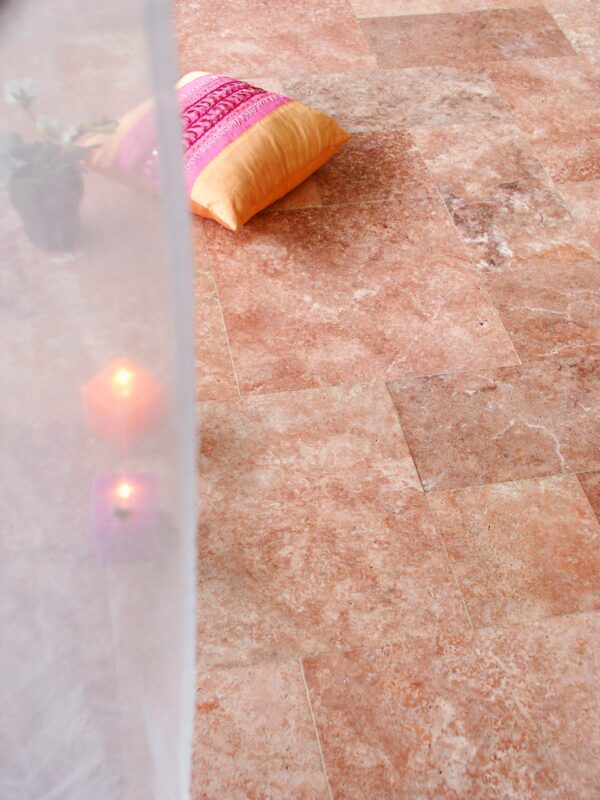
Red Travertine Flooring Establishing a Warm and Layered Interior Palette
Creating Warm and Grounded Interiors with Red Travertine Flooring
Flooring forms one of the largest uninterrupted surfaces within any architectural project, so its material has a major influence on the atmosphere of the space. Red Travertine introduces warmth from the ground up through its natural red, pink, rust, and brown transitions. Instead of acting as a neutral background, the floor becomes an active part of the design, establishing a color palette that can guide furniture, wall finishes, textiles, and lighting choices throughout the interior.
The stone is especially effective in spaces that seek a connection to natural landscapes and earth-inspired colors. Residential living areas, entrance halls, restaurants, boutique hotels, terraces, courtyards, and covered outdoor spaces can all benefit from its grounded appearance. Its natural pores and tonal variations soften clean architectural lines, making minimalist environments feel more tactile and less rigid. In projects with plaster walls, timber ceilings, linen upholstery, or handmade ceramics, Red Travertine strengthens the material-based character of the design.
Different finishes allow the same stone to communicate very different architectural ideas. A honed and filled finish creates a cleaner, more controlled surface suitable for contemporary interiors. Brushed or unfilled finishes preserve more of the natural texture and work well in rustic, Mediterranean, or indoor-outdoor concepts. Tumbled edges can introduce a softer, aged quality, while carefully calibrated tiles support more precise modern layouts. Selecting the finish according to the intended use is essential because it affects both visual character and everyday performance.
Large-format slabs or tiles reduce the number of joints and allow the natural color transitions to read across a broader surface. This approach is particularly effective in open-plan interiors where flooring connects living, dining, and circulation areas. Modular layouts, on the other hand, introduce rhythm and can support more traditional or relaxed architectural styles. In both cases, the stone retains its natural individuality, ensuring that the finished surface never appears mechanically repetitive.
Red Travertine also responds strongly to lighting. Daylight reveals subtle differences between soft pink sections and deeper rust tones, while warm evening lighting intensifies the stone’s earthy character. This changing appearance gives the flooring visual depth throughout the day and helps the interior feel connected to natural light rather than dependent on a fixed decorative effect.
Using Scale, Finish, and Layout to Define the Flooring Character
The architectural effect of Red Travertine flooring depends not only on the stone itself but also on how it is cut, finished, and arranged. Large rectangular formats emphasize continuity and make the stone feel more monolithic, while smaller modules create movement and introduce a more detailed pattern. Designers can therefore adjust the visual intensity of the floor without changing the material.
Vein-cut and cross-cut selections also create different results. Vein-cut travertine reveals linear mineral bands that can visually lengthen a corridor or reinforce a directional plan. Cross-cut surfaces present a more cloud-like and varied pattern, creating a softer and less structured appearance. Choosing between these cuts allows the natural formation of the stone to support the geometry of the space.
Joint color should be considered as part of the overall composition. A grout tone close to the stone creates a more continuous field, while a slightly contrasting joint makes the layout more visible. In large spaces, subtle joints usually allow the mineral variation to remain the primary visual feature. In patterned or modular applications, more defined joints can strengthen the rhythm of the floor.
Red Travertine works particularly well with plaster, warm white paint, natural oak, walnut, aged bronze, blackened steel, and soft neutral fabrics. These materials either extend its warmth or provide controlled contrast. The result is not simply a red floor, but a complete material environment in which color, texture, and architectural proportion support one another.
When planned carefully, Red Travertine flooring can serve as the foundation for the entire project. The same stone can later reappear on a kitchen island, a side table, or a decorative wall, creating a clear connection between different rooms and functions. This continuity allows the interior to feel intentional without relying on excessive decoration or too many unrelated finishes.
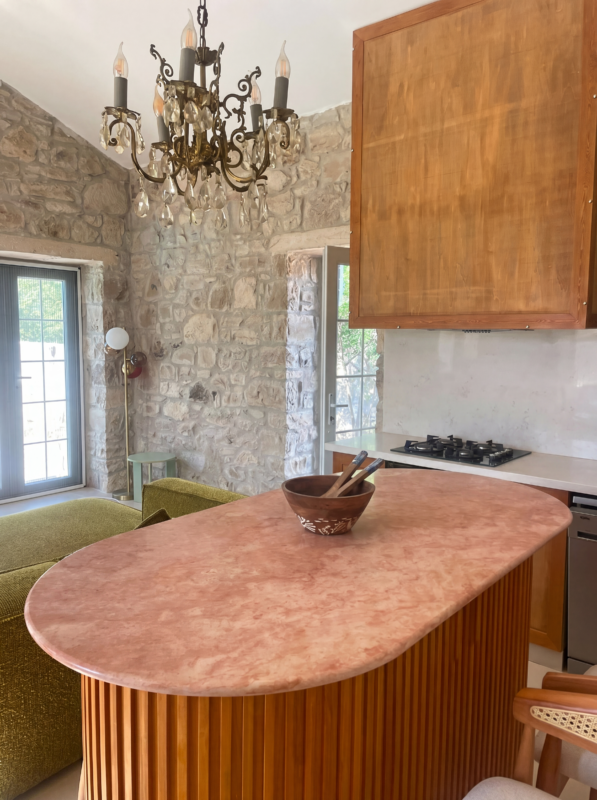
Red Travertine Bringing Warmth and Natural Texture to Contemporary Kitchen Design
Red Travertine Countertops That Bring Warmth into Contemporary Kitchens
Modern kitchens are no longer designed solely for cooking. They have evolved into multifunctional spaces where cooking, dining, entertaining, and everyday living take place within one continuous environment. Because of this transformation, material selection plays a much greater role in defining the atmosphere of the space. Red Travertine introduces a natural warmth that immediately softens contemporary kitchens, making them feel welcoming without sacrificing architectural sophistication.
Its earthy color palette creates a refreshing alternative to conventional white and gray countertops. The natural mineral transitions running through the stone produce subtle movement that changes throughout the day depending on natural and artificial light. Every slab presents a unique composition, ensuring that no kitchen island or countertop is ever identical to another.
Large-format Red Travertine slabs are particularly effective on waterfall islands where the stone continues seamlessly from the horizontal surface to the vertical sides. This uninterrupted flow highlights the geological beauty of the material while creating a sculptural centerpiece within the kitchen. Instead of functioning as a simple work surface, the island becomes an architectural feature around which the rest of the interior is organized.
The material pairs exceptionally well with natural oak cabinetry, walnut veneers, limewashed walls, brushed bronze hardware, matte black fixtures, and soft neutral flooring. These combinations allow Red Travertine to remain visually dominant while maintaining a calm and balanced composition. Rather than creating excessive contrast, the stone establishes harmony through complementary natural materials.
Lighting has a significant influence on the appearance of Red Travertine countertops. During the day, sunlight reveals the stone’s lighter mineral tones and porous texture. In the evening, warm pendant lighting intensifies the rich terracotta and rust-colored areas, creating a completely different atmosphere. This constantly changing interaction between light and stone gives kitchens a dynamic quality that manufactured materials rarely achieve.
Designing Timeless Kitchens with Red Travertine
One of the greatest strengths of Red Travertine is its ability to remain relevant despite changing interior design trends. While many fashionable finishes lose popularity over time, natural stone continues to provide lasting architectural value because its beauty comes directly from geological formation rather than artificial decoration.
Designers frequently use Red Travertine in kitchens that emphasize material authenticity. Instead of introducing numerous decorative finishes, the architecture allows the stone itself to become the defining feature of the room. Clean cabinetry, minimal hardware, and restrained detailing create an environment where the natural variations of the travertine receive full attention.
The stone also performs beautifully when repeated across multiple kitchen elements. Countertops, waterfall islands, shelving, and even dining tables can all be fabricated from the same material, establishing visual continuity throughout the open-plan living space. This consistent material language strengthens the architectural identity of the project while reducing visual fragmentation.
For luxury residences, boutique hospitality projects, and bespoke residential interiors, Red Travertine offers more than aesthetic appeal. It represents craftsmanship, authenticity, and a direct connection to natural materials—qualities increasingly valued in contemporary architecture where timeless design is often achieved through simplicity rather than excess.
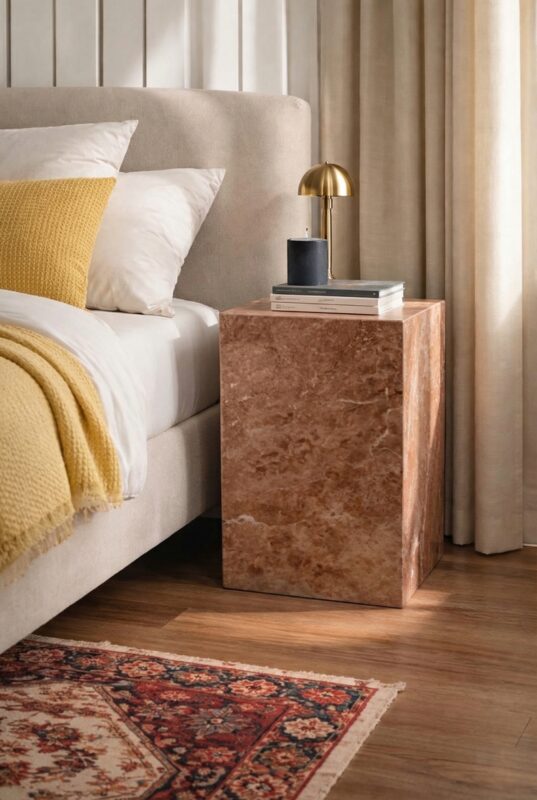
Red Travertine Transforming Furniture into Sculptural Design Objects
Red Travertine Furniture as Architectural Design Pieces
Natural stone furniture has become one of the defining elements of contemporary interior architecture. Rather than functioning solely as practical objects, coffee tables, side tables, and sculptural furniture pieces are increasingly designed as architectural features that contribute to the identity of a space. Red Travertine is particularly suited for this approach because its warm earth-inspired palette immediately draws attention while maintaining a refined and natural appearance.
Every block of Red Travertine displays a different geological composition, ensuring that no two furniture pieces are exactly alike. Its porous texture, mineral-filled cavities, and flowing tonal transitions create surfaces that feel authentic and handcrafted. Instead of relying on decorative ornamentation, designers allow the natural characteristics of the stone to become the primary visual language of the furniture.
Monolithic coffee tables are among the most successful applications of Red Travertine. Large stone volumes emphasize the weight and permanence of the material while celebrating its organic texture. Simple geometric forms, such as cubes, cylinders, and clean rectangular blocks, allow the natural veining and color variation to remain the focal point. This restrained design philosophy aligns perfectly with contemporary architecture, where simplicity often creates stronger visual impact than excessive detailing.
Red Travertine furniture also introduces a tactile quality that contrasts beautifully with softer interior materials. Linen upholstery, boucle fabrics, timber flooring, and handcrafted ceramics complement the stone without competing for attention. The result is an interior that feels balanced, warm, and materially rich rather than overly decorated.
Because natural stone furniture is exceptionally durable, Red Travertine coffee tables and side tables continue to maintain their architectural presence for decades. Their longevity makes them suitable not only for private residences but also for hotel lounges, executive offices, boutique retail spaces, galleries, and luxury hospitality environments where timeless materials are highly valued.
Creating Material Continuity with Red Travertine Furniture
One of the strongest trends in contemporary architecture is the repetition of a single material across multiple design elements. Rather than introducing numerous unrelated finishes, architects increasingly use the same natural stone for flooring, countertops, furniture, and decorative surfaces to establish a unified architectural language.
Red Travertine responds exceptionally well to this concept. A flooring application can naturally transition into a kitchen island, while the same stone reappears as a coffee table or sculptural side table within the adjacent living area. This continuity creates visual rhythm throughout the project without making the interior feel repetitive. Instead, each application reveals a different aspect of the material’s character.
Furniture also provides an opportunity to appreciate Red Travertine at a more intimate scale. While large flooring installations emphasize continuity and spatial depth, smaller furniture pieces allow the intricate mineral details, natural pores, and tonal transitions to be experienced up close. These details reinforce the authenticity of the material and distinguish natural stone from manufactured alternatives.
The versatility of Red Travertine enables it to work comfortably within minimalist, Mediterranean, contemporary, organic modern, and even classic interiors. Its warm palette adapts to changing furniture styles while maintaining a timeless architectural quality. As a result, Red Travertine furniture is not simply an accessory—it becomes an integral part of the interior architecture itself.
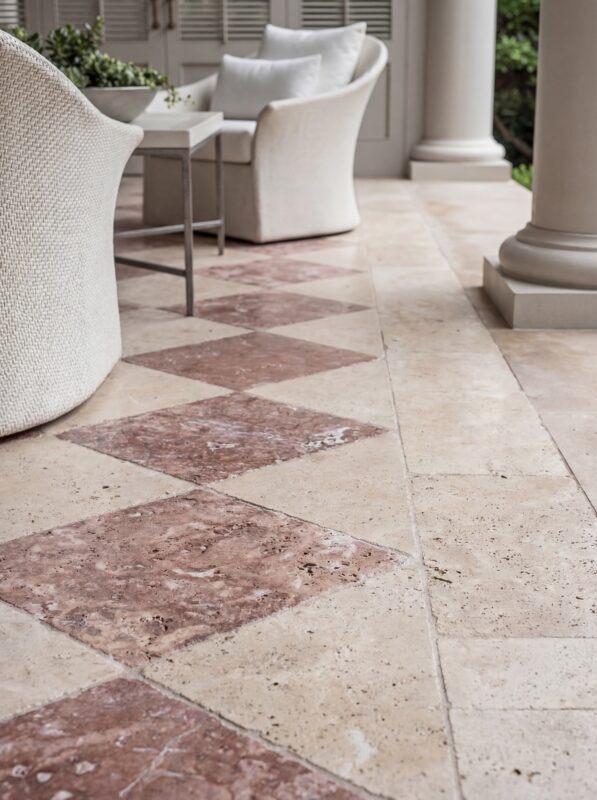
Combining Red Travertine and White Travertine for Balanced Interior Architecture
Which Natural Stones Pair Best with Red Travertine?
One of the greatest advantages of Red Travertine is its ability to work harmoniously with a wide variety of natural stones. While its warm terracotta and earth-inspired tones establish a strong architectural identity, they remain balanced enough to complement lighter stones rather than overpower them. This flexibility allows architects to create layered interiors that feel cohesive instead of relying on a single material throughout the project.
Among all possible combinations, White Travertine creates one of the most natural relationships with Red Travertine. Because both materials belong to the travertine family, they share similar textures, surface characteristics, and geological structures. Their primary difference lies in color. White Travertine introduces brightness and openness, while Red Travertine contributes warmth and visual depth. Together they produce interiors that feel balanced, relaxed, and naturally sophisticated.
In contemporary projects, designers often use White Travertine across larger architectural surfaces such as flooring or wall cladding while introducing Red Travertine as an accent through kitchen islands, coffee tables, feature walls, fireplaces, or reception desks. This strategy prevents the richer red tones from becoming visually dominant while allowing them to function as carefully positioned focal points throughout the space.
Red Travertine also pairs beautifully with Classic Travertine, Silver Travertine, and Light Travertine. Classic Travertine reinforces Mediterranean-inspired interiors through warm beige transitions, while Silver Travertine introduces cooler gray tones that create a more contemporary architectural expression. Light Travertine softens the overall palette, making Red Travertine appear even richer without overwhelming the composition.
For projects requiring stronger visual contrast, Afyon White Marble provides a refined white surface with delicate gray veining that complements the organic movement of Red Travertine. Designers seeking a more dramatic aesthetic may also combine Red Travertine with Nero Marquina Marble, using black marble selectively to create bold focal points within otherwise warm natural stone environments. When carefully balanced, these combinations produce interiors with remarkable depth while preserving material harmony.
Red Travertine as a Versatile Material for Contemporary Architecture
One of the defining qualities of Red Travertine is its ability to move effortlessly between architectural surfaces and custom furniture. The same natural stone can begin as flooring, continue onto a kitchen island, reappear as a coffee table, and finally become part of a decorative composition without disrupting the visual continuity of the project. This consistent material language has become a defining characteristic of high-end residential architecture and bespoke hospitality design.
Beyond its visual appeal, Red Travertine introduces authenticity into contemporary interiors. Every slab records millions of years of geological history through mineral movement, natural pores, and tonal variation. Rather than hiding these characteristics, today’s designers celebrate them, allowing the stone itself to become the central design feature. This approach reflects a broader movement in architecture toward honest materials, craftsmanship, and timeless natural beauty.
Whether applied to expansive flooring, sculptural countertops, monolithic furniture, or carefully balanced stone combinations, Red Travertine offers exceptional versatility. Its warm palette creates welcoming environments, while its compatibility with White Travertine, Classic Travertine, Silver Travertine, Afyon White Marble, and other premium natural stones provides architects with extensive creative freedom.
As contemporary interiors continue to prioritize authentic materials and cohesive architectural expression, Red Travertine remains one of the most distinctive natural stones available. Its ability to unify multiple spaces through one consistent material palette makes it an ideal choice for projects seeking warmth, character, and lasting architectural value.