
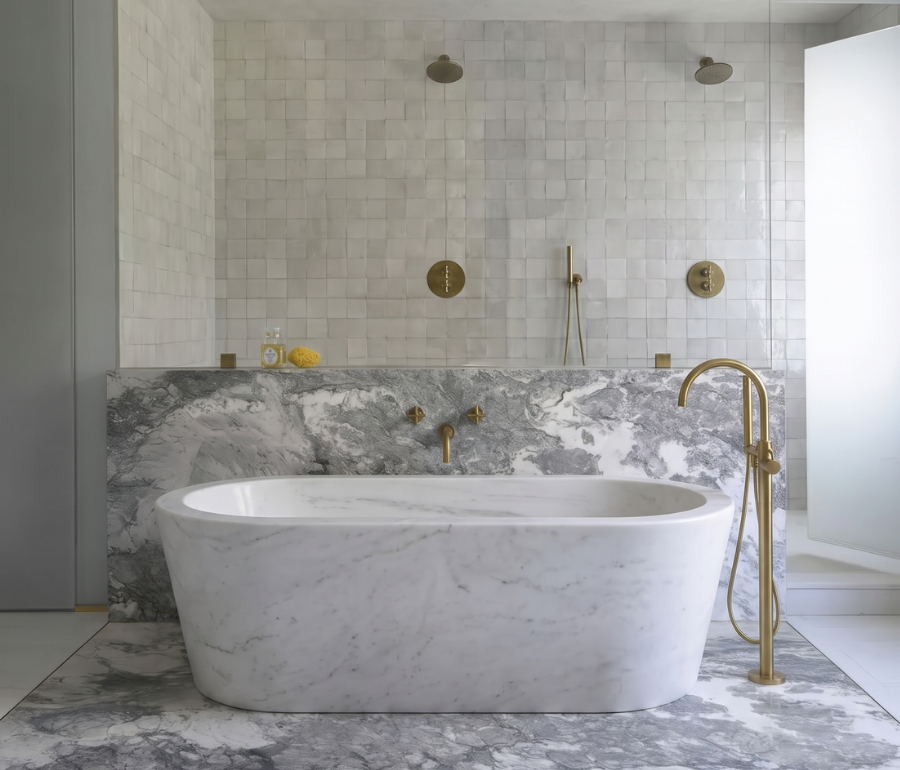
Natural stone has played a defining role in architecture for centuries. Today, its use extends far beyond flooring and wall cladding to include vanities, sinks, furniture, and custom bathroom fixtures. Among these applications, marble bathtubs stand out for their ability to combine everyday function with the visual presence of a sculptural architectural object. Their solid construction, organic veining, and carefully shaped forms make them a central feature in residential bathrooms, luxury hotels, wellness suites, and private spa environments.
Contemporary bathrooms are no longer designed solely as practical spaces. They are increasingly planned as personal retreats where material quality, spatial comfort, and visual calm are equally important. A natural stone bathtub supports this approach by introducing an authentic surface that cannot be duplicated by mass-produced acrylic, ceramic, or composite alternatives. Every block of marble contains unique mineral movement, color variation, and veining, ensuring that each finished bathtub has its own visual identity.
Another important advantage of marble bathtubs is their ability to establish material continuity. The stone selected for the tub may be repeated across the flooring, shower walls, vanity tops, integrated sinks, or decorative niches. This repetition connects separate surfaces and allows the bathroom to feel like one complete architectural composition rather than a collection of unrelated fixtures.
Stone color also influences the atmosphere of the room. White and light gray marbles reflect daylight and help create open, calm interiors, while black or deeply veined stones introduce contrast and a stronger visual focus. The shape of the bathtub, its position within the floor plan, and the selected surface finish further determine how the stone interacts with the surrounding architecture.
This article examines how marble bathtubs function as sculptural bathroom elements, how Carrara Marble supports light and cohesive interiors, and how Pinguino Marble creates a bolder interpretation through dark tones and expressive white veining.
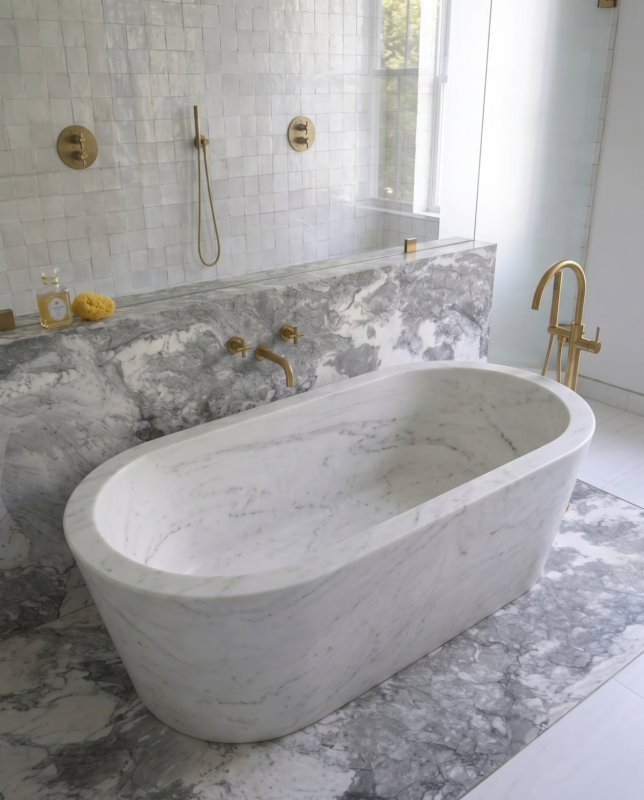
Bianco Carrara Marble Bathtub as a Sculptural Feature in Bathroom Design
How Marble Bathtubs Become Sculptural Bathroom Features
Marble bathtubs are increasingly treated as architectural focal points rather than standard bathroom fixtures. Their mass, depth, and three-dimensional form allow them to influence the entire layout of the room. A freestanding marble tub placed on a central axis, beside a large window, or within a dedicated bathing zone naturally becomes the visual center of the bathroom.
The continuity of the marble veining across the inner and outer surfaces reinforces the perception of a single carved form. This quality is difficult to reproduce with manufactured materials because natural stone carries genuine depth, tonal variation, and mineral structure. Even when the bathtub is fabricated from multiple carefully selected sections, skilled vein matching can preserve a monolithic appearance.
Simple shapes are often the most effective. Oval, rectangular, and softly rounded forms give the stone enough surface area to display its natural pattern without introducing unnecessary decorative details. In these designs, the marble itself provides the ornament. The result is a bathtub that appears restrained from a distance but reveals greater complexity when viewed up close.
Freestanding marble bathtubs are especially suitable for generous bathrooms where circulation can continue around the entire object. Leaving space around the tub allows its form and material to be appreciated from multiple angles. Built-in designs create a different effect by integrating the bathtub into a platform, wall, or architectural recess. This approach makes the tub feel like a permanent part of the room.
Lighting is essential to the final result. Natural daylight reveals subtle differences in veining and color throughout the day, while warm indirect lighting creates a softer evening atmosphere. Concealed lighting beneath platforms, wall washers, and carefully positioned ceiling fixtures can emphasize the volume of the bathtub without producing harsh reflections.
Material pairings also shape the design language. Warm wood cabinetry, limestone-colored plaster, bronze fixtures, and neutral textiles create a relaxed environment around a marble bathtub. Matte black fittings produce a more graphic composition, while brushed nickel and chrome support a cooler, contemporary aesthetic. The strongest bathrooms allow each material to complement the stone rather than compete with it.
Because marble is naturally distinctive, the bathtub can remain relevant even as surrounding furnishings and accessories change. Its visual identity is based on geological formation rather than a temporary decorative trend. For this reason, a well-proportioned marble bathtub often becomes one of the most lasting elements within a high-end bathroom project.
Designing a Cohesive Bathroom Around a Natural Stone Tub
A marble bathtub achieves its greatest architectural impact when it is considered together with the rest of the bathroom rather than selected as an isolated product. Flooring, wall cladding, vanity surfaces, lighting, and fittings should all contribute to a consistent visual hierarchy.
Repeating the same marble on nearby walls or flooring creates a strong sense of continuity. However, an entire room does not need to be covered in one stone. In many projects, using marble selectively around the bathtub and balancing it with plaster, timber, glass, or complementary natural stone creates a more layered and comfortable interior.
Scale is another important consideration. A large monolithic tub requires sufficient surrounding space to avoid making the bathroom feel crowded. In smaller interiors, a more compact form, lighter-colored stone, larger mirrors, and transparent shower partitions can preserve openness. The visual weight of the bathtub should always be balanced against the dimensions of the room.
The relationship between the tub and the view is also significant. Positioning a marble bathtub near a window or facing a landscaped courtyard reinforces the connection between natural stone and the external environment. In hospitality projects, this placement can define the entire guest experience by making bathing part of a carefully framed architectural scene.
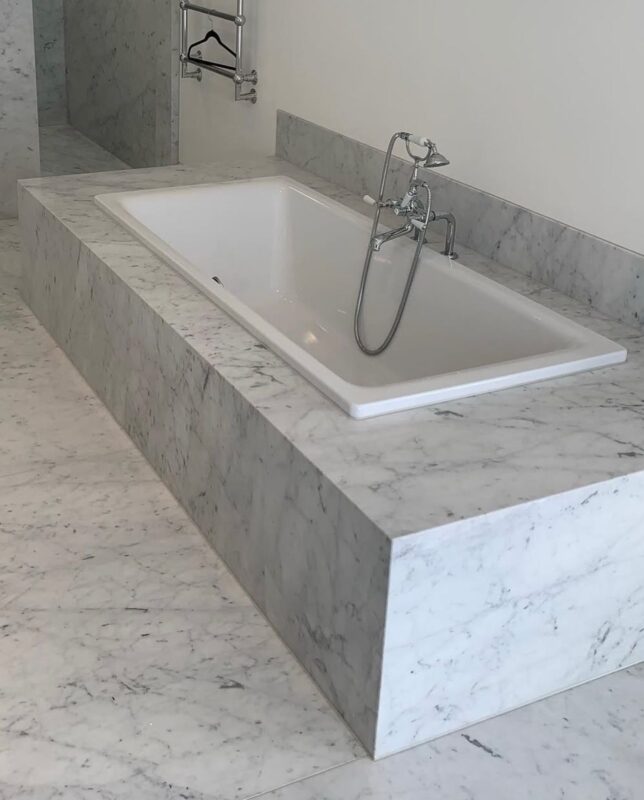
Carrara Marble Bathtub Integrated into a Light Natural Stone Bathroom
Carrara Marble Bathtubs for Light and Cohesive Bathroom Interiors
Carrara Marble is one of the most internationally recognized stones used in architecture and interior design. Quarried in Italy, it is known for its white to light gray background and soft gray veining. These characteristics make it particularly suitable for bathrooms where brightness, calm, and material continuity are central to the design concept.
A Carrara Marble bathtub can be designed as a freestanding sculptural object or integrated into a built-in platform. Built-in applications are especially effective when the same marble continues across the tub surround, nearby walls, flooring, and vanity surfaces. The bathtub then appears to emerge from the architecture rather than being placed into it afterward.
The pale surface of Carrara Marble reflects both natural and artificial light, helping the bathroom feel more open. This is valuable in compact bathrooms as well as larger spa-like interiors. The marble introduces visual movement through its veining without creating the heaviness associated with darker stones.
Large-format slabs can be used around the bathtub to reduce the number of visible joints and preserve the flow of the pattern. When the slabs are carefully selected and arranged, the gray veins can continue across adjoining surfaces, producing a more controlled and intentional composition.
Carrara Marble also works with a broad range of fixtures and finishes. Brushed brass introduces warmth and a more classical reference, while chrome and polished nickel create a crisp contemporary atmosphere. Matte black faucets offer stronger contrast and can make the white marble appear even brighter. Natural oak, walnut, and light-colored textiles soften the mineral surface and add visual comfort.
The stone is equally compatible with minimal and detailed bathroom concepts. In restrained interiors, it can be combined with flat-front cabinetry, frameless mirrors, and concealed lighting. In more traditional projects, it works with paneled furniture, decorative moldings, and polished metal fixtures. This adaptability has helped Carrara Marble remain relevant across changing architectural styles.
A Carrara Marble bathtub can also connect the bathing area with the rest of the home. When the same stone is repeated in a nearby vanity, hallway floor, or custom furniture piece, it creates a broader material relationship beyond the bathroom itself. This type of continuity is particularly effective in custom residences and boutique hospitality projects.
Craftsmanship and Vein Planning in Carrara Marble Tub Design
The quality of a Carrara Marble bathtub depends not only on the stone but also on the fabrication process. Slab or block selection should consider vein direction, tonal consistency, natural fissures, and the final geometry of the tub. Careful planning ensures that the most expressive areas of the stone appear on the most visible surfaces.
Curved forms require precise CNC machining followed by detailed hand finishing. Edges, internal transitions, and drainage slopes must be carefully shaped to combine comfort with visual refinement. Even small inconsistencies can become noticeable on a light marble surface, making accurate craftsmanship essential.
Surface finish also changes the character of the bathtub. A polished finish enhances contrast and reflects more light, while a honed finish provides a softer and more understated appearance. In many contemporary bathrooms, honed Carrara Marble is preferred because it creates a calm tactile surface and reduces strong reflections.
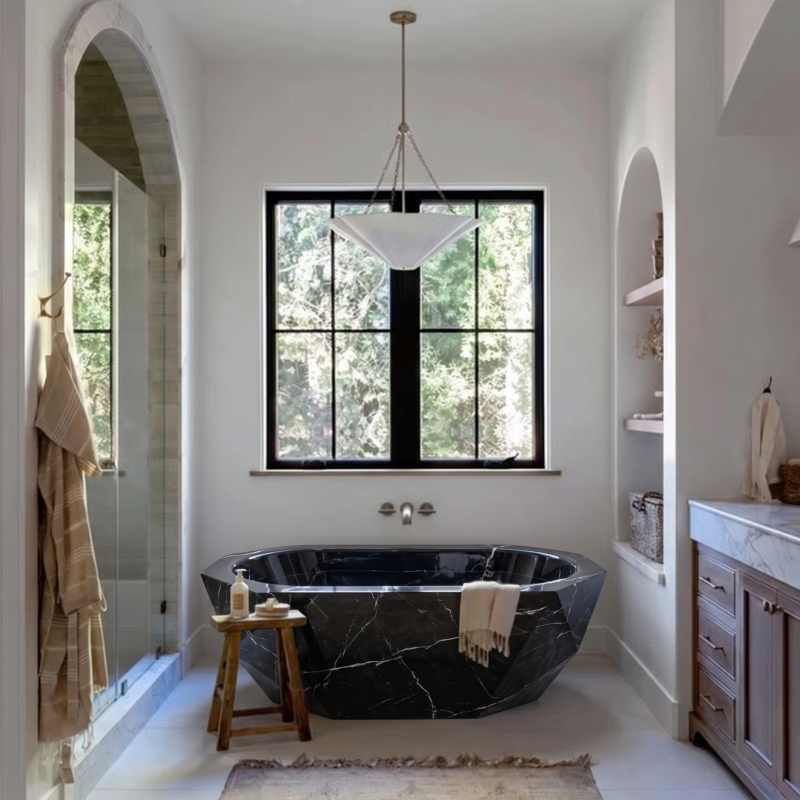
Pinguino Marble Bathtub Creating a Bold Black-and-White Bathroom Focal Point
Pinguino Marble Bathtubs and the Architectural Power of Dark Stone
While white marble bathtubs create calm and brightness, dark natural stones establish a more dramatic architectural presence. Pinguino Marble is distinguished by its deep background and expressive light-colored veining, making it especially effective for freestanding bathtubs intended to become the central feature of the room.
The contrast between the dark stone and surrounding light surfaces immediately defines the bathing area. White walls, pale stone flooring, light oak cabinetry, and large mirrors help balance the visual weight of the tub while allowing its natural veining to remain prominent. The result is a bathroom with depth and strong spatial hierarchy.
Pinguino Marble becomes especially expressive on curved and tapered bathtub forms. As the veining moves across the changing geometry, the pattern appears different from every viewpoint. Thick edges and carefully shaped profiles further emphasize the physical quality of the stone and give the tub a sculptural appearance.
Freestanding designs generally offer the strongest presentation because the marble remains visible on all sides. Positioning the tub away from walls allows circulation around it and gives the viewer a complete understanding of its form. In large bathrooms, placing it on a central axis or in front of a window can create a highly structured composition.
Lighting must be planned carefully around dark marble. Daylight reveals the depth of the surface, while concealed LED lighting and wall washers can highlight the white veining in the evening. Excessively harsh lighting may create glare on polished surfaces, so a layered lighting plan is usually more effective.
Fixture selection can shift the style of the room. Brushed brass adds warmth against the dark stone, stainless steel and chrome create a cooler contemporary appearance, and matte black fittings produce a highly unified monochromatic design. When using several dark elements together, lighter walls and flooring help maintain visual balance.
Pinguino Marble is particularly effective in luxury residences, hotel suites, wellness projects, and private spa interiors where the bathtub is intended to communicate a clear material identity. Instead of blending into the architecture, it becomes the feature around which the entire room is organized.
Choosing the Right Stone, Form, and Finish for a Marble Bathtub
Selecting a marble bathtub requires more than choosing a preferred color. The structure of the block, natural fissures, vein direction, dimensions, weight, installation conditions, and surface finish must all be considered together. Since a bathtub is a large and deeply carved object, the selected stone must be suitable for the intended form and production process.
Light marbles such as Carrara create open and versatile bathroom environments. Dark stones such as Pinguino deliver stronger contrast and can define the room more decisively. The right choice depends on the dimensions of the bathroom, the available daylight, the surrounding materials, and the desired architectural atmosphere.
Form is equally important. Freestanding tubs reveal the stone from every side and work best when sufficient circulation space is available. Built-in tubs create a more integrated appearance and can continue into platforms, steps, niches, or wall cladding. Oval forms feel softer and more organic, while rectangular designs reinforce clear architectural lines.
The surface finish affects both appearance and touch. Polished marble deepens color and highlights the veining, while honed marble offers a matte, calmer surface. The selected finish should be considered together with cleaning requirements, wet-area performance, and the overall design concept.
Weight and installation logistics also require early planning. Natural stone bathtubs can be significantly heavier than standard tubs, so floor loading, transportation routes, access dimensions, lifting equipment, and final positioning should be reviewed before production begins. Plumbing connections and drainage details must be coordinated precisely with the architecture.
Routine care helps preserve the stone over time. pH-neutral cleaners should be used, acidic chemicals should be avoided, and suitable protective treatments may be applied according to the marble and finish. Water should not be allowed to remain on the surface for extended periods, especially around fittings and drainage points.
From the balanced appearance of Carrara Marble to the bold contrast of Pinguino Marble, different natural stones can give a bathtub a completely different architectural identity. When stone selection, craftsmanship, form, lighting, and placement are considered as one design process, a marble bathtub becomes far more than a bathroom fixture. It becomes a permanent natural stone feature capable of defining the entire space.