
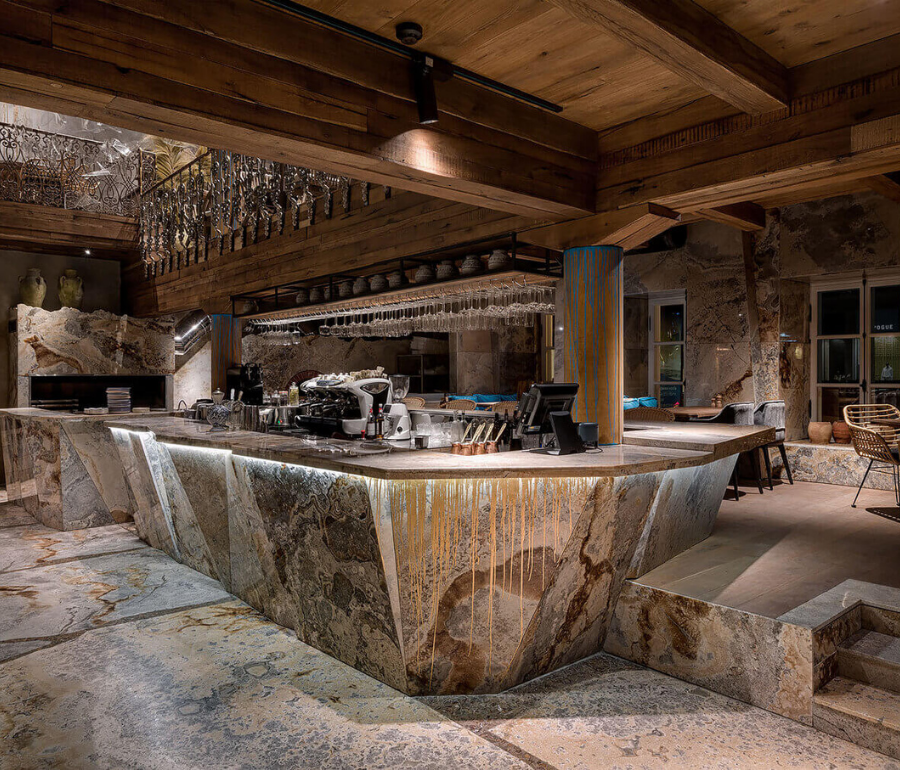
Natural stone is more than a surface finish in architectural projects. Its color transitions, mineral formations, veining, and interaction with light can determine the atmosphere and visual identity of an entire interior. Among decorative natural stones, Silver Onyx stands out with its layered combination of gray, charcoal, cream, honey, amber, and brown tones. Crystalline areas and irregular mineral movement create highly individual surfaces that turn walls, flooring, counters, and custom architectural elements into distinctive compositions.
Known in Turkish as Gümüş Oniks, Silver Onyx belongs to the translucent onyx family. When selected in a suitable thickness and combined with a carefully engineered lighting system, the stone can be backlit to reveal depth within its mineral structure. However, its architectural value is not limited to translucent applications. Even without backlighting, its dramatic color transitions and layered natural patterns create strong visual character on floors, wall cladding, bar fronts, reception desks, staircases, and custom furniture.
Slab selection and vein planning are critical when designing with Silver Onyx. Consecutive slabs from the same block can be arranged to preserve directional movement, create continuous transitions, or form mirrored bookmatched compositions. Depending on the project, highly expressive sections may be reserved for focal surfaces, while quieter slabs can be used for flooring, stairs, or complementary architectural details. This strategy allows the material to define selected areas without overwhelming the entire space.
The applications shown in the image sequence demonstrate the versatility of Silver Onyx at different scales. In the first interior, flooring, counters, and vertical surfaces are connected through one consistent natural stone language. The second application uses the stone across a bar, wall panels, steps, and transitional areas to establish material continuity. The third image presents Silver Onyx in a modular decorative floor pattern, where the individual tiles create a layered composition of warm and cool mineral tones.
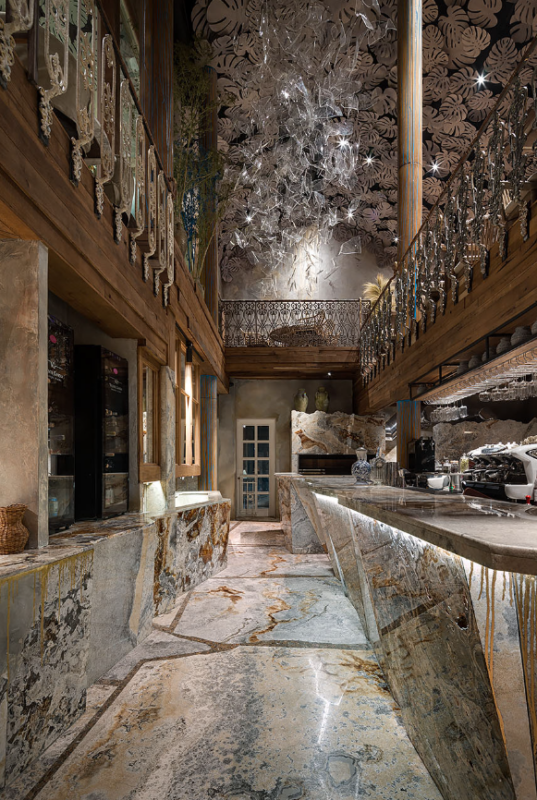
Layered Restaurant and Bar Interior Featuring Silver Onyx Surfaces
Layered Restaurant and Bar Interiors with Silver Onyx
Material selection in restaurant and bar interiors influences far more than appearance. Surfaces affect how guests move through the space, where their attention is directed, and how different zones are perceived. Silver Onyx can define circulation routes, emphasize service areas, and create clear focal points within large hospitality interiors. Repeating the stone across flooring, counters, vertical panels, and built-in elements establishes a consistent visual language throughout the project.
Its gray, honey, amber, cream, and charcoal tones work particularly well with natural timber, aged metal, transparent glass, and decorative lighting. Warm wood softens the mineral intensity of the stone, while bronze or blackened metal details provide a controlled architectural frame. Although Silver Onyx is visually expressive, these complementary materials prevent it from appearing isolated or overly dominant.
Bar counters offer an opportunity to apply the stone to three-dimensional forms rather than flat surfaces alone. Angled fronts, substantial edges, sculpted bases, and geometric volumes reveal the onyx pattern from multiple viewpoints. Veins that appear horizontal on a countertop may continue vertically across the front panel, giving the counter a more dynamic and cohesive character.
Before fabrication, slab layouts should be carefully planned to determine where the strongest mineral areas will appear. Random cutting can interrupt the natural movement and make the finished counter look fragmented. Coordinated slab selection allows patterns to continue across the top, edges, and front faces, creating a more refined architectural result.
Indirect lighting can further emphasize the visual depth of Silver Onyx. Under-counter LEDs, illuminated niches, wall washers, and focused spotlights reveal transitions between lighter crystalline areas and deeper gray or amber sections. Full backlighting is not always necessary; even carefully positioned surface lighting can enhance depth and make the natural stone appear more dimensional.
Creating Material Continuity in Commercial Interiors
Large commercial spaces can feel visually fragmented when too many unrelated finishes are introduced. Repeating the same natural stone across different surfaces creates a connection between functional areas and reinforces the architectural identity of the interior. Silver Onyx is particularly suitable for this approach because its diverse mineral palette can naturally relate to wood, metal, plaster, glass, and other stone materials.
On flooring, smaller or modular pieces can create rhythm and guide movement. On walls and counters, large-format slabs display the stone’s veining and color transitions more clearly. Changing the scale of the material prevents repetition from becoming monotonous. The floor contributes texture and pattern, while vertical surfaces provide larger uninterrupted areas of natural movement.
Surface finish should be selected according to the function of each area. Polished Silver Onyx intensifies color, crystal structure, and reflection, making it well suited to bar fronts, walls, and statement counters. Honed finishes create a softer appearance with reduced glare. For heavily trafficked floors, slip resistance, maintenance requirements, and expected wear must be considered alongside the desired visual effect.
The success of the material also depends on its relationship with lighting and circulation. A counter may be illuminated to become the primary focal point, while the same stone appears more quietly in flooring or stair details. This hierarchy creates visual balance and allows the material to guide the user through the interior without covering every surface at the same intensity.
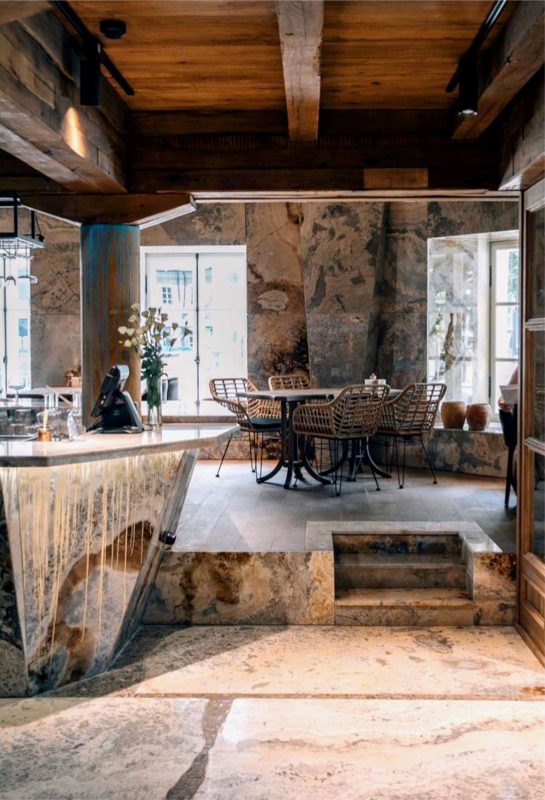
Silver Onyx Used Across a Bar, Steps, and Reception Surfaces
Designing Bar, Reception, and Welcome Areas with Silver Onyx
Reception desks and bar counters are often the first architectural elements noticed when entering a hotel, restaurant, or private hospitality venue. Their material quality communicates the design character of the project before the rest of the interior is fully experienced. Silver Onyx creates a strong first impression through its layered mineral movement and broad range of natural tones.
Large slabs allow the veining to remain visible across expansive surfaces. When the stone is used on the front, sides, and top of a counter, it can give the impression of a single carved volume. Preserving vein continuity between these planes is one of the details that distinguishes a carefully fabricated installation from a standard cladding application.
Using the same material on surrounding steps, wall panels, and threshold areas creates visual continuity between different floor levels and functions. This continuity is not merely decorative. It can help direct visitors, define the service zone, and visually connect dining, circulation, and reception spaces.
Silver Onyx works well with heavy timber beams, textured masonry, bronze fixtures, and warm lighting. Its amber and brown mineral areas connect naturally with wood, while its gray sections relate to stone walls, concrete, and metal finishes. This broad color range makes it possible to combine rustic and contemporary materials within the same project.
A substantial counter design can emphasize the weight and permanence of the stone. Deep edges, angled panels, and projecting surfaces create stronger shadows and reveal different parts of the mineral pattern. In smaller projects, thinner detailing and more restrained use may be more appropriate. The dimensions of the counter should always respond to the scale and proportions of the interior.
Lighting Strategies for Silver Onyx Applications
Silver Onyx is widely associated with illuminated surfaces because of its translucent structure. However, an effective lighting strategy requires more than placing LEDs behind a slab. The stone’s thickness, the location and density of the light source, the distance between the panel and lighting system, and the temperature of the light all affect the final result.
Warm light enhances honey, amber, and brown mineral areas, producing a softer hospitality atmosphere. Neutral light reveals gray and cream transitions more clearly and may be more suitable for contemporary interiors. Inconsistent lighting can create visible hot spots, so the backing system should provide even illumination across the entire surface.
Not every Silver Onyx application needs full backlighting. Grazing light placed close to a wall can reveal surface texture and vein direction. Integrated lighting beneath a counter or step can make the stone appear lighter while also reinforcing the geometry of the design. A combination of direct, indirect, and ambient lighting often creates a more balanced result than relying on a single light source.
Lighting should be planned during the early design stages rather than added after the stone has been installed. Electrical access, ventilation, panel fixing, and future maintenance need to be integrated into the construction details. This is especially important for bars, reception desks, and wall panels where equipment may be concealed behind the stone.
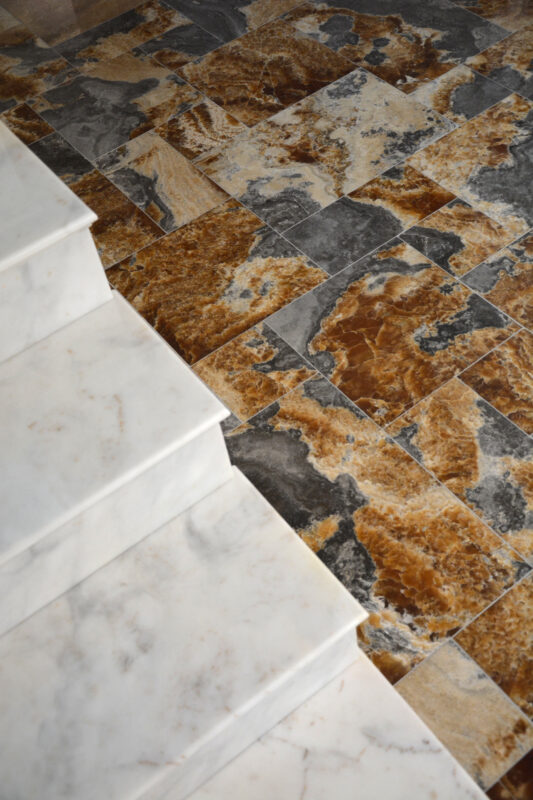
Decorative Silver Onyx Flooring with Layered Mineral Color Variation
Decorative Flooring and Modular Patterns with Silver Onyx
Although onyx is frequently used for illuminated wall panels and decorative counters, it can also create highly distinctive flooring when selected and detailed appropriately. Modular tile arrangements allow the material’s color variations to form a deliberate architectural pattern rather than a random collection of individual pieces.
Silver Onyx is particularly effective in this format because each tile contains a different balance of gray, charcoal, cream, amber, and honey tones. When distributed carefully, these variations create a naturally layered floor that does not depend on printed repetition. Every section contributes to the larger composition while remaining visibly unique.
Slab and tile selection should be completed before installation. Designers can map the pieces to distribute darker and lighter areas evenly, create gradual transitions, or deliberately concentrate stronger colors in selected zones. Without this planning, the finished floor may appear unbalanced, with similar tones grouped unintentionally.
Different dimensions can also be combined to create custom geometric layouts. Rectangular and square tiles may form offset patterns, framed compositions, or directional arrangements that respond to stairs and circulation routes. Border stones in a quieter marble can define the edge of the onyx area and prevent the pattern from becoming visually uncontrolled.
The floor shown beside a white marble staircase demonstrates how a calmer material can balance the intensity of Silver Onyx. White marble provides a clean architectural frame, while the onyx introduces movement and color. This relationship allows both materials to remain distinct without competing for attention.
Combining Silver Onyx with Other Natural Stones
Silver Onyx can be paired with a wide range of marbles, limestones, and travertines. The most successful combinations generally use a quieter secondary stone that allows the onyx to remain the focal material. White marbles such as Afyon White or Carrara provide contrast and brightness, while beige limestone and light travertine create a softer transition.
Gray marbles can connect with the cooler mineral sections of Silver Onyx, producing a restrained palette for contemporary projects. Dark stones may be used selectively as borders, bases, or accent details, but excessive dark contrast can compete with the onyx’s own charcoal areas.
In flooring, the surrounding stone can create a neutral frame around a patterned Silver Onyx field. On walls or counters, a quieter stone may be used on larger surfaces while onyx is reserved for niches, bar fronts, or reception features. This balanced approach reduces visual overload and gives the more expressive material room to be appreciated.
Metal and timber can also function as complementary architectural materials. Bronze emphasizes the stone’s warm tones, blackened steel creates definition, and oak or walnut introduces warmth and texture. Glass allows light to move freely through the interior and supports the translucent qualities associated with onyx.
Long-Term Value of Silver Onyx in Architectural Projects
Natural stone selection should consider long-term performance as well as appearance. Silver Onyx can preserve its architectural value for many years when the correct slabs, surface finishes, installation methods, and maintenance products are used. Routine cleaning with pH-neutral products helps protect the surface, while acidic or abrasive chemicals should be avoided.
Because onyx is a decorative and comparatively sensitive stone, professional fabrication and installation are essential. Support systems, substrate preparation, joint design, edge protection, and traffic conditions should all be evaluated according to the application. Flooring in busy public areas may require a different technical approach from a backlit wall or reception desk.
Every Silver Onyx slab is created through a natural geological process, so no two pieces are identical. Vein density, crystalline formations, color transitions, and translucency can vary even within the same block. This variation is not a defect; it is the defining characteristic that gives each project its individual identity.
Architects and interior designers use Silver Onyx not only as a decorative finish but also as a central material capable of organizing the entire design. In lobbies, restaurants, bars, boutique hotels, private residences, and high-end commercial interiors, it can establish continuity between floors, counters, walls, steps, and custom-made elements.
Through careful slab selection, vein planning, lighting, and fabrication, Silver Onyx can adapt to both large commercial projects and highly customized residential interiors. Its layered colors, translucent mineral structure, and natural patterning create surfaces with depth and individuality while connecting authentic stone with contemporary architectural design.
For this reason, Silver Onyx is more than an ornamental natural stone. It is a distinctive architectural material that brings depth, movement, light, and long-term visual value to interior spaces.