
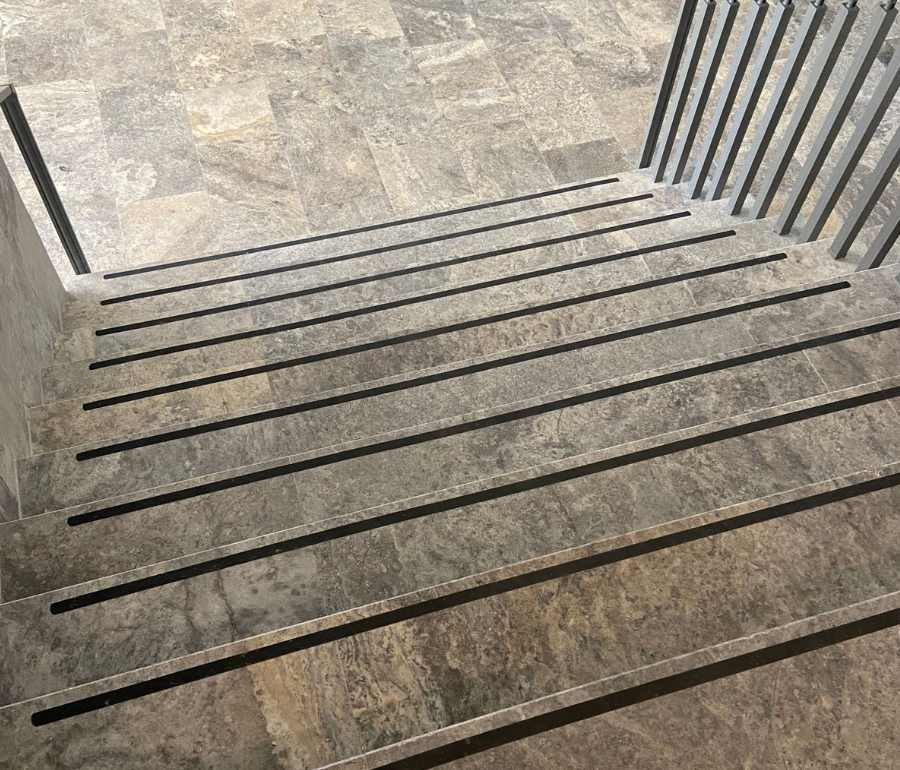
A staircase is far more than a functional transition between different levels of a building. It defines movement, shapes first impressions, and often becomes one of the most recognizable architectural features within a space. Because of this, the material selected for stair treads plays a significant role in both visual character and long-term usability.
Silver Travertine steps combine the timeless appeal of natural stone with a balanced palette of silver-gray, beige, and soft earth tones. Their distinctive textures and naturally occurring veining create staircases that feel authentic and sophisticated while blending effortlessly with a wide range of architectural styles.
Whether incorporated into residential entrances, luxury villas, landscaped gardens, hotel lobbies, commercial developments, or outdoor living spaces, Silver Travertine offers remarkable design flexibility. Its neutral color palette complements wood, steel, glass, concrete, and other natural materials, allowing architects and designers to create cohesive environments throughout an entire project.
Beyond appearance, stair design requires careful consideration of tread proportions, risers, landings, surrounding flooring, and lighting. Using the same natural stone across these elements creates visual continuity that strengthens the architectural identity of the space. Silver Travertine makes this continuity possible while preserving the unique character found only in genuine natural stone.
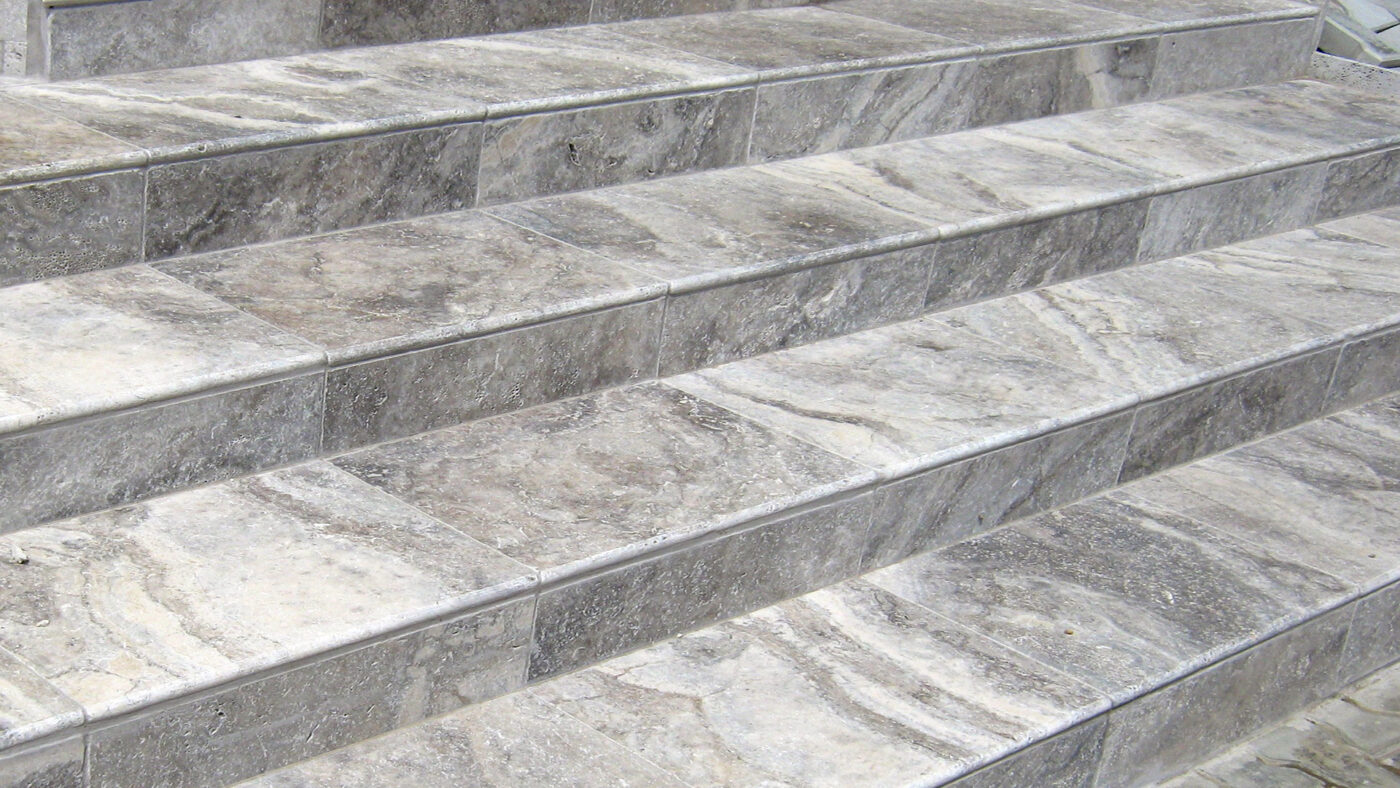
Silver Travertine Steps with Natural Veining
The Natural Character of Silver Travertine Steps
One of the defining qualities of natural stone is that no two pieces are ever exactly alike. Silver Travertine reflects this characteristic through subtle variations of silver gray, warm beige, soft cream, and natural mineral movement that make every stair tread unique.
Unlike manufactured materials that repeat identical patterns, each slab of Silver Travertine displays its own combination of veining, tonal variation, and natural texture. This individuality gives staircases depth and authenticity while allowing the architecture to feel connected to nature.
The first project illustrates how continuous veining across the stair treads and risers creates a unified architectural composition. Rather than appearing as separate pieces, the staircase becomes a single sculptural element that guides movement throughout the space.
The stone’s understated color palette also provides exceptional flexibility when selecting complementary materials. Warm wood handrails create a welcoming atmosphere, black steel railings introduce contemporary contrast, and frameless glass systems allow the natural beauty of the stone to remain the primary visual focus.
Large-format Silver Travertine stair treads can further enhance this seamless appearance by minimizing visible joints and emphasizing the natural movement within the stone itself.
A Versatile Material for Residential and Commercial Projects
Silver Travertine steps are suitable for a wide variety of architectural environments. Residential homes, boutique hotels, luxury retail spaces, office developments, hospitality projects, and landscape designs all benefit from the stone’s neutral appearance and natural elegance.
Inside a building, Silver Travertine introduces warmth without overwhelming the surrounding architecture. Outdoors, it blends comfortably with gardens, courtyards, terraces, retaining walls, and landscaped pathways, helping create a natural transition between built and outdoor environments.
Its balanced color range allows architects to incorporate the same material throughout multiple areas of a project while maintaining visual consistency from the entrance to the interior spaces.
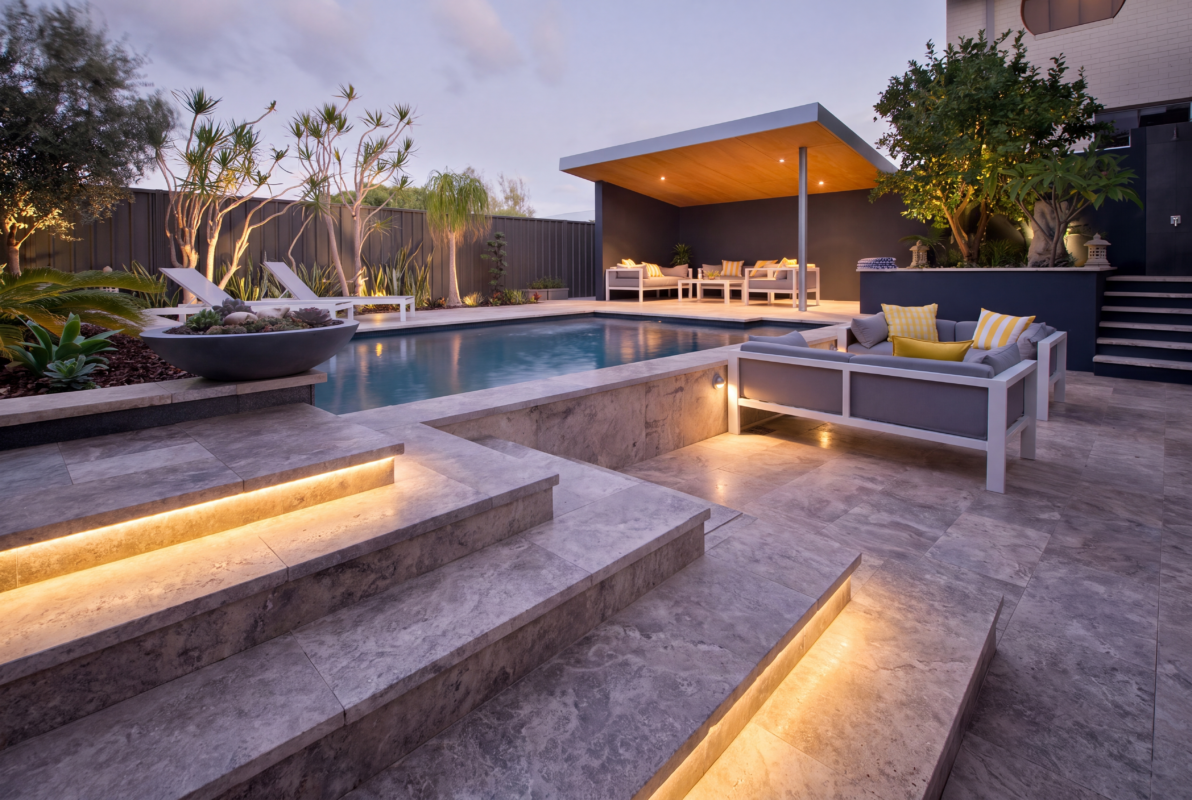
Silver Travertine Garden Staircase and Landscape Step Design
Outdoor Performance of Silver Travertine Steps
Outdoor staircases are exposed to changing weather conditions, direct sunlight, seasonal temperature fluctuations, and continuous foot traffic. For this reason, selecting the right natural stone is about more than appearance—it also requires choosing a material that integrates naturally into exterior architectural environments while supporting long-term project requirements.
Silver Travertine has become a preferred material for exterior staircases because of its balanced color palette and architectural versatility. The combination of soft silver-gray and warm beige tones blends naturally with surrounding landscapes, making it an excellent choice for garden stairs, villa entrances, terraces, courtyards, poolside pathways, and outdoor entertaining areas.
The second project demonstrates how Silver Travertine can create a seamless connection between architecture and landscape design. Instead of dominating the environment, the stone complements surrounding planting, retaining walls, timber structures, and natural vegetation. This harmony is one of the reasons why travertine continues to be specified in residential and hospitality projects around the world.
When planning an exterior staircase, the stair treads represent only one component of the overall design. Landings, risers, adjacent paving, lighting, and surrounding hardscape materials all contribute to the finished appearance. Using Silver Travertine throughout these connected elements creates visual continuity while reinforcing the architectural identity of the project.
Because every slab contains unique natural movement, exterior staircases gain depth and character that cannot be replicated by manufactured materials. Rather than producing repetitive surfaces, the staircase evolves into an architectural feature with its own individual identity.
Choosing the Right Surface Finish
Surface finish plays an important role in the overall appearance of a staircase. Different finishes can create different visual effects while supporting the intended architectural style of the project.
For interior applications, designers often select finishes that emphasize the refined texture and natural color variation of Silver Travertine. Exterior projects may require finishes that provide a different visual character depending on the design concept and project specifications.
The selected finish should always complement the surrounding materials, architectural style, and intended use of the staircase. When stair treads, risers, and landings share the same finish, the result is a cleaner and more cohesive architectural composition.
Another important consideration is the direction of the natural veining. Careful planning during fabrication allows the movement of the stone to continue across multiple treads, producing a staircase that feels unified rather than assembled from individual pieces.
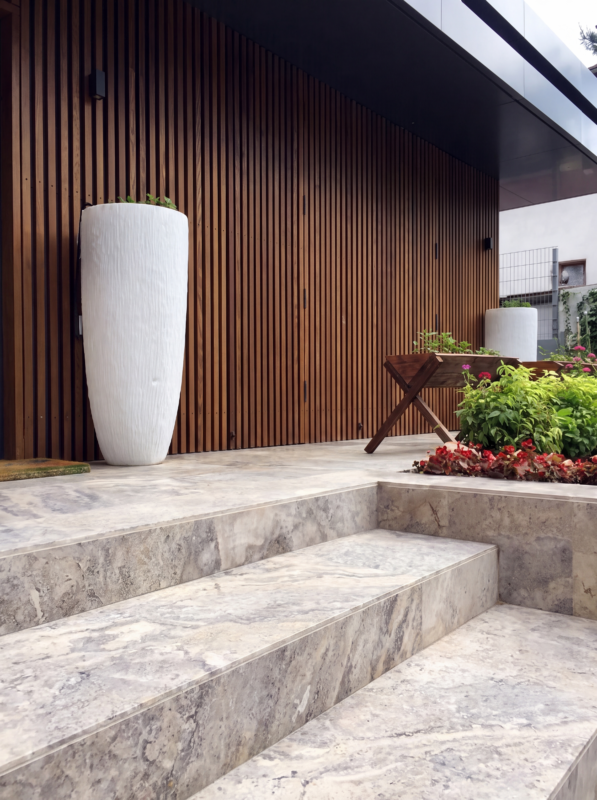
Silver Travertine Steps with Continuous Natural Stone Design
Creating Architectural Continuity with Silver Travertine
Successful staircase design extends beyond individual steps. It considers how the staircase connects to surrounding floors, entrances, terraces, and outdoor circulation areas. Material continuity is one of the most effective ways to strengthen this relationship.
The third project demonstrates how Silver Travertine can be used beyond the stair treads themselves. Extending the same material across adjacent paving and surrounding architectural elements creates a unified visual language that enhances the overall project.
This continuity is particularly valuable in luxury residences, hospitality developments, and large architectural projects where every transition between spaces contributes to the overall experience. Rather than introducing multiple materials, designers can establish consistency by allowing Silver Travertine to guide movement throughout the property.
Its neutral color palette supports this approach exceptionally well. The stone works equally comfortably alongside wood decking, concrete paving, steel detailing, glass balustrades, and contemporary landscape design. Because the colors remain balanced and understated, the architecture itself remains the primary focus.
Large-format applications further enhance this effect by reducing visible joints and emphasizing the natural flow of the stone. When tread layouts are carefully planned, the veining can appear to move continuously from one step to the next, creating an elegant visual rhythm throughout the staircase.
A Material Suitable for Diverse Architectural Styles
Silver Travertine adapts naturally to a wide range of architectural languages.
Minimalist homes benefit from its clean appearance and subtle movement.
Mediterranean residences gain warmth from its earthy tones.
Contemporary villas appreciate its compatibility with glass and steel.
Landscape architects frequently specify the material because it integrates comfortably with planting, water features, retaining walls, and outdoor living spaces.
This versatility allows a single natural stone to establish continuity throughout an entire project without appearing repetitive or visually overwhelming.
Project-Specific Sizes and Custom Fabrication
Every staircase is unique, which is why standard dimensions are not always suitable for architectural projects. The proportions of each tread, riser, landing, and transition area should be carefully coordinated with the overall design to create a balanced composition.
Silver Travertine steps can be fabricated in a variety of dimensions to suit residential, commercial, hospitality, and landscape applications. Project-specific production allows architects and designers to maintain consistent proportions throughout the staircase while integrating surrounding flooring and adjacent architectural features.
Using the same natural stone for stair treads, risers, landings, thresholds, and connected paving areas creates a seamless visual flow between spaces. This approach strengthens the architectural identity of the project and allows the staircase to become part of a unified design language rather than an isolated element.
Custom fabrication also makes it possible to accommodate curved staircases, oversized landings, floating stair concepts, and other bespoke architectural details while preserving the natural beauty of the stone.
Edge Profiles That Define the Character of the Staircase
The appearance of a staircase is influenced not only by the stone itself but also by the profile of each tread. Edge detailing changes how the staircase interacts with light, affects the perceived thickness of the stone, and contributes to the overall architectural style.
Depending on the project, Silver Travertine stair treads can incorporate a variety of edge profiles, including straight edges, lightly beveled edges, eased edges, rounded profiles, or bullnose details. Each profile creates a distinct visual expression while complementing different architectural concepts.
Minimal contemporary homes often favor clean, understated profiles that emphasize precision and simplicity. More traditional or transitional interiors may incorporate softer edge details that introduce subtle curves while maintaining the elegance of natural stone.
Selecting the appropriate profile should always consider the staircase design, tread thickness, surrounding materials, and the desired visual effect. When executed with precision, edge detailing enhances the craftsmanship of the finished staircase without distracting from the natural character of the travertine.
Combining Silver Travertine with Wood, Glass, and Metal
One of the greatest strengths of Silver Travertine is its ability to harmonize with a wide variety of architectural materials.
Natural wood introduces warmth and organic texture, creating inviting residential interiors with a comfortable atmosphere.
Black steel railings provide crisp contemporary contrast while emphasizing the clean geometry of the staircase.
Frameless glass balustrades allow uninterrupted views of the stone, highlighting its natural veining and subtle tonal variations.
Concrete walls, architectural plaster, and neutral-colored flooring also pair naturally with Silver Travertine, making it suitable for both minimalist and richly layered interior concepts.
Because its colors remain balanced and understated, Silver Travertine serves as a connecting element between different materials rather than competing for visual attention. This versatility enables architects to use the same stone throughout multiple areas of a project while maintaining a cohesive design language.
Architectural Lighting and the Beauty of Natural Stone
Lighting plays a significant role in how a natural stone staircase is experienced throughout the day.
During daylight hours, natural sunlight reveals the subtle variations in Silver Travertine’s veining and mineral composition. As lighting conditions change, different tones become more prominent, giving the staircase a dynamic appearance without altering the material itself.
In the evening, carefully positioned architectural lighting can further emphasize the texture and depth of the stone. Integrated lighting beneath stair treads, concealed wall fixtures, and indirect illumination along circulation paths create soft shadows that enhance the dimensional qualities of the travertine.
Rather than overwhelming the architecture, well-designed lighting works together with the natural stone to establish atmosphere, improve wayfinding, and highlight the craftsmanship of the staircase.
When lighting design and material selection are planned simultaneously, the finished staircase becomes both a functional circulation element and an architectural focal point.
Frequently Asked Questions
Is Silver Travertine suitable for both indoor and outdoor staircases?
Yes. Silver Travertine is widely used for both interior and exterior staircase applications. The appropriate finish and fabrication details should always be selected according to the specific requirements of the project.
Can Silver Travertine be fabricated in custom stair dimensions?
Yes. Stair treads, risers, landings, and other architectural components can be produced in project-specific sizes to accommodate a wide range of residential, commercial, and hospitality designs.
Does every Silver Travertine staircase look the same?
No. As a natural stone, every slab has unique veining, color variation, and mineral characteristics. These natural differences give each staircase its own distinctive appearance.
Which architectural styles work well with Silver Travertine?
Silver Travertine complements contemporary, minimalist, Mediterranean, transitional, and classic architectural styles. Its neutral palette allows it to integrate naturally with wood, steel, glass, concrete, and other natural materials.
Can Silver Travertine be used beyond staircases?
Yes. In addition to stair treads, Silver Travertine is frequently used for flooring, terraces, garden pathways, pool surrounds, wall cladding, and other architectural applications, allowing consistent material continuity throughout a project.
Natural stone staircases combine architectural function with timeless material character. With its balanced color palette, distinctive natural veining, and compatibility with a wide variety of architectural materials, Silver Travertine steps offer designers the flexibility to create cohesive interior and exterior environments. Whether incorporated into a private residence, hospitality project, landscape design, or commercial development, carefully fabricated Silver Travertine staircases contribute lasting visual value while celebrating the authenticity and individuality that only natural stone can provide.